
By Jorge Valdez
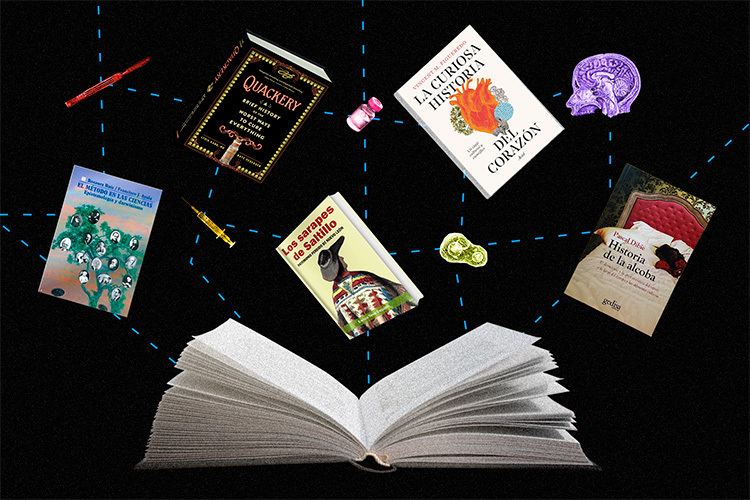
During this season of rest—that well-earned pause from daily routines—reading often becomes one of the most rewarding ways to spend time. Drawing from the Valdez-Balli collection, housed at the Library of the School of Medicine and Health Sciences at Tecnológico de Monterrey, I have selected five works that explore science and related fields from diverse and thought-provoking perspectives.
1. El método en las ciencias. Epistemología y darwinismo
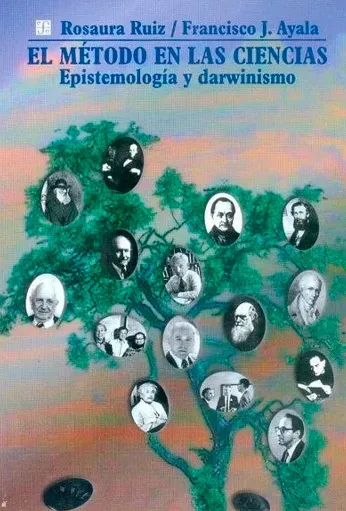
The first recommendation (The Scientific Method: Epistemology and Darwinism) offers a fresh perspective on the scientific method, developed by two renowned scholars and authors: Rosaura Ruiz Gutiérrez and Francisco Ayala, in a volume published by Fondo de Cultura Económica.
The scientific method, epistemology, and Darwinism are closely intertwined. Epistemology, as a theory of knowledge, examines the scientific method—grounded in observation, hypothesis formulation, and experimentation—as a means of producing valid knowledge.
Darwinism, encompassing concepts such as evolution and natural selection, not only stands as a paradigmatic example of an empirically supported scientific theory, but also provides a powerful metaphor for the evolution of knowledge itself.
From an evolutionary epistemological standpoint, the dynamics of change and adaptation inherent to Darwinism illustrate how scientific theories transform and become refined over time.
2. Quackery: A Brief History of the Worst Ways to Cure Everything
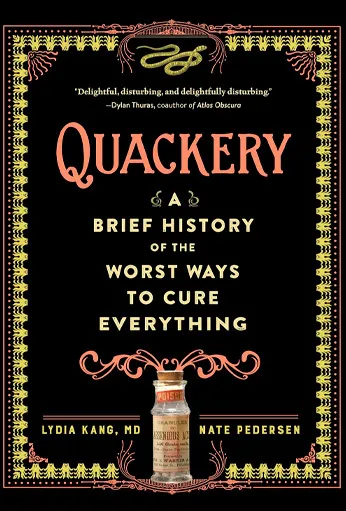
The second selection is a brisk and provocative journey through the history of medical quackery over the past several centuries.
Blending fascination, horror, and dark humor, Quackery plunges readers into the astonishing history of medicine’s mistakes, excesses, and deeply questionable practices.
Ranging from the merely bizarre to the dangerously absurd, the book catalogs dozens of outlandish and morbidly comic treatments—some devised by physicians and scientists, others by spiritualists or snake-oil salesmen (yes, literal snake oil). All of it sustained by a mix of ignorance, trial-and-error experimentation, and, at times, outright fraud.
Illustrated with vintage images, photographs, and historical advertisements, the book skillfully weaves macabre humor with science and historical storytelling. Its authors, Lydia Kang, a physician, and Nate Pedersen, a librarian and historical science writer, offer a captivating—if unsettling—perspective on the strange missteps that have shaped the development of medicine.
3. Los sarapes de Saltillo. Patrimonio perdido de Nuevo León
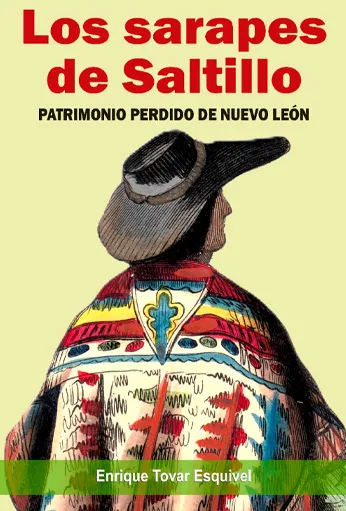
The Saltillo sarape is one of the most recognizable symbols of Mexican cultural heritage, particularly in Nuevo León and Coahuila. Its distinctive design, featuring a central diamond and a rich array of colors, has made it a highly prized artisanal object.
However, recent research reveals that the finest and most elaborate sarapes were not originally woven in Saltillo itself, but rather in households across Nuevo León and Coahuila. There, Indigenous, mestiza, and criolla women produced them on backstrap looms. These pieces were later sold at the Saltillo fair, a practice that ultimately cemented the sarape’s name and reputation.
In this work (The Sarapes of Saltillo: Lost Heritage of Nuevo León), Enrique Tovar—true to the rigor that defines his historical research—delights readers by dismantling long-held myths (something he is well known for) and offers an illuminating reflection on identity, domestic labor, and cultural heritage.
4. The Curious History of the Heart: A Cultural and Scientific Journey
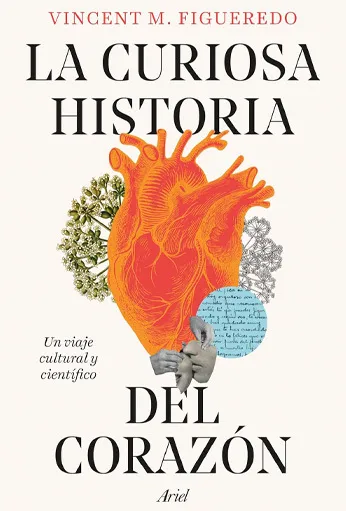
What secrets does the most symbolic organ of the human body hold? Why has the heart fascinated humanity for centuries, and how much do we truly understand about its potential?
For as long as we can remember, the heart has been far more than a vital organ: across cultures, it has become a universal symbol of love, life, and wisdom. Although modern science has vastly improved our understanding of its physiology and medical significance, the heart continues to move us as a timeless emblem of emotion and memory.
Vincent M. Figueredo, a cardiologist, scientist, and historian, takes readers on a compelling journey—from ancient beliefs to the most recent scientific discoveries—revealing how this organ shapes our existence and why it remains an endless source of inspiration.
This book is an engaging and immersive invitation to view the heart from a renewed perspective.
5. Historia de la alcoba
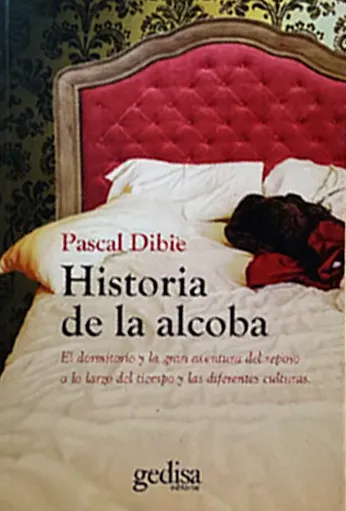
This work (The History of the Bedroom) makes it clear that the bedroom transcends its function as a simple sleeping space, instead representing the evolution of human intimacy over time. From antiquity, when it served as a site of power in cultures such as ancient Rome, to its role as a family refuge during the Middle Ages, the bedroom has evolved in ways that reflect each era’s culture, fashion, and social dynamics.
Pascal Dibie—emeritus professor of ethnology at the University of Paris—explores this transformation, tracing the bedroom’s shift from a modest bed to a symbol of status and privacy, closely linked to rituals, customs, and rest. He also examines how other cultures, including Indian and Chinese traditions, influenced its development.
Ultimately, the bedroom is not merely a room; it is a reflection of civilization itself—its values and the ways in which humanity has lived, loved, and rested across centuries. In this book, now translated into 15 languages, Pascal Dibie, ethnologist and professor at Paris-Diderot, takes readers on a sweeping adventure through the history of rest.
Did you find this story interesting? Would you like to publish it? Contact our content editor to learn more at marianaleonm@tec.mx