

In 1983, Sally Ride became the first American woman to go to space, as part of the National Aeronautics and Space Administration’s (NASA) STS-7 mission. While preparations were underway, an unexpected question arose among her male colleagues: how many tampons would the astronaut need for her week-long stay?
The group of engineers, capable of calculating complex astronomical variables, did not know how to answer a seemingly simple question, so they suggested that she take 100.
The anecdote revealed the profound ignorance we have about a biological process that happens to almost half of humanity.
“We would rather colonize Mars than study women’s bodies,” says Elizabeth Rizor, a postdoctoral researcher specializing in neuroimaging applied to women’s health at UC Santa Barbara.
Although Sally’s story happened decades ago, the reality is that since then little effort has been made to study menstruation and communicate its importance to the population.
“We still haven’t managed to make the world understand the importance of a physiological process that will affect everything,” says Andrea Rodríguez, a researcher specializing in sexual, menstrual and reproductive health at the School of Public Health of Mexico.
On this International Women’s Day, it is important to talk about the scientists who are leading a new era in the science of menstruation to understand it in depth and ensure that all menstruating people experience it with dignity.
Menstruation: the Fifth Vital Sign
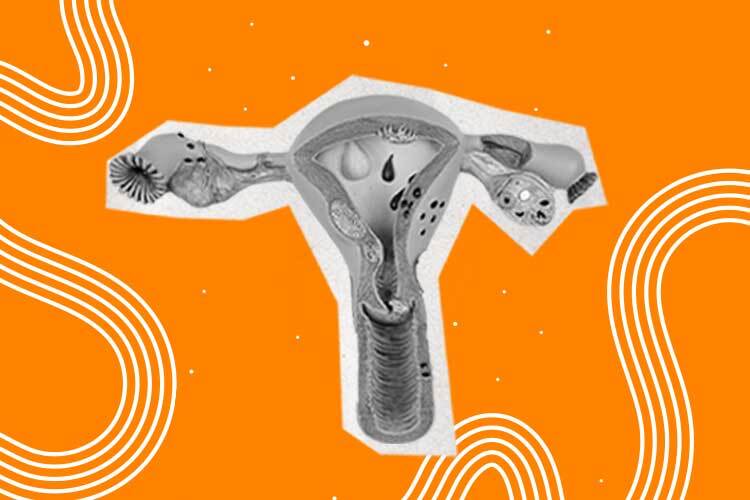
Menstruation is one of the four phases of the menstrual cycle, a process that occurs to the female sex every 21 to 35 days. Its phases are: the proliferative or follicular phase, the ovulatory phase, the luteal phase, and the menstrual phase.
It is mediated by a series of hormones that function as chemical messengers between the brain, the ovaries and the uterus, preparing the latter so that, in case it receives a fertilized egg, a baby will be gestated.
But, although the menstrual cycle is related to reproduction, its function in our body is much greater.
“It is an indicator of balance between the spheres of our life,” says Claudia Hernández, a gynecologist specializing in girls and adolescents at the Women’s Institute in the Zambrano Hellion Hospital of TecSalud.
It is becoming increasingly clear that for the cycle to proceed in a healthy way, it is necessary to have good habits: eating and sleeping well, hydrating, exercising and controlling stress.
This event is so crucial to our health that institutions like the American College of Obstetricians and Gynecologists consider it the fifth vital sign. This means that monitoring it is as important as measuring our temperature, blood pressure, and heart rate.
But beyond the physical aspect, talking about menstrual health involves a whole range of conditions.
“It is when a menstruating person has access to dignified menstruation through education, health, access to products, eradication of taboos, and public policies that promote health,” says Rodríguez.
According to the expert, to ensure everyone experiences it well, it’s essential that it be taken seriously. “We continue to believe that the fight for menstrual health is just a trend, not realizing that we often speak from a place of privilege,” she warns.
Inequalities in Menstrual Health
Although from some privileged spheres it may seem that menstruation is very easy to manage, there are conditions where it is not.
Women who live in prisons or indigenous communities, or are migrants, often do not even have access to basic products such as pads, tampons or menstrual cups to manage their period.
In areas where child marriage is permitted: “it’s like a green light that girls are ready to get married at 10, 11, 12 years old,” says Rodríguez.
In a study conducted by the researcher and her colleagues, they found that only 15% of the adolescent girls surveyed in a public high school in Mexico have good information about menstruation.
Furthermore, nearly 80% expressed negative or erroneous ideas about it, highlighting the persistence of social taboos. “There is a lot of inherited misinformation,” says Rodríguez.
The lack of information exists not only among the general population, but also within the scientific community. This is evident in the difficulty of diagnosing conditions such as endometriosis or polycystic ovary syndrome, for example.
Medical textbooks still teach incorrect concepts. “The amount of menstrual bleeding we have to learn for exams is 80 milliliters per cycle,” says Hernández. “Any woman who has normal menstrual cycles knows it’s much more.”
We also know little about what happens to our brain throughout the cycle.
“When I was doing the literature review for our study, I was taken aback because it was the shortest I’ve ever had to do,” says Viktoriya Babenko, a researcher specializing in cognitive neuroscience at UC Santa Barbara.
Babenko, Rizor, and a group of researchers recently published the first study analyzing how the architecture of our whole brain changes in tune with the hormonal variations of the menstrual cycle.
Our Brain Changes Structurally Throughout the Menstrual Cycle
Although there was already evidence in the literature that certain brain regions have receptors for hormones associated with reproduction and that these regions vary throughout the menstrual cycle, the researchers decided to adopt a comprehensive approach.
“White matter, in regard to how it may changes a function of this process was vastly understudied,” says Rizor.
Therefore, they analyzed both gray matter and white matter throughout the entire cycle in a group of menstruating people.
Gray matter is composed of neurons, glial cells, and dendrites; it is the site where information is processed. White matter, on the other hand, is made up of myelinated nerve fibers that coat the nerve endings, moisturizes them and allows communication between different regions of the brain.
At three key moments —during menstruation, on the day of ovulation, and halfway through the luteal phase— they conducted experimental sessions that included blood draws, surveys, and brain scans to measure the thickness of both structures.
They found that hormonal changes during the menstrual cycle are associated with variations in the size of different structures throughout the brain. This is the first evidence of global-scale structural changes occurring in parallel with these fluctuations.
Furthermore, they observed marked differences among participants in the types of changes they experienced. “This way we can really see how the cycle changes actually affect a person week to week,” says Babenko.
The study did not seek to link these findings to energy levels, mood, or cognition; however, “it provides a good anatomical foundation that other researchers can build off of,” Rizor notes.
Exploring whether these changes are related to premenstrual syndrome could provide the scientific validation that many of us are hoping for regarding how challenging menstruation can be.
The Future of Menstrual Science
For decades, scientific research avoided including menstruating people or female animal models to avoid confounding factors from hormonal variability.
Today, we know that these fluctuations are a unique opportunity to study their importance. “We believe that the role of these hormones are not only at the core of understanding women’s stress and health, but also what makes us, regardless of sex, ourselves every day,” Babenko suggests.
With these studies and those to come, perhaps we’ll understand how powerful it is to be active and productive while experiencing these changes. Maybe managing menstruation will become easier, and we’ll be able to communicate that it’s not just “a women’s issue,” but a matter of essential public health.
It may also help us to live it peacefully instead of with suffering.
“A lot of times it could feel like you don’t have control over your body because all these fluctuations are happening,” Babenko says. “But once you start learning about your body a bit better, you can adapt more effectively to those cycles.”
Understanding our bodies can help us to stop seeing menstruation as something burdensome and start seeing it as a wonderful natural process.
Did you find this story interesting? Would you like to publish it? Contact our content editor for more information: marianaleonm@tec.mx