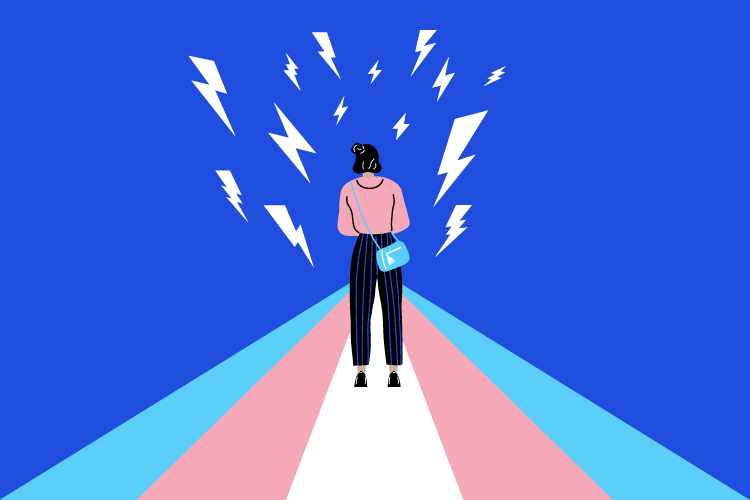


Transphobia refers to rejection, discrimination, and violence against transgender and non-binary people. It affects millions worldwide and, in its most extreme forms, can be deadly.
From a scientific perspective, efforts have been made to understand it, and today it is recognized as something complex that involves multiple social, cultural, and psychological factors.
“When I talk about this topic, I always say that it is like a complicated dish; there are a lot of factors and elements that condition transphobia and cannot be separated,” says Hamid Vega, a psychiatrist and researcher at the Ramón de la Fuente Muñiz National Institute of Psychiatry.
One of the ingredients is ignorance and misinformation. Several studies show that when people lack clear information about what gender identity is, they are more likely to adopt misconceptions, such as believing that there are only two genders or that biological sex fully determines gender identity.
“Being trans is something natural,” says Tecelli Domínguez, a researcher at the Center for Global Health Research of the National Institute of Psychiatry Ramón de la Fuente Muñiz.
Far from being an exception, it is estimated that in Mexico 0.9% of people aged 15 and over identify as trans or non-binary. Even if the term ‘transgender’ is relatively new, gender diversity has existed for thousands of years across cultures.
In line with this evidence, the World Health Organization (WHO) updated its guidelines and in 2019 moved gender incongruence out of the category of mental disorders. Medical associations agree that it is not a pathology.
“Sex and gender variability is the same as what happens with the variability of human height,” says Vega.
Causes of Transphobia: Misinformation, Sexism, and Cultural Norms
In addition to misinformation, various studies also show that cultural context is a major driver of transphobia.
In countries like Mexico, where traditional gender norms persist, the pressure to conform to rigid ideas of masculinity and femininity remains strong and causes a rejection of anything different from that.
This system, described as sexist and heteronormative, leaves little room for diversity, and those who challenge it often face discrimination, rejection, and violence.
In a recent study, Mexican researchers found that in the country, men exhibit more prejudice towards trans people and are less tolerant of people who do not conform to traditional gender norms, compared to women.
“It’s curious because of the people who responded to the survey, most were women, and yet the level of rejection predominated among men,” says Domínguez, who was one of the authors of the study.
Furthermore, negative attitudes toward trans or non-binary people have been found to be linked to higher levels of sexism, authoritarianism, and rigid religious beliefs. These attitudes reflect a broader worldview shaped by rigid ideas of morality and “what is natural.”
“People of diverse sexual orientations and gender identities have been associated with these prejudices and so-called immoral things,” Vega points out. “That’s why there are hate crimes; there’s this element of wanting to punish you for representing something that, morally speaking, is supposedly wrong.”
Thus, transphobia appears to involve misinformation, prejudice, and deeply ingrained social norms.
Mental Health Effects of Transphobia and Exposure to Violence
The consequences of transphobia go far beyond a comment or gesture of disapproval. For many trans and non-binary people, it is a daily reality that negatively impacts their health, safety, and life opportunities.
Since 2009, a project that tracks the killing of trans people has documented 5,322 of these hate crimes around the world, but the number is probably higher.
Mexico ranks second in the world for transfemicides, second only to Brazil. This violence—the most dehumanizing manifestation of transphobia—is just the tip of the iceberg of a much larger problem.
Long before violence escalates to murder, transphobia appears in everyday forms of discrimination, such as family rejection, school bullying, workplace discrimination, and unequal treatment in health services.
“Anything that involves rejection or violence towards what is different is accepted and normalized, or at least not sanctioned,” Domínguez points out.
In the country, trans people are more likely to be denied employment opportunities, experience workplace violence, and receive unequal treatment.
All this systematic and structural rejection causes them serious mental health problems. Evidence shows that constant exposure to stigma and discrimination is associated with higher levels of anxiety, depression, chronic stress, and suicidal ideation.
They are also much more likely to engage in substance abuse. “Sometimes you have to find ways to cope with the fear, pain, sadness, anger, and frustration you feel,” Vega says.
In addition, many trans people avoid seeking healthcare for fear of being mistreated, which aggravates preventable medical problems.
How to Reduce Transphobia: Education, Family Support, and Public Policy
Although the situation remains alarming, science also offers clues about how it can be fought.
One of the most powerful tools is education: programs that explain gender and sexual orientation diversity clearly and with evidence reduce prejudice, especially when implemented from an early age.
Support from home is also essential. Studies show that family support can be a protective factor for mental health.
“When their immediate family understands and supports them, they’ll be able to deal with everything else much more easily,” says Vega. “Even if it’s just one family member, they’ll have a better quality of life and be much happier than someone who is completely and utterly rejected.”
Another key element is direct contact and meaningful interaction. Getting to know and interacting with trans people significantly reduces prejudice by transforming an abstract idea into a human experience, allowing empathy to prevail.
At a structural level, public policies also play a fundamental role. Having anti-discrimination laws, access to inclusive health services, and legal recognition of gender identity not only protects rights but also helps shift social norms over time.
“In Mexico we have seen changes because many modifications have been made at the legislative level to promote the acceptance of non-binary gender identity,” says Domínguez.
Evidence suggests that combining education, family support, and public policies can reduce prejudice and prevent violence.
“Being trans doesn’t make them more or less of a person, more or less human,” Vega concludes.
Did you find this story interesting? Would you like to publish it? Contact our content editor for more information: marianaleonm@tec.mx