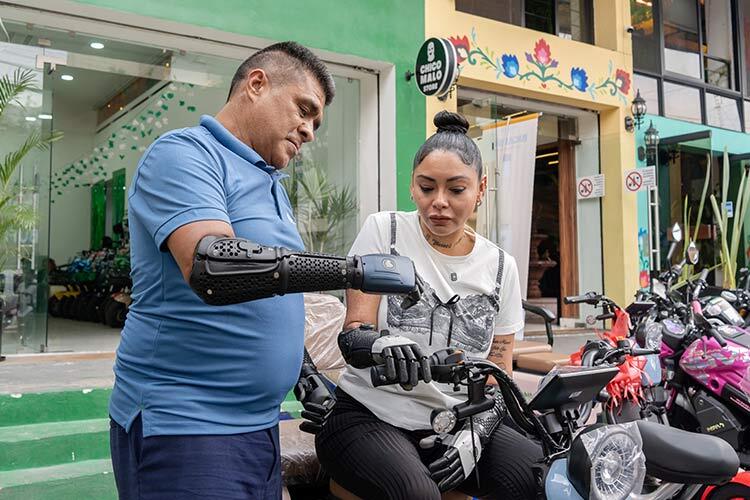


Moving our hand to pick up a glass of water seems like a simple action, but behind those movements lies a sophisticated communication between our brain, nerves, and muscles. A Mexican robotics and Artificial Intelligence (AI) company has developed a system that allows the control of advanced prosthetic arms that can restore mobility to people who have lost one or both of these limbs.
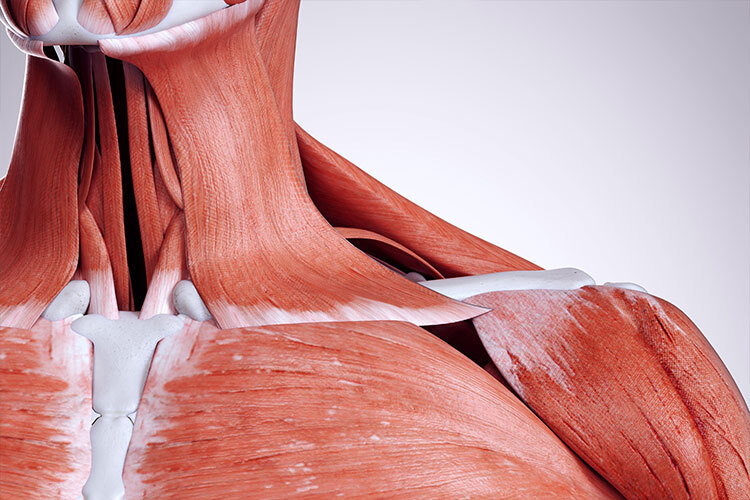
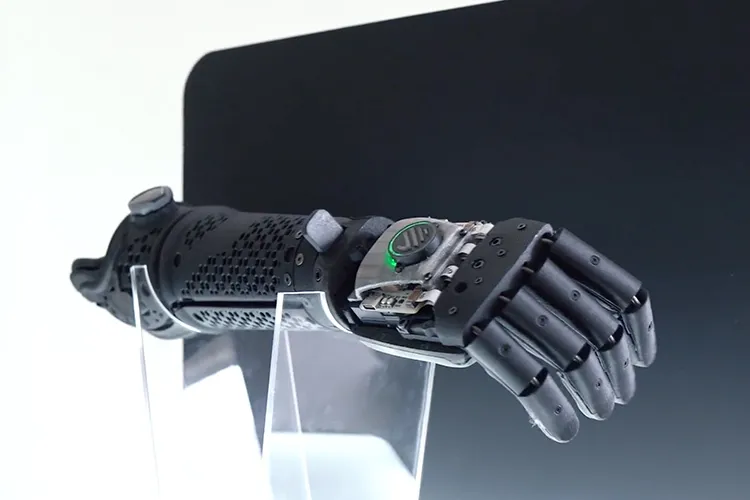
What’s special about these prostheses is that they can interpret the electrical signals sent by the brain when it wants to make a certain movement and —without the person having to do anything— it can execute it with great precision.
With traditional prosthetics, people must learn how to use them in order to operate them, and the movements they make often feel unnatural, but in their case, it’s the opposite.
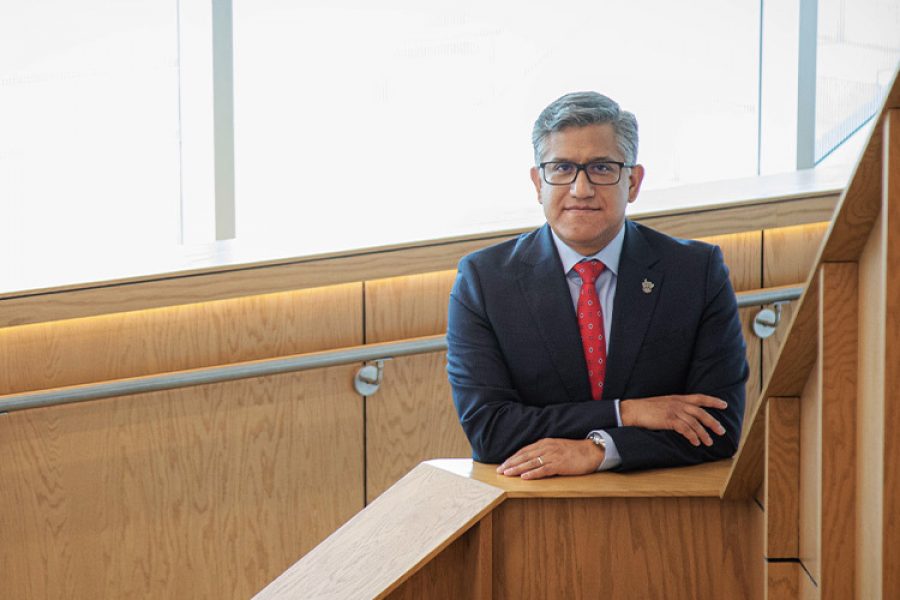
“Our system makes the machine learn how to function through a person’s natural movement,” says Alan Hernández, a biotechnological engineer who studied at Tec de Monterrey, Campus Guadalajara, and is CEO and co-founder of BioGrip.
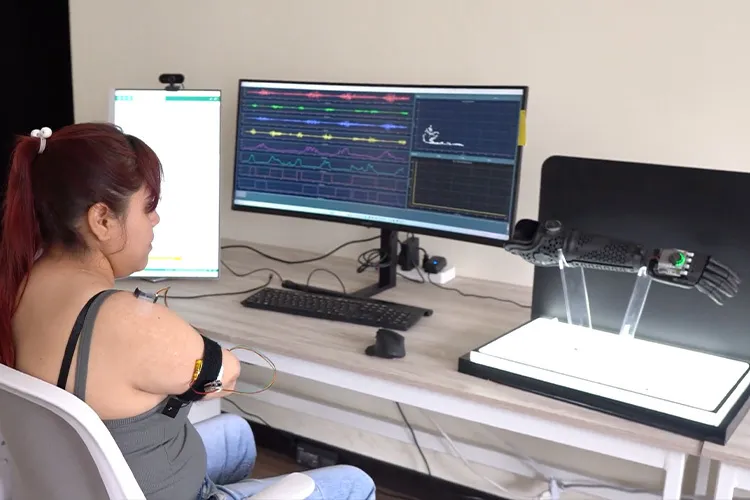
Using highly responsive sensors, their system is able to detect these electrical remnants of an intended movement. These signals are then processed using machine learning algorithms.
In this way, the AI learns to recognize individual patterns of contraction and relaxation and translates them into actions such as opening or closing a robotic hand.
“Hand movements are incredibly complex,” says Hernández. “That’s why almost no one has taken it to this level.”
Their AI models are developed on computers with high processing capacity and the prosthetics has its own processor in a reduced version.
Furthermore, the technology is non-invasive and all components of the system are placed above the skin, as its sensors are wireless.
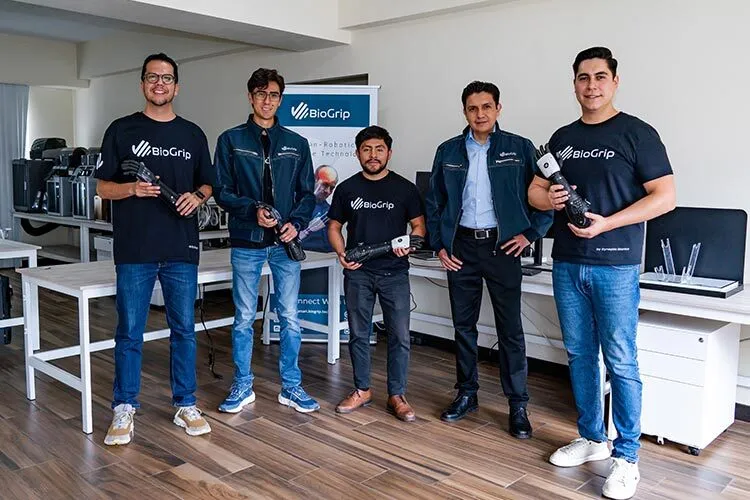
The Story Behind BioGrip
In 2019, after a long battle with Lyme disease, Israel González, an electronics engineer specializing in advanced robotics and AI, decided to found BioGrip to restore mobility and hope to people with disabilities.
Years earlier, while trying to resolve his own diagnosis, he met Mr. José Luis, a man who had both arms amputated and who inspired him.
The type of systems they have developed seeks to reduce the distance between neural intention and mechanical response, one of the main challenges in the development of human-machine interfaces.
Their goal is not only to replace a limb, but to restore the feeling of control and agency, that is, for the person to feel that the movement occurs as a natural extension of their body.
“When you think about opening and closing your hand, you don’t think ‘I’m going to press twice here,’“Hernández explains, “We focused on natural control.”
Their approach aligns with the global trend in prosthetics and rehabilitation of designing technologies that adapt to the human body, rather than forcing the body to adapt to the technology.
Technological Innovation for Those Who Need It
Beyond its technological innovation, BioGrip has found a way to make robotics and bionics —a discipline that combines biology and technology to create systems and devices that mimic or improve the functions of living beings— accessible in real-world contexts.
In Latin America, these types of technologies are neither common nor easy to access.
To solve this, the company uses modular, scalable systems, centered on who will use them.
A key component of their development is that they collaborate with healthcare professionals, such as orthopedists, physiotherapists, and rehabilitation specialists, as well as users who actively participate in improving the devices.
“We empathize with our users, I think that’s our greatest strength,” says Hernández.
The future of Prosthetics, Transplants and Rehabilitation
Looking ahead, the company aims to expand and refine its control system so that it can be applied not only to prosthetics, but also to exoskeletons, remote surgery robots, and industrial robots.
“We want to make a universal device to which any other prosthetist can connect their own prosthetics to,” says Hernández.
Furthermore, they are collaborating with the group of surgeons who achieved the world’s first bilateral arm transplant in 2015.
The idea is that in the future, their technology can also be used to rehabilitate transplanted limbs in a simpler and more efficient way.
“We want the person to say ‘I want to start moving my hand’ and the hand moves as if it were a robotic prosthesis, but it is a flesh-and-blood one,” says Hernández.
In a context where medical technology is often developed far from those who need it most, their project is not only innovative, but also seeks to have a social impact.
At this intersection of biology and technology, the company explores a fundamental question for science: what does it mean, today, to move an arm again?
Did you find this story interesting? Would you like to publish it? Contact our content editor to learn more: marianaleonm@tec.mx