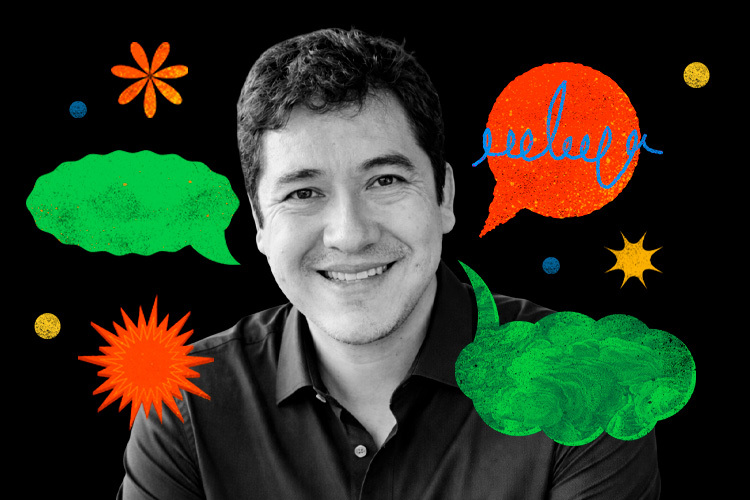


From a refugee camp in Cambodia to leading the Frederick National Laboratory for Cancer Research, one of the world’s most prestigious cancer research centers, Ethan Dmitrovsky’s career illustrates how translational oncology can turn scientific discoveries into real treatments for cancer patients.
A physician, scientist, and current director of the laboratory, Dmitrovsky’s professional path bridges clinical experience, basic research, and strategic decision-making within institutions dedicated to global health and cancer research.
This vision was at the center of his conversation during the International Congress on Educational Research (CENI) at Tecnológico de Monterrey, a flagship event that brings together leaders in science, innovation, and education. During his keynote, Dmitrovsky explained that his scientific vocation emerged from a deep ethical conviction.
“My motivation is deeply rooted in the concept of servant leadership,” he said, referencing the ideas of Robert Greenleaf and emphasizing that research only finds its true meaning when it serves others.
For Dmitrovsky, research is not limited to generating technical knowledge or academic advances. His approach is grounded in a clear social responsibility: ensuring that science moves beyond the laboratory and has a direct impact on people’s lives, particularly through the development of new strategies for cancer treatment.
From Clinical Experience to Translational Oncology
One of the defining moments of his career occurred when, as a volunteer physician, he diagnosed leukemia in a child at a refugee camp. With no access to treatment, the disease was incurable.
That experience led him to question how cancer treatments were being developed. “That’s when I realized we needed therapies that were less aggressive and more accessible—treatments that could be applied anywhere in the world,” he said. That realization set him on the path toward translational oncology: bringing discoveries from the lab into clinical practice.
The Challenge of Bringing Discoveries to Patients
For decades, cancer was viewed as a single disease. Today, that understanding has changed dramatically. “We used to define cancer by what it looked like under the microscope; now we know it is defined by its genetic profile,” Dmitrovsky explained.
This shift opened the door to therapies that target specific mutations, transforming outcomes for many patients. These advances not only reshaped basic research but also changed how personalized treatments are designed. For Dmitrovsky, this is one of the main reasons for optimism in oncology today.
Still, many promising discoveries never become treatments. Dmitrovsky acknowledges that this gap remains one of the field’s greatest challenges.
“Historically, scientific research and clinical practice have not been as integrated as they should be,” he said. The solution, he argues, lies in teams where scientists and physicians share responsibility for translating knowledge into clinical care.
Doing Science and Choosing What to Fund in Difficult Times
Beyond the lab, Dmitrovsky has also played a key role in setting scientific priorities and deciding which projects receive funding. These decisions, he explained, are not based solely on academic metrics.
The central criteria include potential patient impact, methodological rigor, reproducibility, and teams’ ability to work across disciplines. For him, funding science is also a way of shaping the future of research.
In a global context marked by budget cuts, misinformation, and political pressure, Dmitrovsky strongly defends the value of scientific research.
For him, doing science remains worthwhile because it represents a form of public service. Many of the answers to today’s global health crises, he noted, emerged from decades of basic research that once seemed to have no immediate application.
Technologies Transforming Research
Artificial intelligence (AI), big data analytics, computational biology, and gene editing are accelerating the pace of scientific discovery. Still, Dmitrovsky stressed that no technology can replace scientific judgment.
The key, he said, is integrating these tools to ask better questions and make more informed decisions.
One of the central messages of his talk was directed at younger generations. For Dmitrovsky, scientific training must go beyond technical mastery.
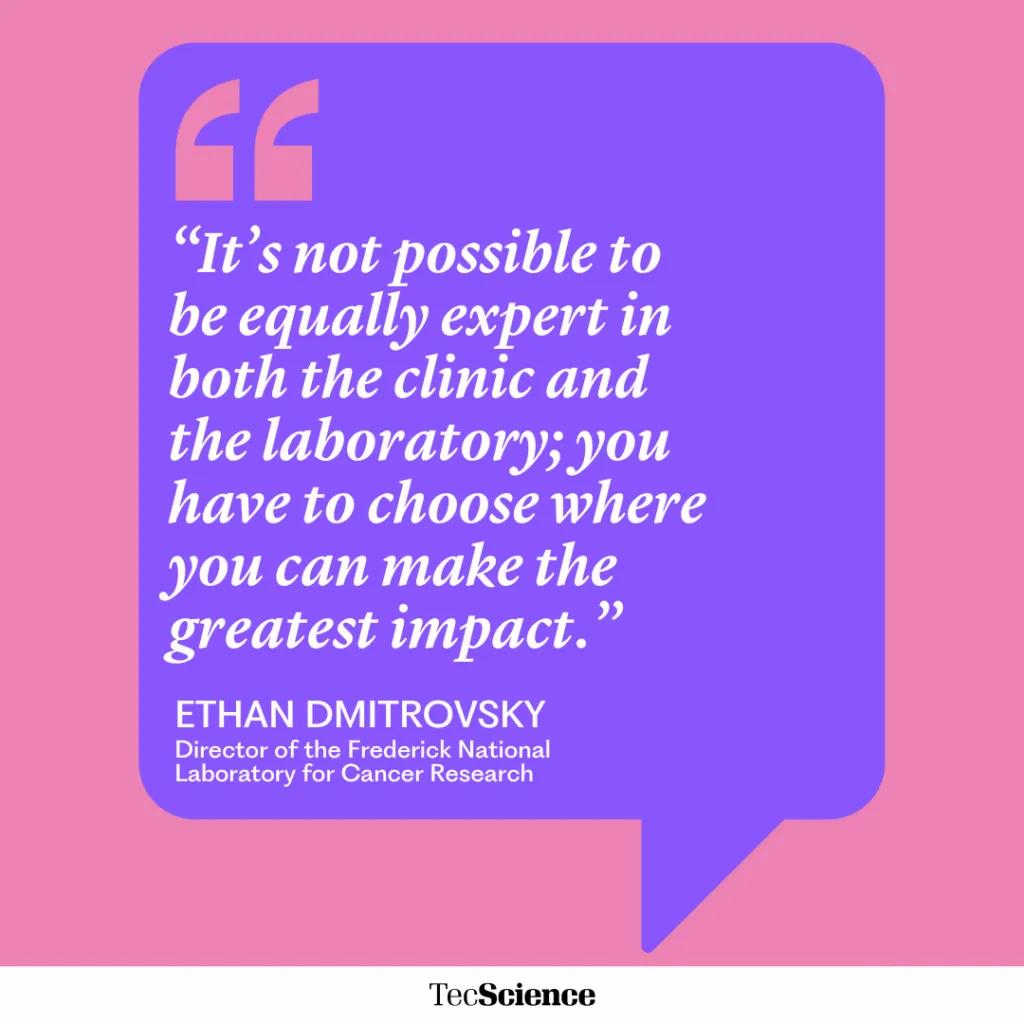
“It’s not possible to be equally expert in both the clinic and the laboratory; you have to choose where you can make the greatest impact,” he said. Even so, he emphasized the importance of understanding both worlds, as well as cultivating passion and perseverance.
Leading Science Is More Than Managing It
In Dmitrovsky’s view, leading science requires vision, trust, and the ability to protect talent. It is not just about managing resources but about creating the conditions for knowledge to flourish. Many of the most complex barriers, he noted, are not technical but cultural—and overcoming them requires conviction and collaboration.
Looking ahead, Dmitrovsky anticipates a future in which cancer research becomes increasingly personalized, interdisciplinary, and preventive.
For him, major breakthroughs will not come from isolated laboratories but from collaborative networks capable of integrating multiple disciplines and technologies around a shared purpose: improving patients’ lives. His message is clear—the future of cancer research will depend not only on technology but also on science’s ability to collaborate, adapt, and remain committed to society.
Did you find this story interesting? Would you like to publish it? Contact our content editor to learn more: marianaleonm@tec.mx