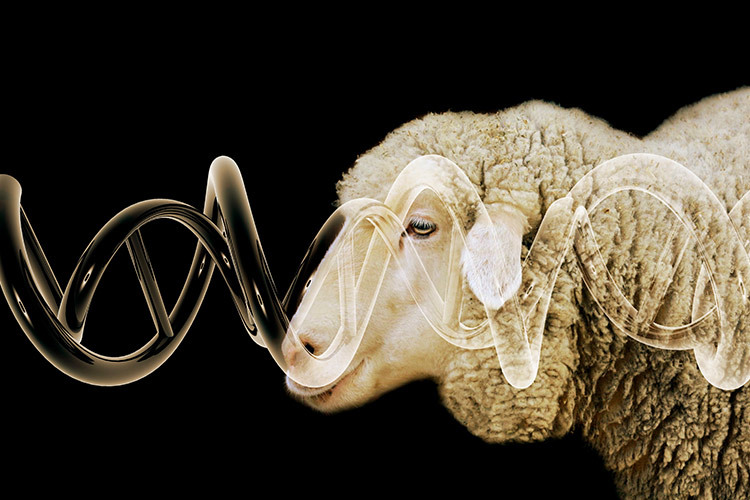


You have probably heard of Dolly the sheep, named in tribute to the singer Dolly Parton. In 1997, a group of researchers in Scotland introduced the first cloned mammal: a sheep created from an adult cell taken from the mammary gland of another six-year-old sheep. The world reacted with disbelief to this scientific breakthrough.
For the past forty years, biotechnological development has achieved significant advances in modifying the genetic composition of bacteria, plants, and animals. The first transgenic animal was a mouse, created in 1982 and known as the “Supermouse,” due to its increased size after scientists inserted the human growth hormone gene into the genome of a fertilized egg from another specimen using microinjection.
So, What are Transgenic Animals?
Transgenic animals are those in which a gene of external origin has been inserted and deliberately integrated in a stable manner into the genome of all the organism’s cells, and which can be passed on to their offspring.
In animals, transgenesis may involve transferring DNA into the organism or altering the animal’s own DNA.
How are Transgenic Animals Created?
Currently, there are at least eight methods used to produce transgenic animals:
DNA microinjection
This was the first method developed to initiate transgenesis and the same one used to produce the first mouse. It became widely adopted starting in the 1980s and remains one of the most common techniques for gene transfer in animals.
The process involves introducing an external gene into a host cell (such as eggs or embryos) using glass micropipettes. The DNA carrying the desired genes is transferred, after which the embryos are implanted into a surrogate mother.
Dolly’s case, for example, resulted from this method: somatic cell nuclear transfer (SCNT) is a technique used to create embryos by transferring the nucleus of a somatic cell into an egg cell whose nucleus has previously been removed.
Animals can also be produced by transforming stem cells cultured in vitro with the desired gene. Successfully transfected cells may then be used in somatic cell nuclear transfer to generate transgenic animals, or the constructed gene may be directly injected into an embryo through micromanipulation.
3. Somatic cell nuclear transfer
4. Retrovirus-mediated gene transfer
5. Sperm-mediated gene transfer
6. Testis-mediated gene transfer
7. Receptor-mediated (linker-based) method
8. Liposome-mediated technology
Today, transgenic animals can be readily produced using the CRISPR/Cas9 gene-editing technique, which functions like molecular scissors to precisely cut DNA. This method has enabled the creation of the first litter of genetically modified pigs in Latin America.
What Animal Species are Transgenic?
Although it may seem that transgenic organisms are already everywhere, they are currently limited to controlled populations and relatively few species: mice, rats, pigs, goats, trout, sheep, two types of cattle (Bos taurus and Bos taurus × Bos taurus indicus), horses, tilapia, AquAdvantage salmon, a research worm called Caenorhabditis elegans, the fruit fly, and the zebrafish.
Applications: Xenotransplantation
In 2024, the patient Richard Slayman became the first human to receive an organ from a genetically modified animal. After centuries of imagining a surgery of this kind, gene editing has made it a reality.
Although he died nearly two months after receiving a pig kidney transplant, doctors in Massachusetts—where the patient lived—explained that his death was not necessarily linked to the procedure.
Xenotransplantation (that is, the transfer of cells, tissues, or organs from animals to humans) is one of the most medically significant applications, along with the use of animal models for in vivo studies to further understand gene function in living organisms.
In addition to xenotransplantation, other applications include:
- Improving nutrients in animal-derived products, including increasing their quantity, overall food quality, and specific nutritional composition.
- Creating disease-resistant animals: this application is mainly used in agricultural production, such as cows that produce more milk or higher protein levels, or preventing conditions like skin diseases in sheep.
- Medical and pharmaceutical applications: transgenic animals make it possible to produce specimens that serve as sources of useful human therapeutic proteins, such as growth hormone, insulin, or human lactoferrin, among others.
- Transgenic animals can also be used to model human diseases, test vaccines, and study treatments for conditions such as Alzheimer’s disease, cancer, and HIV.
The horse Equus caballus is one of the species that has recently joined the list of transgenic animals in Argentina through the CRISPR Cas9 (spCas9) method, with a specific focus on muscle traits. It is further evidence that advances in animal gene editing continue to expand, and that this list will likely keep growing.
New genomic techniques (NGTs), such as CRISPR/Cas and other precision-editing tools, have enabled targeted genetic alterations with lower associated risks, allowing for more predictable outcomes and minimizing the hazards linked to earlier methods, according to the 2025 assessment conducted by the European Food Safety Authority (EFSA). As a result, we are likely to continue seeing advances in the range of animals with different traits and applications.
Did you find this story interesting? Would you like to publish it? Contact our content editor to learn more at marianaleonm@tec.mx