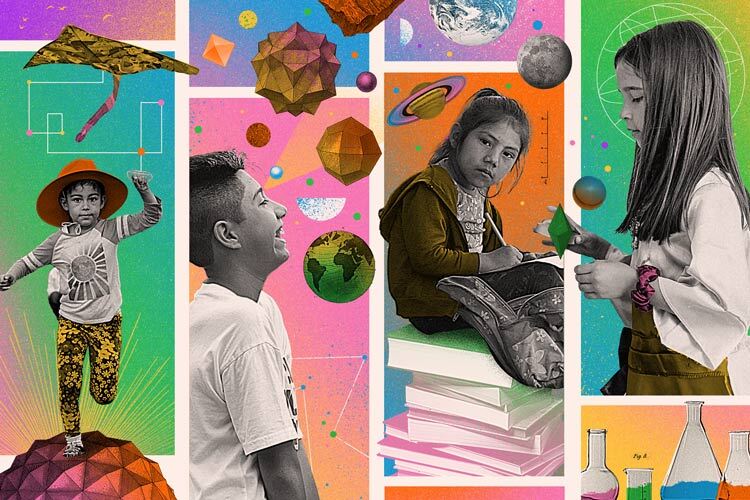


Investing in preschool education is one of the best decisions a society can make, as its benefits last a lifetime and extend beyond children to their families and society as a whole. However, for this to happen, teaching must be of high quality.
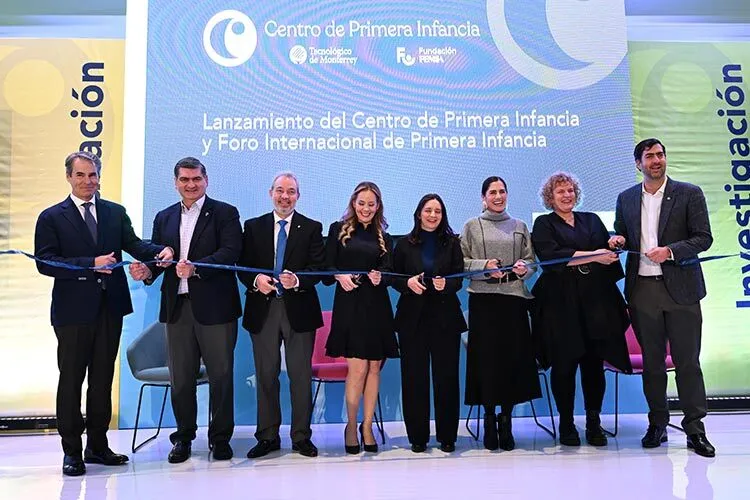
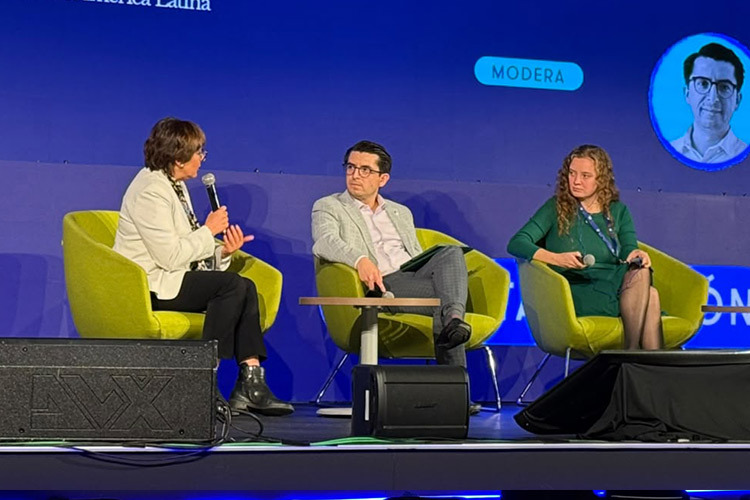
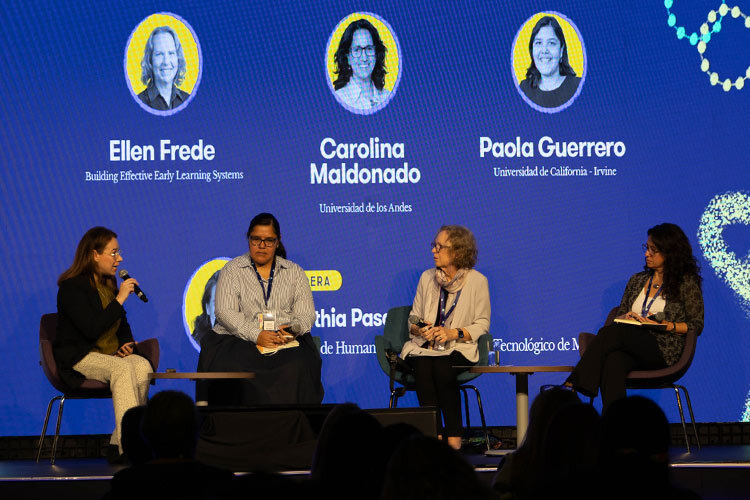
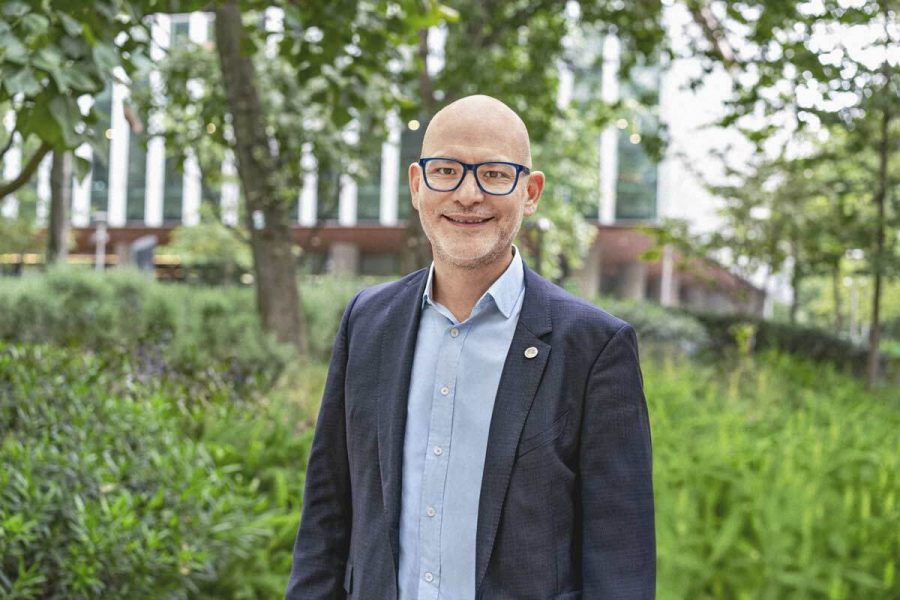
“More years [of education] starting earlier can produce stronger outcomes if you have enough quality,” said Steven Barnett, founding director of the National Institute for Early Education Research (NIEER) at Rutgers University, U.S., during the International Forum on Early Childhood, which took place for the fourth consecutive year at Tec de Monterrey, organized by the Center for Early Childhood.
During his keynote address, Early Childhood Economics, Return on Investment and Evidence of Long-Term Impact, Barnett presented longitudinal research, economic evaluations, and public policy experiences that demonstrate the benefits of allocating resources to these programs.
In Mexico, preschool is mandatory, and since 2019, early childhood education, which serves children from zero to three years old, is also mandatory; however, its implementation faces limitations.
In the 2021-2022 school year, only 4.8% of Mexican children aged zero to two years received this education, according to the National Council for the Evaluation of Social Development Policy (CONEVAL).
The economic focus of the conference did not try to reduce the importance of childhood to a matter of performance and productivity, but rather how monetary evidence can constitute an effective strategy to justify its relevance to governments.
“We have very good causal evidence that quality early childhood programs can improve longevity,” Barnett said. “In essence, it can be a matter of life or death.”
The Benefits of Investing in Early Childhood can Last a Lifetime
Research conducted over the past fifty years demonstrates that early life experiences profoundly influence a person’s cognitive, emotional, physical, and social development.
Even so, early childhood continues to receive insufficient public funding. And while it’s never too late to improve people’s lives, correcting problems costs more than preventing them: there is evidence that investing in this stage yields benefits in various areas that last for decades.
“It’s not that the window for change closes after you’re 5, but rather that it becomes progressively more expensive to fix things that went wrong,” Barnett pointed out.

Three U.S. studies focused on preschool education —the Perry Preschool Study, the Abecedarian Project, and the Chicago Child-Parent Center Study— found economic benefits that were higher than the cost of implementing them, in one case, 10 times greater.
These advantages stem from various factors, including higher job earnings, better educational paths, and less crime.
Barnett also presented studies conducted in the U.S., Japan, and Spain that found investment return rates of between 6 and 8%, comparable to those on financial investments.
New Jersey: How to Transform the Education of 50,000 Children
In New Jersey, USA, an educational reform was implemented starting in 2000 that targeted communities with high concentrations of poverty. The model incorporated:
- Two years of preschool education from the age of three.
- Groups of a maximum of 15 children, with a teacher and an assistant present in the classroom.
- Teachers with degrees and specialized training in early childhood education.
- Better salaries, training, and professional support for teachers.
- Constant evaluations of their results and the quality of education in the classrooms.
Before the reform, approximately 70% of children already attended some type of preschool program, but many received an inadequate quality education. Following the reform, the courses improved from minimal to good or excellent levels.
The results were convincing: one year of high-quality preschool education reduced the learning gap between children from low-income families and those from middle-income families.
Furthermore, those who attended had a 15 percentage point lower probability of repeating a grade. The advantages in reading, mathematics, and science were sustained throughout elementary school and into high school.
For Barnett, this demonstrates that it’s possible to apply small projects to large-scale ambitions. “This is a statewide transformation for 50,000 children; it is possible, we did it,” the expert said. “It wasn’t cheap, we had the budget.”
Children’s Needs First, Then the Budget
Doing something like this in Mexico would be complicated—considering the United States is a high-income country—but not impossible. A key aspect of achieving it is starting with planning the interventions and then allocating a budget.
In New Jersey, the first thing they did was establish the learning and child development goals, then they designed a program that would allow them to achieve them, determined what was needed and, finally, calculated its cost.
“This is exactly the opposite of what public policy almost always doeswhich is to start with the budget and then figure out what we can give kids,” Barnett reflected. “And then we’re disappointed when we don’t achieve our goals.”
Furthermore, state involvement is essential, as high-quality preschool education is generally prohibitively expensive. Achieving it must be a process that is constantly built and improved through resources, evaluations, and sustained support.
“High-quality education costs more than many parents can afford,” Barnett said. “If there’s no public investment, we are not going to have it.”
Thus, societies will have to decide between continuing with educational systems that reproduce poverty and inequality or investing in programs capable of transforming people’s life trajectories starting with their childhood.
Did you find this story interesting? Would you like to publish it? Contact our content editor for more information: marianaleonm@tec.mx