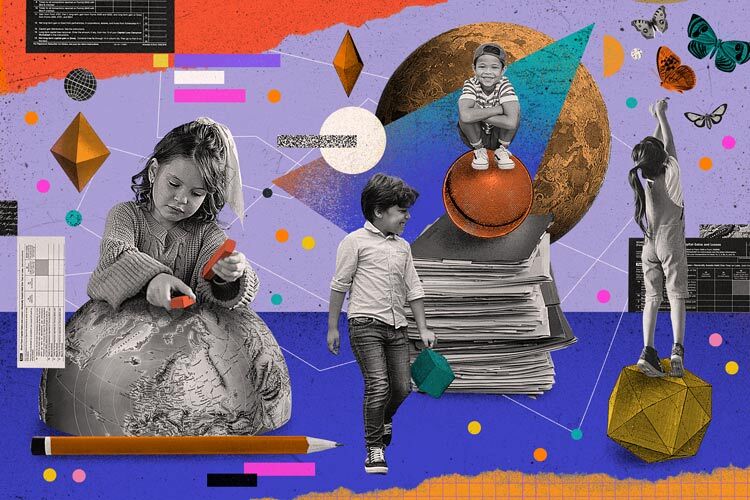


Early childhood is probably the most important stage of human development, and there is increasing evidence that ensuring that it is lived in a healthy and fulfilling way depends not only on factors such as good nutrition, but also on developmental environments.
“What surrounds us literally shapes us, not just in the relationships, but in the built and natural environment and broader systemic forces,” said James Cairns of Center on the Developing Child.
In his keynote talk, What Surrounds Us Shapes Us: How Creating Supportive Developmental Environments Promotes Child Health and Development, which took place during the third edition of the International Forum on Early Childhood, Cairns explained that, although we haven’t paid much attention to them, structural inequalities and climate change affect—directly and indirectly—the way children develop across the globe.
Until now, many of the public policies that seek to protect this stage focuses on evidence about the biology of children, their neurological development, their interaction with their primary caregivers, and the toxic stress to which they may be exposed.
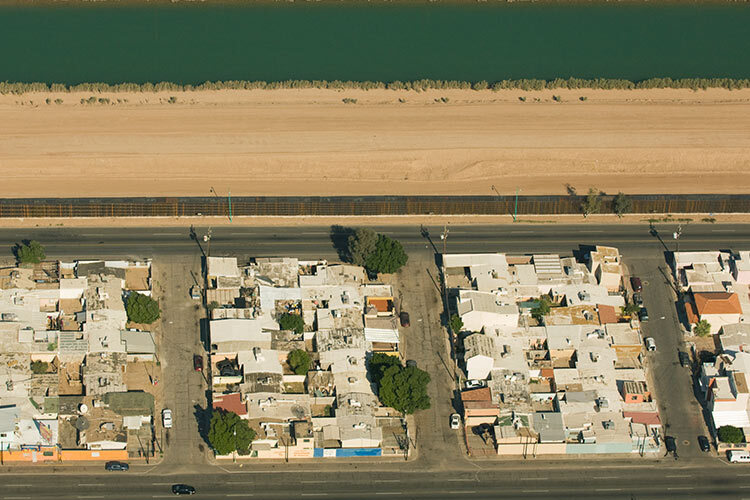
Although these factors are crucial, we know little about the importance of the neighborhood, community, or city where we grow up and how that determines who we will become.
“There are ever growing body of research knowledge in many of these areas that we haven’t fully drawn into how we think and talk about what’s influencing child development,” Cairns emphasized.
The Three Circles of a Developmental Environment
A developmental environment refers to the spaces, experiences, events, and influences that surround a child as they grow up.
These environments are determined by three major factors or layers, according to Cairns. The first is the social circle, which involves things like their biology, nutrition, education, and a child’s relationship with their primary caregivers.
The second is the built and natural environment, which has to do with what is happening in your community, such as air quality, infrastructure, access to transportation and green spaces.
The last is systemic influences, with aspects such as policies, laws and historical and structural inequalities that have developed in cities over time.
“Every developmental environment is a combination of positive and negative influences,” Cairns noted. “There’s no such thing as a perfect, ideal environment; there are always challenges and threats.”
Even so, the levels of exposure to hazard or access to opportunity are often not randomly or equally distributed, but are conditioned by social systems, which has led to great inequalities.
The Child Opportunity Index
At the Institute for Child, Youth and Family Policy at Brandeis University, there is a research project that examines whether children have what they need to grow up healthy and reach their full potential in the neighborhood where they live.
As part of the project, they have developed the Child Opportunity Index (COI), which contains data from neighborhoods in the United States from 2012 to 2023.
The COI is composed of 44 indicators across three main domains: education, health and environment, and social and economic. The index ranges from 0 to 100, and the higher the score, the greater the development opportunities for children.
“For example, a neighborhood with a opportunity score of 6 is a predominantly Black African American neighborhood, while the one with an opportunity score of 85 is a predominantly white one,” Cairns emphasized.
Therefore, it is essential to pursue equity at all levels.
The Impact of Climate Change on Childhood
The social, natural, and built environment are all affected by climate change, which in turn affects children and their caregivers.
“Instead of five extreme heat days in your town, now you have twelve,” Cairns recalled.
This climate phenomenon affects mainly three areas: water, air, and temperature, which in turn impact childhood in specific ways.
Contaminated water, for example, affects gene expression during gestation and the first years of life, nutrition and growth, as well as the immune system and their susceptibility to infections.
Extreme heat affects fetal development, learning, sleep, mental health, and behavior in young children.
“If you reduce the temperature in classrooms, kids test scores go up,” Cairns said.
Regarding air quality, recent research has focused on studying it indoors, as it has been found that children and their caregivers spend 90% of their time inside.
Thus, due to a lack of ventilation and the release of toxins and harmful substances from cleaning products, furniture, and stoves, pollutant levels can be two to five times higher than outdoors.
This can result in impairments of the immune system, gene expression, brain development, and endocrine disruptions in childhood.
“[Climate change] is affecting caregivers, parents, teachers and others, which limits their ability to provide that supportive, caring environment,” Cairns emphasized.
How to Create Positive Developmental Environments
During his lecture, Cairns acknowledged that this information can be overwhelming for those who work in early childhood.
However, understanding how much the environment impacts childhood development can drive innovative and collaborative ways to create positive neighborhoods in the future.
“If we’re trying to work towards better outcomes, more sustainable societies, we have to understand that all of these things are also directly affecting children’s development, wether we like it or not, and can handle it or not,” Cairns said.
Fortunately, there are many solutions to these problems if a local approach is taken, such as increasing green areas and the resilience of urban spaces.
“The secret here is when you do that for kids, it’s also really good for adults,” he concluded.
Did you find this story interesting? Would you like to publish it? Contact our content editor to learn more: marianaleonm@tec.mx