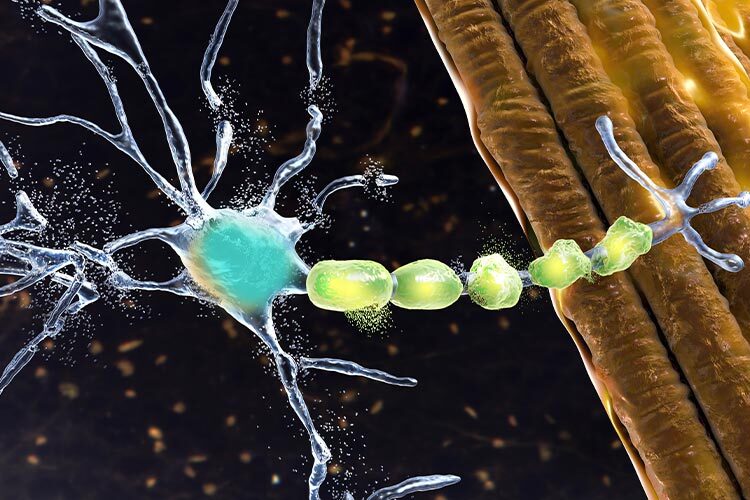


Amyotrophic lateral sclerosis (ALS) is one of the most devastating neurodegenerative diseases, with a life expectancy of two to five years after the onset of the first symptoms. In Mexico, a group of researchers has shown that an autologous stem cell transplantation can increase both the lifespan and quality of life of those living with ALS.
ALS is the illness that physicist Stephen Hawking lived with; it affects the motor neurons that control movement, leaving patients unable to speak, walk, eat or breathe on their own.
Globally, it is estimated that around 350,000 people have ALS, and to date, there is no cure. Treatments generally include oral medications, such as riluzole, which can slow its progression, control symptoms, and improve quality of life.
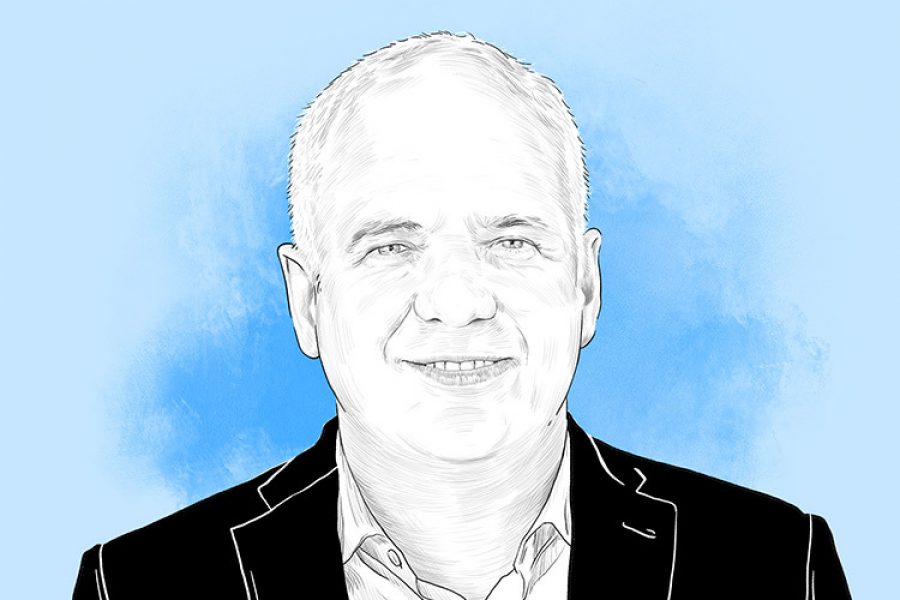
But according to Héctor Ramón Martínez, director of the Institute at Neurology and Neurosurgery at TecSalud, the available medications are very expensive and their results modest. “That’s why I’ve always been focused on finding alternatives,” says the expert.
In 2005, he and a multidisciplinary group of doctors and researchers proposed using the patient’s own stem cells —hence the term autologous— and transplanting them directly into their brain to regenerate damaged neurons.
To this day, the group has treated 62 patients who have showed a marked improvement in their symptoms and a longer-than-expected survival rate.
An New Treatment for Amyotrophic Lateral Sclerosis
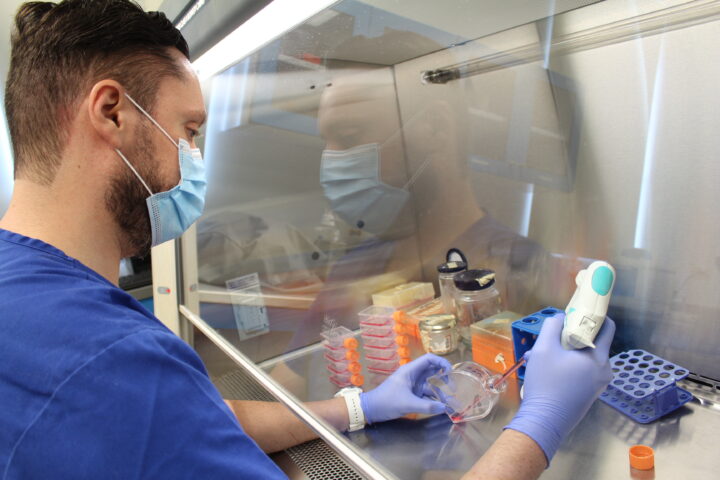
The team, led by Martínez, designed a protocol in which stem cells are extracted from the patient’s own blood through a peripheral vein, after stimulating the bone marrow with the drug filgrastim to produce them in excess.
Next, they are grown in the laboratory and an antibody with magnetic particles is added, which allows them to be separated from the rest of the blood contents using a magnet.
Once separated, the cerebrospinal fluid is extracted from the patient and the stem cells are placed in it.
“Since it comes from the patients, we don’t need to use any immune response modulating medication, we eliminate the risk of rejection,” says Martínez.
Finally, the stem cells are implanted directly into the motor cortex of the brain through two small holes, called trephines.
Of the first 10 patients treated, none required a tracheostomy or a gastrostomy to breathe or eat, unlike several in the control group who did.
“Of the 10 patients in the control group, five had died within a year of follow-up, and of the experimental group, only two; the survival rate was higher,” says Martínez.
At the time, the results were so promising that an international consortium, called NEALS, focused on ALS research and treatment, requested an audit of their protocol.
“They spent five days reviewing each file,” Martínez recalls. After various evaluations and tests, they approved it and included Tecnológico de Monterrey in the consortium, which includes institutions such as the Massachusetts General Hospital and Duke University.
The surgery is performed under local anesthesia, so patients can be discharged the next day. Furthermore, no cerebral hemorrhages, infections, or epileptic seizures caused by the procedure have been reported.
Possible Mechanisms Behind the Improvement in Symptoms
In the treated patients, in addition to the observed improvements in their symptoms and greater survival rate, magnetic resonance imaging showed that the corticospinal tract —the area of the brain that transmits nerve impulses from the brain to the spinal cord to control voluntary movements— was thicker.
“When the patients arrived, this area was very thin; after six months of treatment, it was twice the size, with many fibers,” says Martínez.
The researcher believes that the stem cells transplanted into the area promote the recovery of damaged motor neurons, and that this could be one of the physical explanations behind the improvements observed after the procedure.
Although the mechanisms are not entirely clear, stem cells do not generate new motor neurons as such, but rather stimulate the survival and function of those that remain and reduce inflammatory processes associated with degeneration.
The Future of Regenerative Therapies for Treating Rare Diseases
Over the years, Martínez remembers patients who have made an impact on him and motivated him to continue, such as a woman who came in almost unable to move and who, a few months after treatment, was already standing and bathing herself.
“Another one arrived in a wheelchair the first time, and the second time, he came in walking,” he says.
Over time, their experimental protocol has evolved into a regenerative therapy platform for treating ALS.
Recently, the team moved to the Zambrano Hellion Hospital where a highly specialized laboratory was developed that will be used for advanced therapies.
“We are going to use it to perform stem cell transplants not only in ALS, but also in cardiology, hematology and oncology,” says Martínez.
In addition, they have other projects, such as working on the early diagnosis of ALS and other rare diseases.
They also plan to continue with the necessary steps so that autologous stem cell transplantation can become a widely used treatment for this disease.
The experience behind the project was presented in December 2025 at the 18th International Congress of the Cell Transplantation and Regenerative Medicine Society in Japan, where it sparked the interest of international groups.
And although the therapy is still in the research phase, and is not a cure, it represents an important effort in Latin America and the world to treat this disease with regenerative medicine.
“When a patient is told ‘there is nothing that can be done’, that is where our responsibility as doctors begins: to find something that can be done,” Martínez says.
Did you find this story interesting? Would you like to publish it? Contact our content editor for more information: marianaleonm@tec.mx