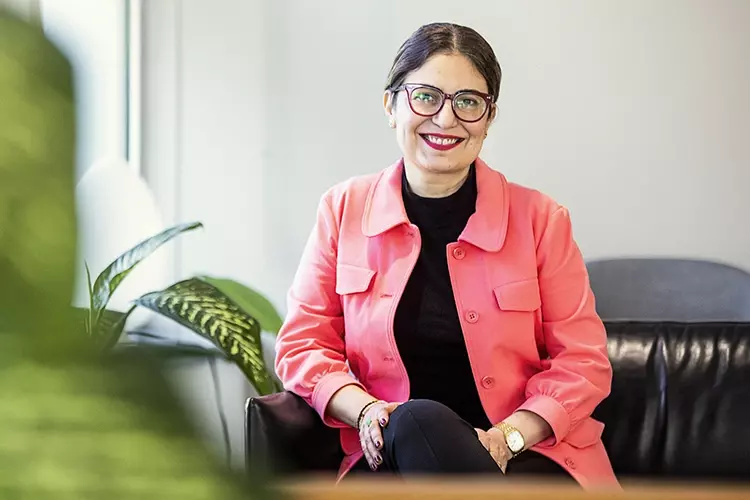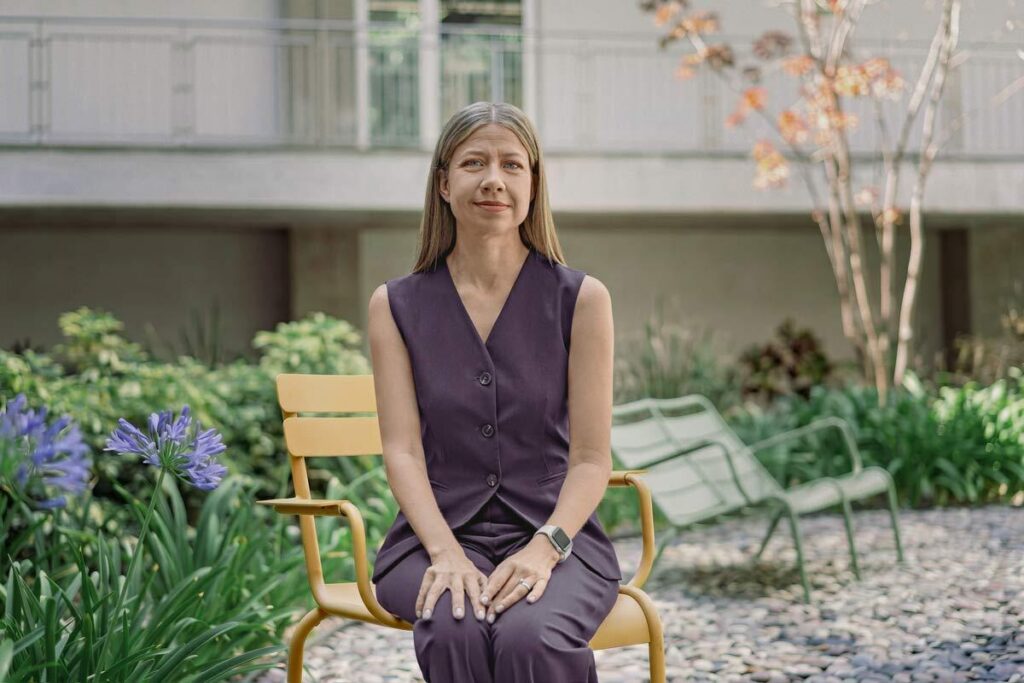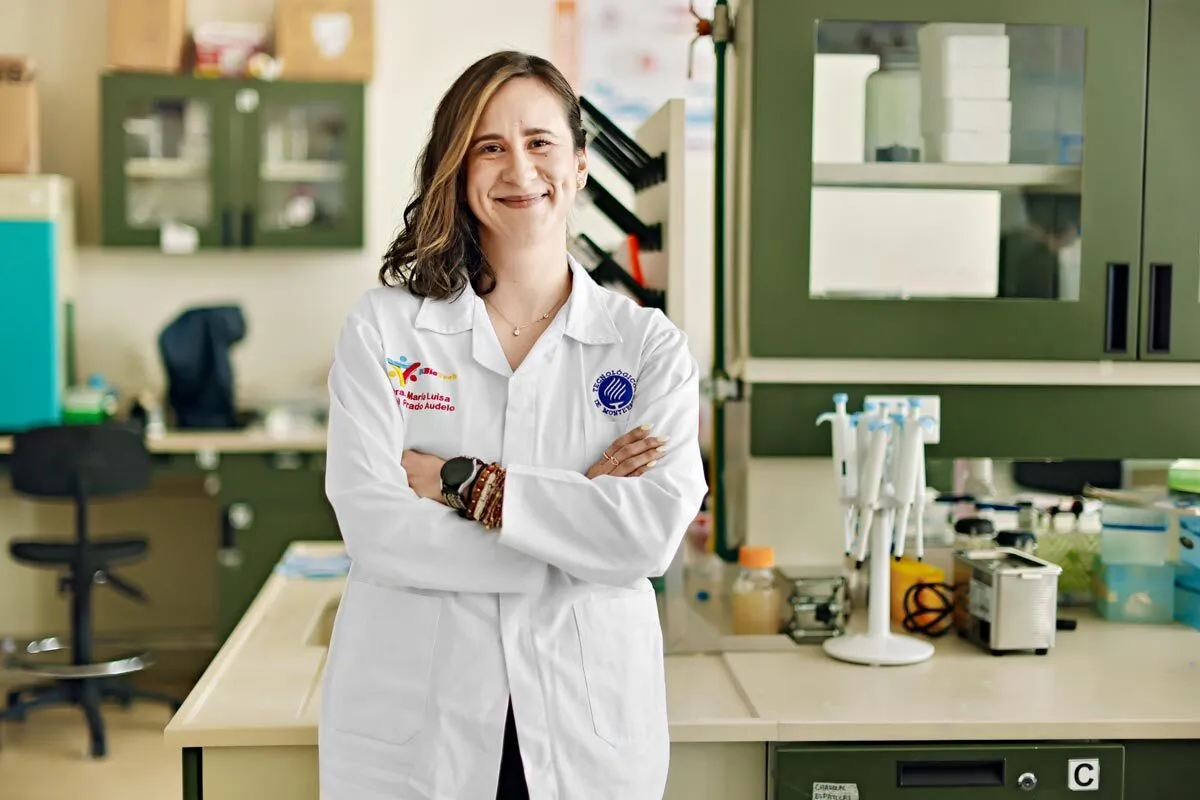


With a big smile and wrapped up in a white lab coat, María Luisa del Prado welcomes us into her workspace —Lab 207— on the second floor of the Health Sciences Technology Park at Tecnologico de Monterrey’s Mexico City campus.
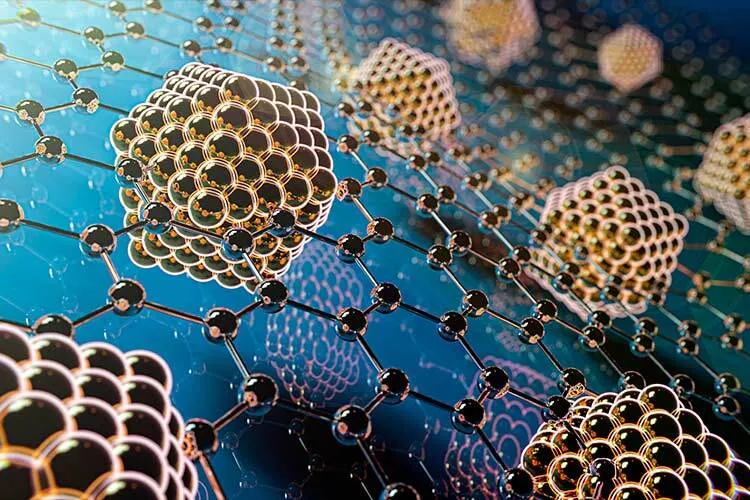
It’s 10 a.m., and warm light pours in through the large windows, lighting up a space filled with test tubes, flasks, pipettes, and a huge whiteboard. Here, she and her INBioTech team are working to figure out solutions to major health challenges from the smallest scale—things so tiny they’re invisible even under an optical microscope, like atoms and nanoparticles.
She holds a degree in Chemical Engineering and a PhD in Materials Science, and her work focuses on developing polymers with clinical applications: tackling antimicrobial resistance and helping chronic wounds heal. She ended up in this line of research —she admits as the interview kicks off— because it was the closest thing to what she originally wanted to study: cosmetology.
Her career has earned her awards such as the 2025 Bionano Innovation Award in Science and Technology and the 2025 CANIFARMA Award, both granted by Mexico’s National Chamber of the Pharmaceutical Industry.
Among many other achievements, María Luisa del Prado stands out as the only Mexican woman on the scientific editorial team for Elsevier’s Next journals, iIn addition to being included in the Stanford–Elsevier ranking, which lists the top 2% of the most highly cited scientists worldwide.
Why did you want to study cosmetology?
I wanted to learn how to come up with things like creams or shampoos, but from a scientific angle, actually testing whether you can reduce wrinkles or make hair shinier. In chemical engineering, there wasn’t really anything about cosmetics until I took a biomaterials class and then I realized, “This is totally my thing.”
During my master’s, my advisor worked with collagen, a structural protein that acts like glue between tissues. Then, during my PhD, I started to focus on burn treatments and tissue regeneration, especially skin. Before I knew it, I was fully pulled into the clinical world.
So how did you end up doing what you do now in your lab?
During my postdoc, I really got into nanotechnology. It was a pretty winding road, but also incredibly rewarding. I started linking what we knew about wound healing with nanotech to develop hydrogels and patches. It was a beautiful project, and it also brought us a lot of recognition.
Three years ago, I joined Tec, and we set up the lab around that idea: bringing together nanotechnology and materials science to develop more effective tools that help people heal better.
One of your research lines has to do with essential oils…
There’s something we all kind of get instinctively: certain natural molecules actually work. Why do you drink chamomile tea when your stomach hurts? Because it’s anti-inflammatory. Why put almond oil on your skin? Because it moisturizes.
We started working with oregano oil and saw its potential. So we took it a step further by using nanoparticles to enhance its properties
What kind of applications do essential oils have?
Their bioactive compounds help on several fronts. For one, they support wound healing because they’re anti-inflammatory—chronic wounds often have uncontrolled inflammation and high oxidative stress, so these compounds act as antioxidants.
On the other hand, wounds that don’t heal tend to get infected—and many of those infections are now antibiotic-resistant. What’s interesting is that these molecules also have antimicrobial properties, so we’re trying to tackle both issues at once.
A more romantic way to look at this research is going back to the roots of ancestral medicine, but through the lens of materials science, using oils like curcumin, which I absolutely love.
Why do you say curcumin is your great love?
It was the first molecule I worked with during my postdoc. I was designing nanoparticles to encapsulate it and deliver it to the brain for neurodegenerative diseases, with the goal of crossing the blood-brain barrier.
Then I thought, “Why not use it on skin too?” That’s where everything took off. Curcumin opened the door for me into this whole world of natural molecules—understanding their structures, their potential…
It has anti-inflammatory and analgesic properties, as well as potential anticancer effects. We’ve published a ton of work thanks to it. That said, it’s a tricky love—it stains everything yellow. It’s been a love-hate relationship for years.
Did you always want to do this?
Not at all. As a kid, I was really into astronomy. I was obsessed with the universe, and I still am. I never thought about medicine or even chemistry. I hate blood, I didn’t want to work with rats or bacteria… and now I work with both.
But chemistry was always there. My mom was a chemist, so I grew up around books and experiments. I loved Beakman—that scientist who made everything fun—and I had an amazing teacher in middle school. Even if I didn’t want to admit it, it was already part of me.
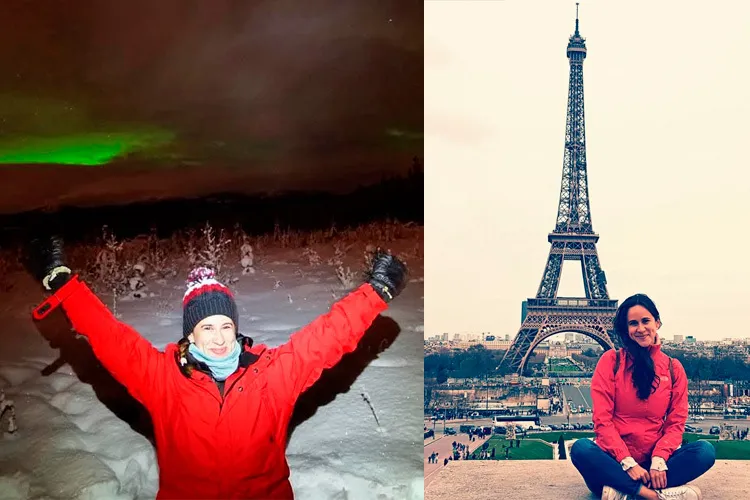
Before the interview, in an email exchange, when we asked for personal photos to accompany this piece, you mentioned that one of the things you love most in life was being your mom’s daughter…
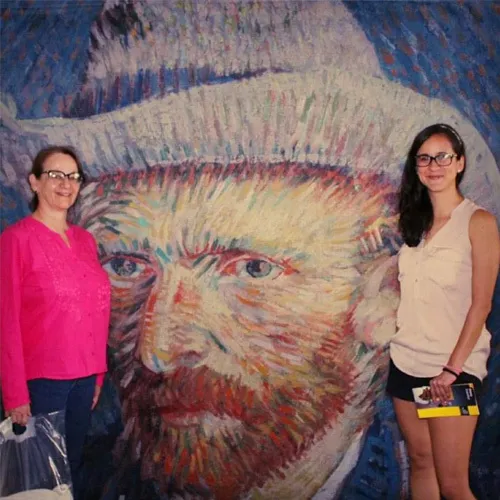
My mom passed away a year and a half ago, but being her daughter has always been something I’m proud of. She was an independent woman, and since I’m an only child, we were very close. I’m 100% sure that if I am who I am today, it’s because of her.
You’ve mentioned several key women in your journey. Has that led you to advocate for women in science?
In my lab, I have three PhD students and supervise nine undergraduate theses—all of them led by women.
The problem is not that there aren’t women in science—it’s that there aren’t enough at the top levels. That’s why I get involved in programs like SOI-STEM at Tec, because we need to make role models visible. A young girl should be able to see another woman doing science and think, “I can do that too.”
We’ve made progress, yes—but there are still strong biases. And from a position like mine—not one of power, but definitely of privilege—you can help push that change forward.
What are you like outside the lab?
In the little free time I have, I really enjoy traveling. Over the past few years, I’ve gotten pretty hooked on working out—it’s the only time I’m not thinking about the lab.
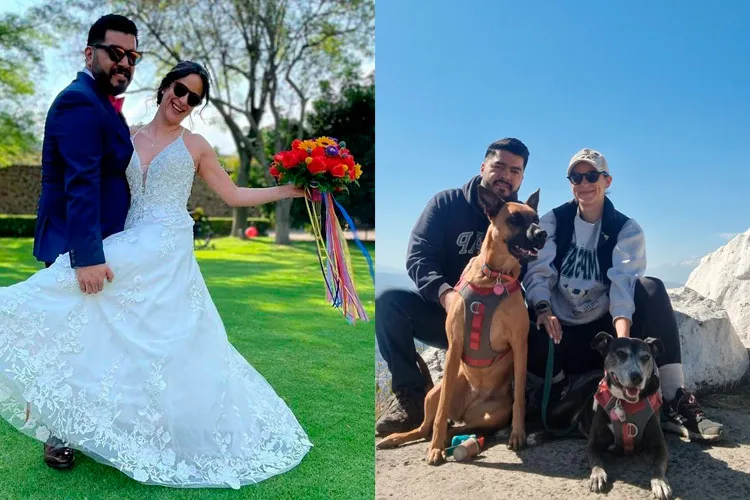
But when it comes to hobbies—real hobbies—when I actually have time, I love getting away with my husband and our two dogs to explore. They’re my babies. We love going out and discovering new places.
What keeps you going in your research?
I love learning, something that almost feels like it’s supposed to stop after your postdoc, but it doesn’t.
What keeps me going is keep learning. Hopefully, one day, we can come up with a real solution that addresses one of the main issues we study in the lab: antibacterial resistance.
Did you find this story interesting? Would you like to publish it? Contact our content editor to learn more at marianaleonm@tec.mx