

Success is a loaded word in the startup world. Technology-based entrepreneurship demands scientific expertise, prototype development, financing, legal know-how for patents, and real connections to the market. Bringing all these elements together doesn’t happen overnight.
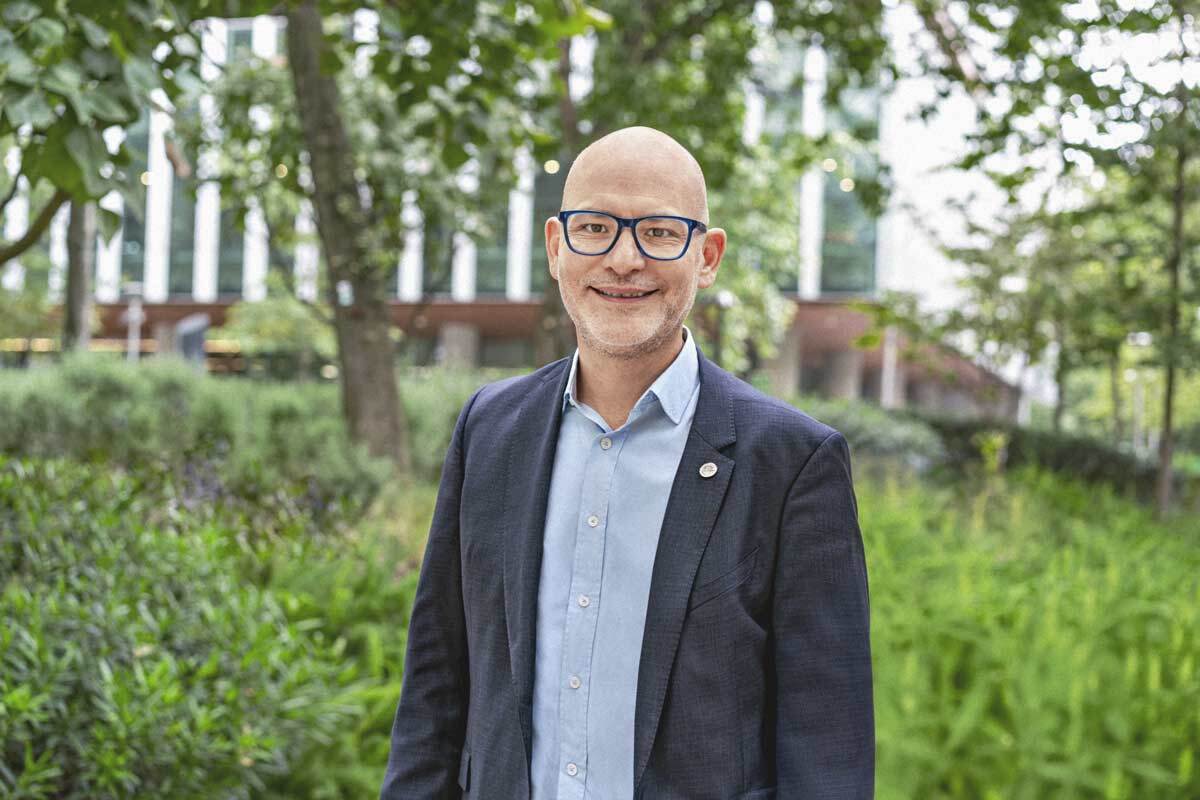
It’s a process that unfolds in stages, each with its own definition of success—at least according to Odille Sánchez Rodríguez, who leads the Center of Excellence in Technology-Based Entrepreneurship at Tecnologico de Monterrey.
Through her work at the Eugenio Garza Lagüera Institute for Entrepreneurship, Sánchez supports tech and science-based startups at every stage, from developing early ideas to breaking into international markets.
In 2025, the center worked with more than 2,000 founders across nearly 600 projects, startups, and companies. “It’s a system of generation, maturation, and strengthening startups,” she said. The key word—and what makes the center distinctive—is “system.”
Even so, the real challenge, she explains, is building an ecosystem where universities, companies, governments, and investors can work together to support entrepreneurs.
A Data-Driven Methodology to Support Tech Startups
For her doctoral thesis at EGADE Business School, Sánchez developed a methodology that helps startups track key milestones throughout their lifecycle and connect them with the right support at the right time.
A tech startup typically needs resources that universities, investors, governments, and corporations can provide—but in many cases, those players aren’t coordinated enough to step in when it matters most. The result is that many promising ideas fail not because they lack merit, but because help arrives too late or not at all. This was the problem Sánchez set out to solve: how to organize an ecosystem around the actual needs of emerging startups.
She compares it to going to the doctor. You come in with a specific pain, the doctor runs some tests, and treatment follows from the diagnosis. At the center, that diagnosis goes beyond identifying a startup’s stage—it also considers the type of technology being developed and the industry it operates in.
For Sánchez, this personalized approach is what sets the center apart from other incubators or accelerators. Even as they offer support at different levels, their aim is to build a community among founders, startups, and the center itself. “Everything we do is based on what they need, what we can offer them, and where their pain points are,” she explains.
How to Survive the “Valley of Death”
The center’s support system is built around four pillars: pipeline creation, validation and risk reduction, growth, and expansion.
Their model also accounts for the regional realities of Mexico and Latin America, where access to capital works differently than in other markets.
A question Sánchez hears often is why there seems to be so little capital available for startups. But the problem, she says, is twofold: there aren’t enough late-stage companies capable of making certain kinds of investments, and early-stage startups, when risk is highest, struggle to attract funding at all.
This is where many tech- and science-based startups encounter the so-called “valley of death”—the gap between early validation and commercial scalability, when risk is high and private capital is still reluctant to invest. “In Latin America specifically, there’s a lot of talent, a lot of ideas, and a lot of solutions that never cross that valley simply because the capital isn’t there at that stage,” she said.
Without that injection of resources, companies can’t purchase materials, finish prototypes, or complete essential testing. “There are specific milestones that simply can’t be reached without that intervention,” she said.
The center’s work, then, isn’t just about understanding what a startup needs internally but about knowing when and how to draw on a broader ecosystem of private enterprises, communities, service providers, governments, investors, and experts.
Connecting Mexican Startups with Investors and Global Markets
Over the past year, the center connected founders to a network of 85 investment funds. Its portfolio spans startups in fintech, foodtech, and other technology sectors. Nearly half of the cases involve seed funding, and more than a quarter are Series A.
This focus has also allowed the center to develop an incubator-as-a-service model for government and corporate partners, generating annual revenue of between 10 and 11 million pesos.
They’ve collaborated with the governments of Jalisco, Guanajuato, Chihuahua, and Mexico City, as well as companies like Daikin, Heineken, the José Cuervo Foundation, and AstraZeneca.
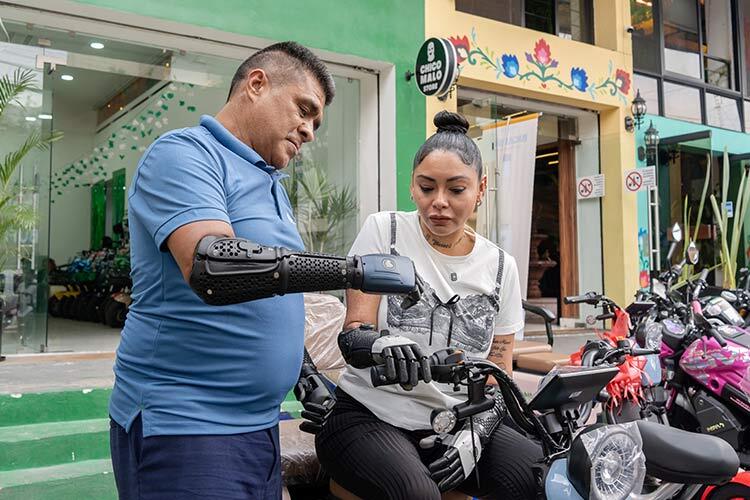
Among the startups they’ve supported is BioGrip, which developed software that allows users to control the precise movements of a prosthetic limb using brain signals. Another is BioEsol, focused on sustainable energy solutions, which closed a $15 million investment round in 2024 and reached a valuation of over $100 million.
Also worth noting is Greenfluidics, which combines biotechnology and architecture to create sustainable urban spaces. Its founders have pitched to investors in Berlin and Paris and are currently collaborating with Mexico’s Department of Energy.
Innovating from Science: Patience and Sophistication
“Developing science and technology requires a sophisticated approach,” said Sánchez, “sophisticated in every sense of the word: the resources, the methods, the models.” And the challenges shift with each stage. Early on, the obstacle might be access to laboratory infrastructure; later, it’s navigating the regulatory landscape to bring a product to market.
“If you look at it through the lens of development timelines, each stage presents a different challenge,” she said. Beyond scientific rigor, it also demands patience since technological development, by its nature, takes time.
Sánchez has seen teams underestimate this. “It’s one thing to understand it intellectually and another to live it,” she said of founders who grow discouraged by how long the process takes.
A Results-Oriented Model for Scientific Entrepreneurship
The center’s methodology identifies concrete milestones like a patent filed, a funding round closed, or a product launched, and maps out what each player in the ecosystem needs to do to reach them.
What makes it innovative is that it brings together three dimensions that are typically treated separately: the roles of key stakeholders, the activities they carry out, and the measurable outcomes they produce. “It’s an intervention oriented toward results,” said Sánchez. “What does the government need to do? What does the industry need to do to reach that goal?”
Her framework grew out of a personal conviction that science and technology are essential to solving complex problems. Even though Sánchez isn’t in the lab herself, she’s found her way of contributing: “Not with my own hands directly, but by orchestrating things that will serve more innovative entrepreneurs.”
Did you find this story interesting? Would you like to publish it? Contact our content editor for more information: marianaleonm@tec.mx