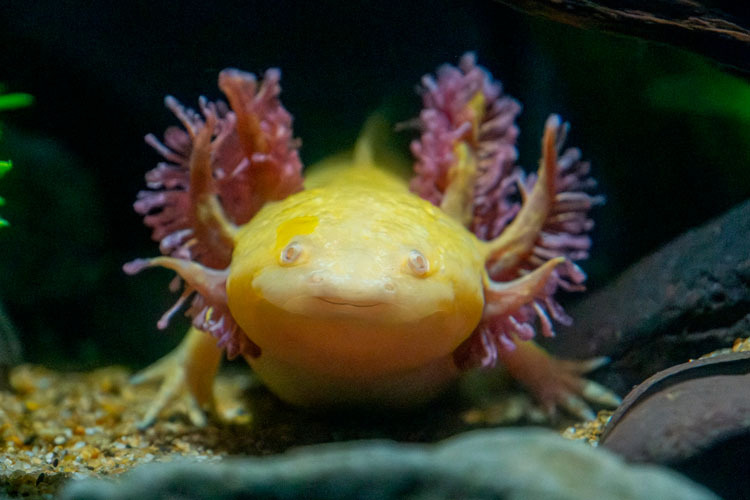


Have you ever looked at the back of a 50-peso Mexican bill? It shows Lake Xochimilco, a small axolotl, and the maize grown in its chinampas. The United Nations Educational, Scientific, and Cultural Organization (UNESCO) declared this site a World Cultural Heritage Site in 1987, thanks to its canal network, ancient agricultural tradition, and remarkable biodiversity. Yet over time, the ecosystem has suffered due to urban sprawl, climate change, and pollution.
However, today only 188 kilometers of canals remain. Urban expansion has reduced the number of chinampas and agricultural areas by 75%. Water pollution and invasive species such as carp and tilapia, which eat axolotl eggs, have placed the species (Ambystoma mexicanum) at critical risk of extinction.
The Axolotl: From Chinampas to Science
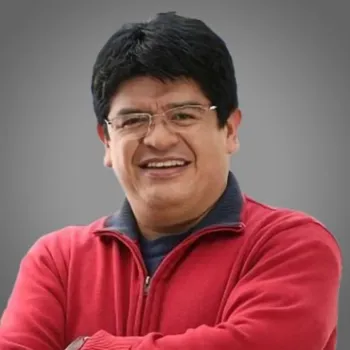
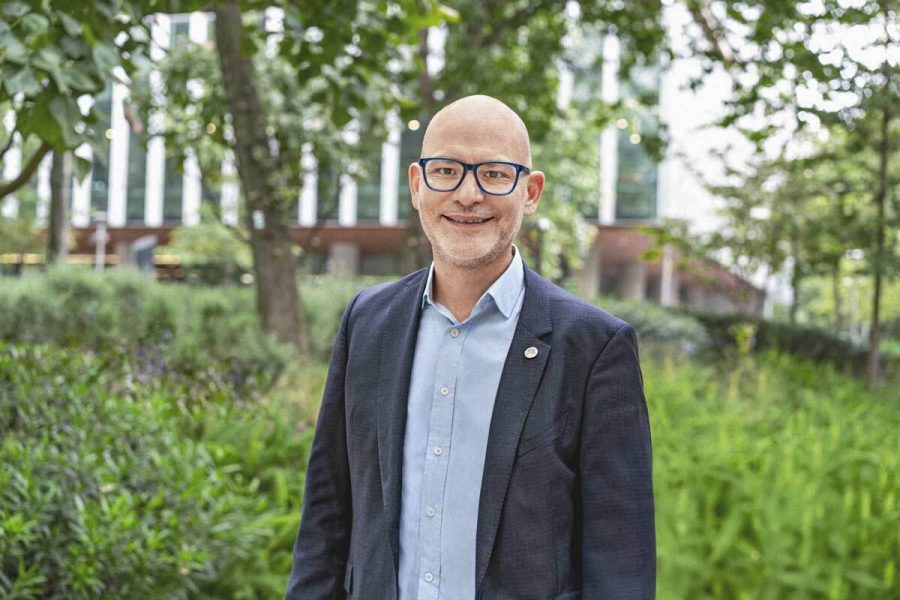
A witness to these environmental changes is Jorge Membrillo, a researcher at the Institute for the Future of Education (IFE) and a native of this area in the southern part of Mexico City. As a child, he would navigate through the chinampas with his grandmother, helping her grow all kinds of vegetables on those floating islands. Today, he’s part of a team at Tec de Monterrey that designs interdisciplinary educational experiences aimed at raising awareness about the cultural and scientific value of the axolotl.
“The real danger is not only the loss of the ecosystem but also the loss of our connection to it,” says Membrillo, who also teaches at the School of Engineering and Sciences (EIC). “The axolotl is both a cultural and scientific treasure, but many people have forgotten about it—until they see it on the 50-peso bill and start to wonder what it is.”
The Axolotl: Cultural Symbol and Scientific Treasure
This species, endemic to Xochimilco, is globally recognized as a symbol of Mexican biodiversity and ancestral culture. According to Mexica mythology, the axolotl represents the incarnation of Xólotl, the brother of Quetzalcóatl, who was condemned to live in the lake’s dark waters.
Scientists consider the axolotl a biological gem thanks to its ability to regenerate entire limbs and even parts of its brain. This is possible due to a phenomenon known as neoteny, which allows it to reach adulthood while retaining larval features.
In 2025, Nature published a study linking levels of retinoic acid and how effectively axolotl cells regenerate after an amputation.
Axolotl Challenge: “No One Protects What They Don’t Know”
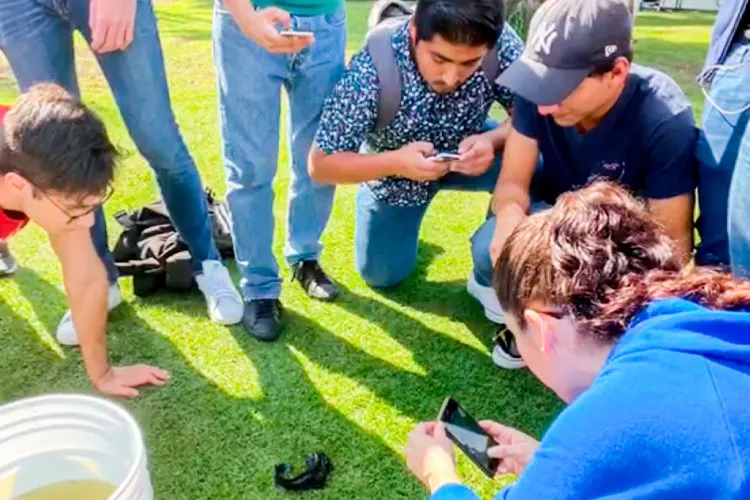
The deterioration of the lake has made wild axolotls a rarity. Today, conservation centers keep more than 90% of the surviving axolotls in captivity, making wild sightings rare. With this in mind, the IFE team launched the Axolotl Challenge, a research-driven educational project centered on one question: How can students from diverse fields contribute to the preservation of the axolotl and its ecosystem?
“The ultimate goal is preservation, and for students themselves to become spokespeople for this cause,” says Membrillo. “No one protects what they don’t know. That’s why we must start with the younger generations, teaching them about the axolotl’s scientific, cultural, and identity value.”
Students from diverse academic fields take part in the program, strengthening their skills through a challenge-based learning approach. They confront real-world environmental challenges and apply their knowledge to design innovative solutions for axolotl conservation—from improving the conditions of Lake Xochimilco and creating better habitats to developing ecological education campaigns and proposing sustainable business models.
Field Visits, Talks, and Real-World Solutions
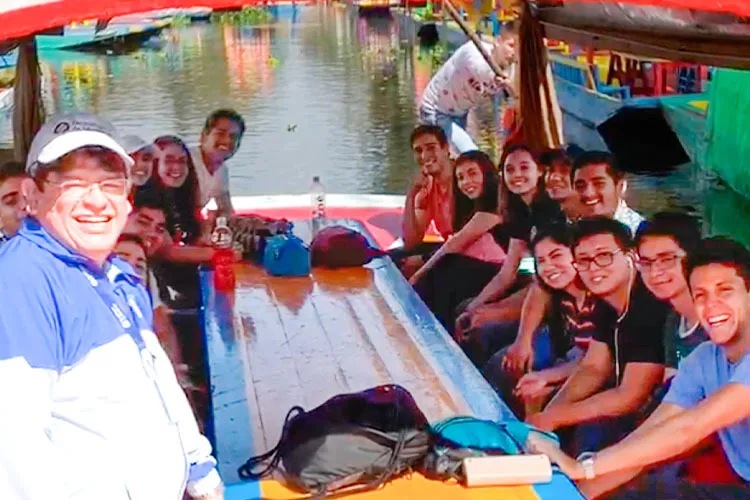
Membrillo explains that the project’s activities are designed to promote active, interdisciplinary learning through direct engagement with the environment. During field visits to Lake Xochimilco, students travel on traditional trajineras, explore the ancient chinampa farming system, and visit axolotl conservation centers such as Michmani—a key partner in the program—where they learn about the species’ developmental stages and habitat requirements.
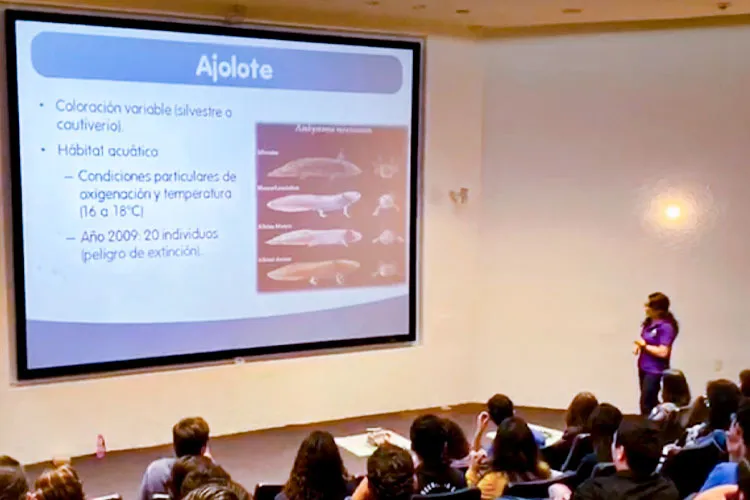
The experience is further enriched with talks by biologists, axolotl caretakers, and officials from the Ministry of the Environment. After analyzing the ecosystem’s challenges, students design practical, actionable solutions and present them to the program’s community partners. The Papalote Children’s Museum collaborated with the program on one of its most notable projects, which incorporated several student proposals into a themed exhibit on Xochimilco and the axolotl. These included projects focused on improving energy efficiency, upgrading lighting systems, and optimizing water temperature control in breeding tanks.
Skills and Environmental Awareness
Throughout the process, students develop essential skills, including teamwork, critical thinking, effective communication, environmental ethics, and sustainability. For researcher Jorge Membrillo, the most valuable outcome is the awareness created: “If just one student goes home and tells their family about the value and identity of the axolotl, that’s enough. We want our students to become advocates, to learn by doing, and to be transformed by the experience.”
Five Pillars for Axolotl and Xochimilco Conservation
According to Membrillo, the team has defined five key pillars to ensure the project achieves lasting impact and can be replicated in other contexts: heritage value, which recognizes the historical and environmental richness of ecosystems; cultural identity, which strengthens people’s connection to their roots; social justice, which involves and benefits local communities; scientific value, which drives research and knowledge creation; and entrepreneurship, which encourages sustainable solutions. “A project like this could take place in the Sonoran Desert, in Teotihuacán, or on Cerro de la Silla,” he explains. “What truly matters is grounding it in these five pillars.”
To date, the Axolotl Challenge has been held six times, with more than 300 students participating and 16 projects presented in the most recent edition during Tec Weeks, a part of the academic calendar when students engage in intensive, challenge-based learning experiences.
For Jorge Membrillo, this initiative goes beyond an educational project. It is a way to honor ancestral knowledge, protect biocultural heritage, and defend life through science. “I hope to die still having seen Lake Xochimilco,” he says, hopeful that new generations will be willing to care for what they now know, value, and feel as part of their identity.
Did you find this story interesting? Would you like to publish it? Contact our content editor to learn more at marianaleonm@tec.mx