

The first time a baby says “mom” or “dad” often becomes a cherished memory. But long before children learn to speak, they learn to listen. Caregivers usually assume that children can hear when they are spoken to, when words and sounds are introduced. But what happens when that process does not unfold as expected?
According to the World Health Organization (WHO), children with some degree of hearing loss may experience difficulties in language development, with consequences for their education and social skills. Even so, an estimated 60% of the causes of childhood hearing loss are preventable, provided they are detected and treated early.
One of the main challenges is that many low- and middle-income countries lack sufficient resources to identify hearing loss in a timely way. In response, a team of researchers at Hospital Zambrano Hellion, part of TecSalud at Tec de Monterrey, is working on the implementation of Artificial Intelligence (AI) technologies to support otolaryngologists in diagnosing hearing loss in infants and young children.
Medical AI to support auditory diagnosis
The project aims to develop a platform that allows physicians to enter patient data and receive predictions—generated by AI models—about possible diagnoses and future complications, based on knowledge previously generated by specialists.
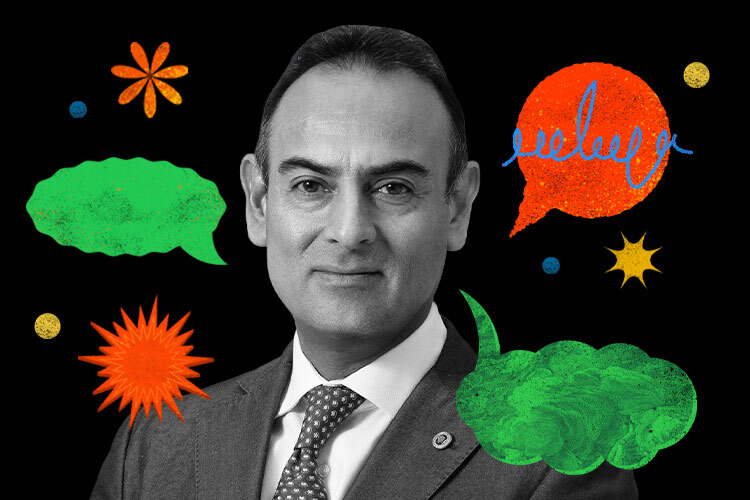
Sergio Mora, an auditory engineer and doctoral student in Auditory Neuroscience at Tec de Monterrey, explains that the goal of this technology is not to replace physicians, but to strengthen their work and support clinical decision-making.
He also emphasizes that the AI used in this project is different from general-purpose tools such as ChatGPT. Instead, the team relies on an approach known as Medical Informed Machine Learning, designed specifically for medical applications.
Unlike other machine learning models that identify patterns by analyzing massive volumes of data, this type of AI is trained using information and domain-specific knowledge from audiology. In this way, the accumulated experience of otolaryngologists and researchers serves as a guide to generate more accurate and clinically relevant predictions.
The data challenge in audiology
The performance of these models depends largely on the quality and quantity of the data used to train them. For Mora and his team, one of the main challenges is that many specialized audiology databases are not openly accessible.
In other cases, it is unclear how databases were constructed, or they present incompatibilities that prevent them from being combined to train a single model—a problem known as lack of interoperability.
Against this backdrop, the researchers called for the standardization of audiology database generation in Mexico during a presentation at the V International Conference on Auditory Pathology.
Mora notes that having high-quality national data is essential, since economic inequalities between countries mean that middle- and low-income nations tend to have less medical information about their populations.
“That limits the progress that can be made at the national level to implement these types of tools and technologies. In the end, we adopt databases from countries whose development conditions allow for much more advanced research in these areas,” he explains.
This issue is critical because the social and cultural realities of Mexico differ from those of high-income countries. “If we adopt those technologies, they are not truly representative of our conditions, our history, or our culture,” Mora concludes.
Local data for more representative AI
For this reason, researchers at Hospital Zambrano Hellion are working with a local database built from information on more than 6,000 patients treated at the hospital. These data have been used to train the AI models.
Not all available information is used for training. A portion of the data—including diagnoses previously made by physicians without AI support—is reserved to evaluate the model’s accuracy.
While one part of the database is used to improve predictive performance, the other is used to assess whether the AI can correctly anticipate diagnoses already established by the hospital’s specialists.
Although the project has not yet reached a stage where concrete accuracy figures can be reported, Mora estimates that within a couple of years the team could be closer to developing a tool ready for use in medical offices. Before that, the project will need to comply with emerging Mexican regulations governing the use of AI in medicine.
Did you find this story interesting? Would you like to publish it? Contact our content editor to learn more: marianaleonm@tec.mx