

Innovating in education is a core mission of academic institutions worldwide. To achieve this, experts agree that research must guide the process.
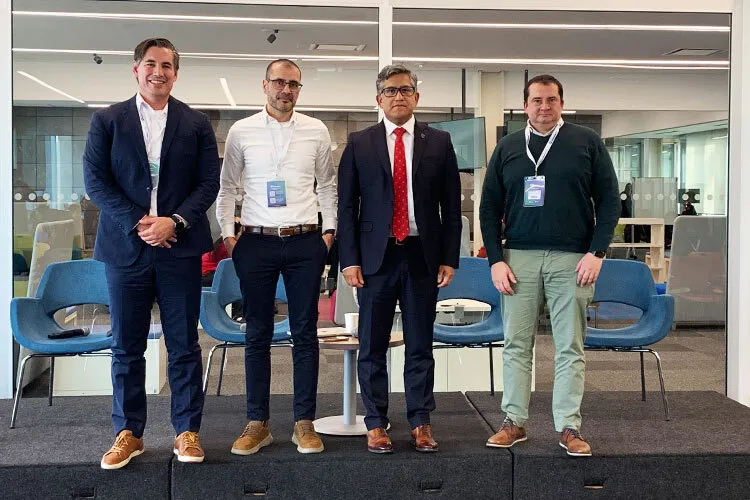
“The key is to have evidence in education and know what works and what doesn’t,” said Javier Guzmán, Vice President of Research at Tec de Monterrey, during his participation in the panel Without Evidence, There is No Innovation: The Power of Educational Research, held during the first day of the IFE Conference 2026.
The panel was moderated by Luis Portales, director of Experimentation and Impact Measurement at the Institute for the Future of Education (IFE) of Tec de Monterrey, and in it Javier Guzmán, along with Juan José “Juanjo” Mena, researcher at the University of Salamanca, and Francisco García, research professor at the same institution, analyzed why it is necessary to do research on the new technologies, tools and interventions that are used to educate.
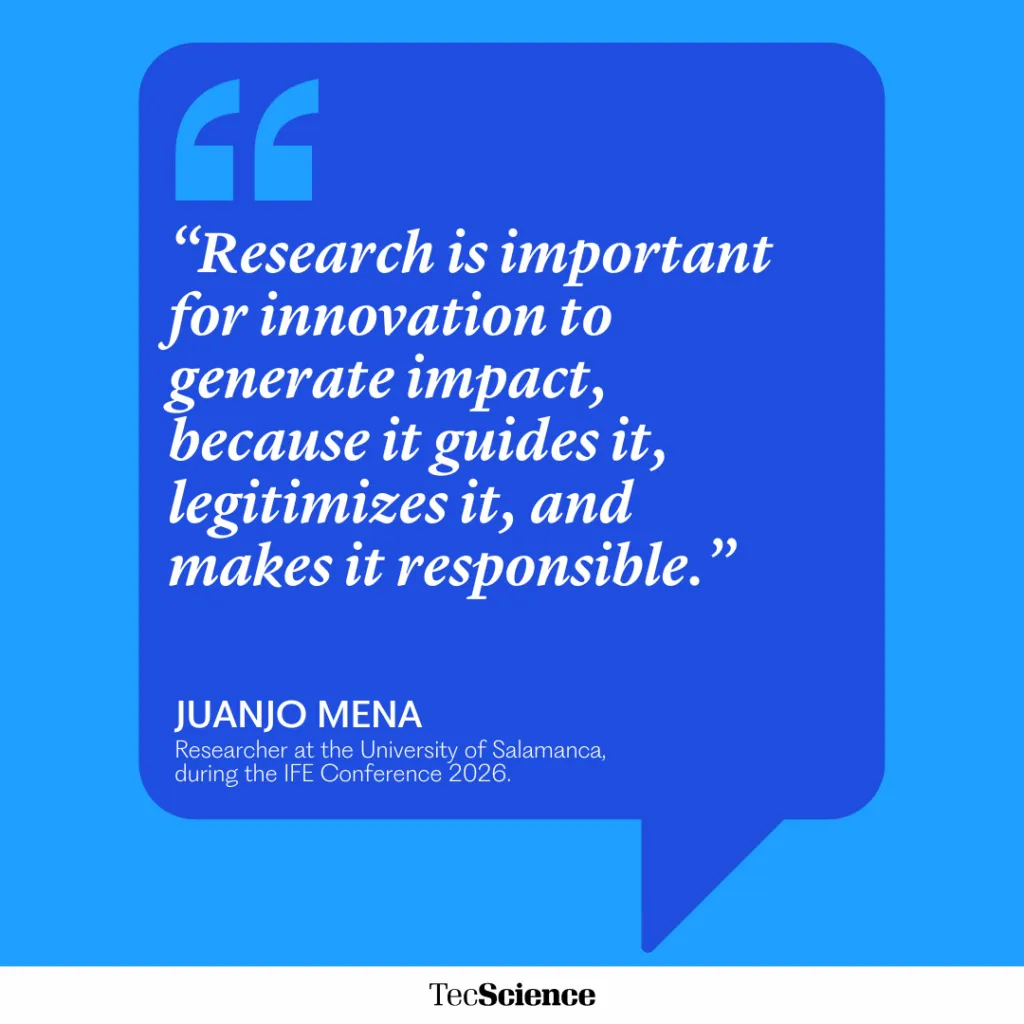
The experts agreed that education has the power to transform societies, but to know if it truly works, research is its best ally. “Research is important for innovation to have an impact,” said Mena.” “I think because it guides, legitimizes, and makes innovation responsible.”
From their perspective, when innovation is not tested, it can become a belief rather than evidence, which could prevent informed decisions from being made for the progress of education.
Educational Research and the Role of New Technologies
For the panellists, research must be the cornerstone of innovation, especially when it comes to applying new technologies to education, such as artificial intelligence (AI). “In ten years we will be talking about another technology, and we will have to incorporate it, but we must always return to the fundamental question of why we are doing this,” Guzmán emphasized.
AI and other technologies can help, but if they are not applied with an understanding of the specific context of each classroom, country, and region, the risk of biases that hinder the benefits they could bring is high.
“It’s important to go beyond mere technology; it needs to be put to use so that it really brings about that change,” García explained.
Beyond the technological situation, the speakers agreed on a central point: education needs evidence to move forward.
Although historically guided by tradition, in recent years evidence has become key to improving teaching and curriculum design.
According to experts, advancing education and evaluating whether innovations work requires research. Furthermore, this research must be longitudinal, generate open data, and be contextualized to each specific situation.
“The gap between research designs and real-life practice has always existed; it’s between theory and practice,” Mena said. “You have to adapt to the contexts, the difficulties your students face, or the dynamics of the institutions.”
Towards Evidence-Based Educational Innovation
According to Guzmán, in Mexico and Latin America, evidence has not always guided decision-making in education or other areas of development, which has hampered its transformative power. “The research we do has to be applied; we need to define what that means for education,” Guzmán said.
Looking ahead, experts agree that research should be incorporated from the very first phase of any educational innovation in order for it to truly have an impact.
Did you find this story interesting? Would you like to publish it? Contact our content editor to learn more: marianaleonm@tec.mx