

Higher education in Latin America faces major challenges. These include a widening gap between professional training and labor market needs, as well as research efforts that often fail to make a meaningful local impact.
To address these and other pressing challenges, the Institute for the Future of Education (IFE) at Tecnológico de Monterrey Educational Group has launched two Big Bold Initiatives (BBI). The goal is to transform education and workforce development across Latin America.
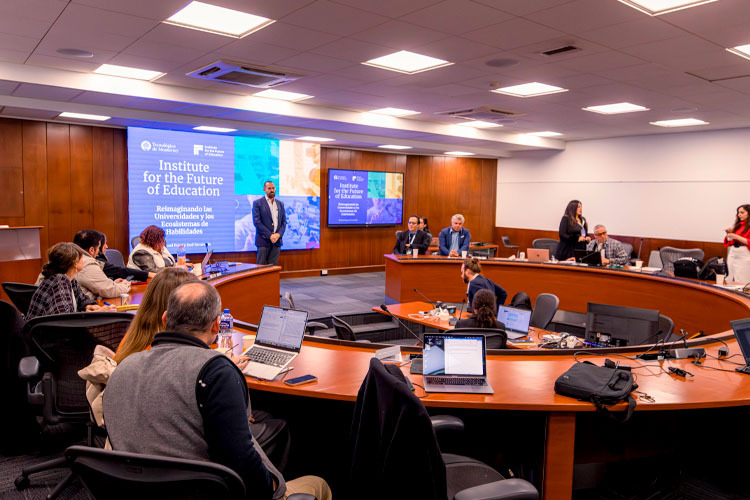
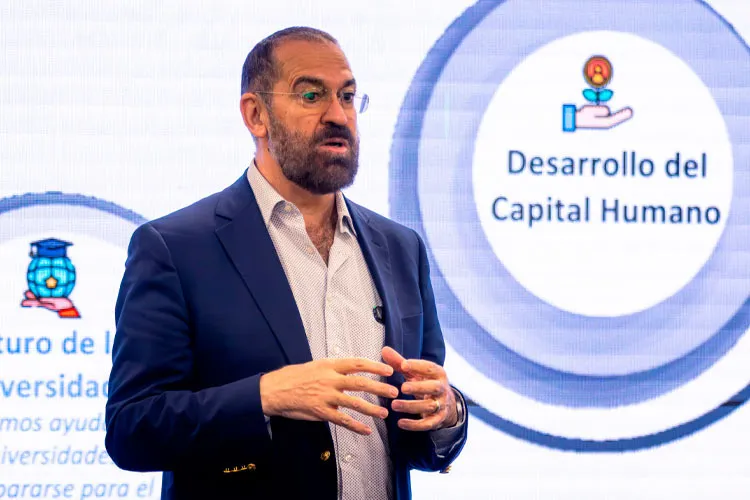
The two programs, BBI #1: The Future of Universities and BBI #2: Skills Ecosystems, were introduced during the IFE Conference 2026 by Michael Fung, IFE’s executive director, and José Escamilla, the institute’s associate director.
“These initiatives promote a shared vision of education and skills development systems that are more flexible, inclusive, and closely aligned with social and economic needs,” said Fung. He added that work is already underway through ongoing research, reports, and publications produced by the IFE.
Among the Institute’s immediate plans, the director added, are efforts to partner with university networks and identify regional skills ecosystems that can support collaboration.

Preparing Universities for the Future of Higher Education
BBI #1: The Future of Universities focuses on transforming higher education institutions to improve quality, coverage, access, and efficiency, explained Escamilla. The goal is to make universities socially relevant and capable of responding to rapid technological, economic, and demographic changes.
This initiative is built around five key components:
- A Maturity Model
This model helps assess an institution’s current state based on eight dimensions, identify gaps, and define transformation pathways. Some of these are future-oriented dimensions, such as an evidence-based educational model, community-impacting research, inclusive access, and holistic student development. Others are enabling dimensions, including institutional governance and financial sustainability, along with faculty and staff development and support.
- Four-Level Assessment
This framework categorizes institutions by maturity level to help prioritize transformation strategies. Using four maturity levels across the eight dimensions and 24 sub-dimensions, universities can anonymously benchmark their results against peer institutions.
- A Playbook
This practical guide includes case studies tied to key dimensions such as educational models, governance, and digital transformation, among others.
- Peer-to-Peer Support
This component involves a peer-learning approach that enables institutions to learn from one another’s experiences and adapt different models to their local contexts. It will be carried out through a university transformation network, allowing institutions to move forward collaboratively.
- A Roadmap
This is a step-by-step framework that guides institutions from their current state toward their envisioned future models. By defining their own path, universities can choose which dimensions to prioritize for improvement.
In this initiative, IFE acts as a strategic partner and neutral facilitator, with the goal of supporting adoption, learning, and continuous improvement among institutions and educational ecosystems. This includes bringing together various stakeholders and strategic partners, such as government agencies, university networks, and funding organizations.
“This is not about university accreditation. This is a model for us to sit down and reflect on the future of higher education,” said Escamilla. “Our goal for 2035 is to have 1,000 universities using it as a strategic reference.”
Building Skills Ecosystems to Close Industry Talent Gaps
BBI #2: Skills Ecosystems focuses on closing the gap between industry needs and the skills taught by educational systems in Latin America. Through this initiative, IFE seeks to strengthen the lifelong learning ecosystem and boost employability by fostering collaboration with key players such as government agencies and industrial clusters.
This initiative is structured around four main pillars:
- Ecosystem Capability Model
This model is based on eight dimensions, including developing the supply of skills, designing flexible and personalized learning pathways, setting economic development priorities, and improving the connection between talent and job opportunities. It also involves designing interventions for inclusion and implementing a skills credentialing system, among others.
- Capability Level Assessment
This assessment aims to gauge how well-developed an ecosystem’s capabilities are in order to guide strategies for systemic improvement. The evaluation spans eight dimensions and is structured across four levels, using rubrics and sub-dimensions to assess maturity.
- Support Resources
These include practical tools, case studies, and peer-learning mechanisms involving industrial clusters and other ecosystem stakeholders.
- Roadmap
This flexible, adaptable guide can be applied across diverse contexts. “It also allows us to sit down together for a joint assessment and, from there, define where we are. Based on our intentions and available resources, we can determine where we want to go and how we aim to build these capabilities,” said Escamilla.
Expected Impact and Next Steps
Fung noted that the skills demanded by today’s labor market are shifting rapidly due to advances in technology, artificial intelligence (AI), and the transformation of industries and supply chains.
To address this, the initiative includes the creation of sector-specific skills taxonomies. For example, in Mexico, one has already been developed for the automotive sector. By analyzing job postings and conducting interviews with companies, the initiative identified existing job roles, the skills they require, and how those requirements may change in the future, ultimately aiming to promote the acquisition of new competencies.
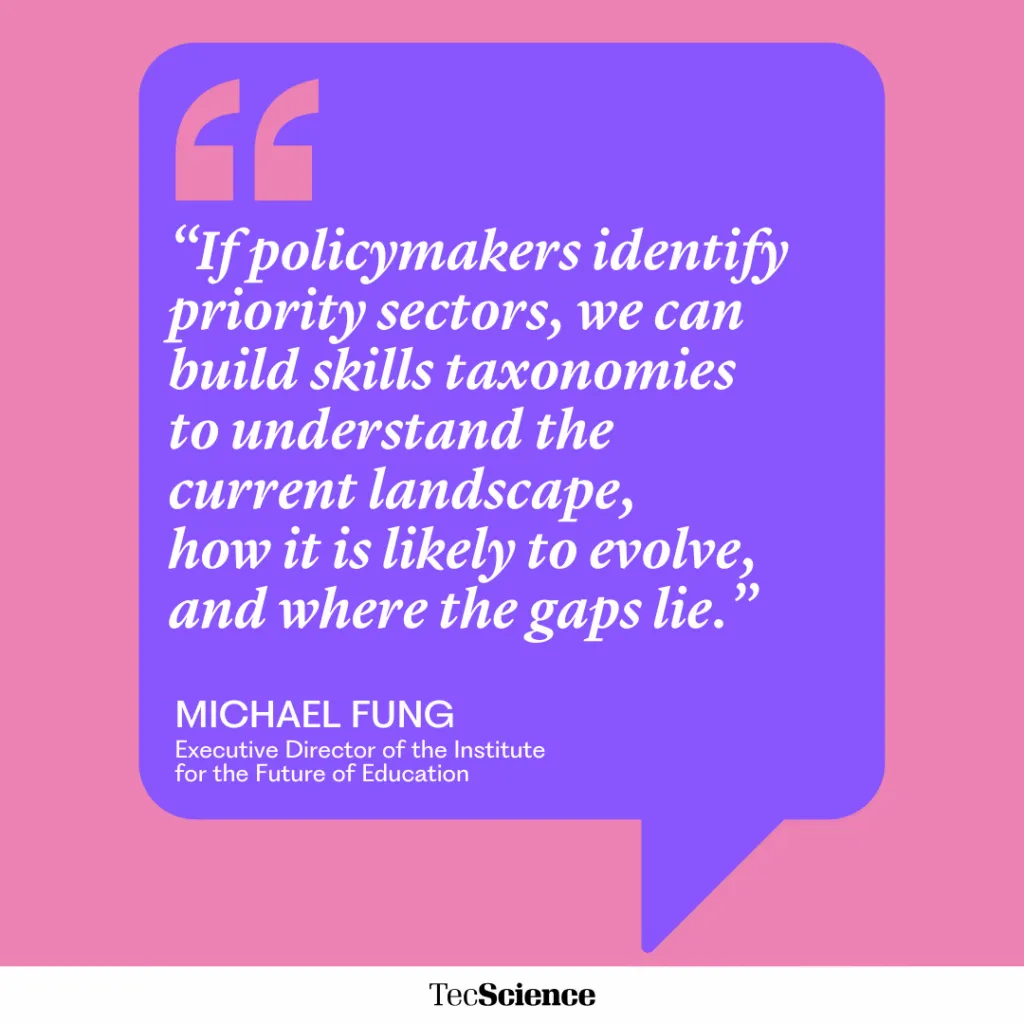
“If policymakers can clearly identify which sectors are strategic priorities, we can then build the skills taxonomy to understand the current landscape, how it’s likely to evolve, and where the gaps lie,” Fung added.
The initiative’s goal for the next decade is to reach 10 million workers and learners and to see 500,000 employers adopt skills-based practices.
Both initiatives have already made progress in developing their models, according to IFE’s executive director. This work is backed by research, reports, and publications produced by the Institute.
“Our immediate plans for the coming year are to fully develop these tools and begin working with university networks, as well as to identify a few skills ecosystems in the region where we can start engaging,” said Fung. “The early stages will be the most challenging. But once we’ve established a working model, we hope to scale it much more quickly across a broader range of institutions and regions.”
Did you find this story interesting? Would you like to publish it? Contact our content editor to learn more: marianaleonm@tec.mx