
In a world accustomed to thinking of epidemics as phenomena of the recent past, the multinational hantavirus outbreak detected on an expedition cruise in the South Atlantic serves as an uncomfortable reminder: emerging zoonotic diseases continue to find new pathways for expansion on a hyperconnected planet.
As of May 8, 2026, the World Health Organization (WHO) and the Centers for Disease Control and Prevention (CDC) confirmed the monitoring of an international cluster of cases associated with a maritime voyage that traveled through Ushuaia, Antarctica, South Georgia, Tristan da Cunha, Saint Helena, and Ascension Island. On board were 147 people from 23 countries. The preliminary toll is concerning: eight identified cases (six confirmed and two suspected) and three deaths.
The agent involved is the Andes virus, a particularly significant variant within the hantavirus family because, unlike most hantaviruses, it has documented capacity for person-to-person transmission.
Hantavirus: A Known but Still Underestimated Threat
Hantaviruses are a group of viruses transmitted mainly by rodents. In the Americas, they can cause Hantavirus Pulmonary Syndrome (HPS), a potentially lethal disease that begins with nonspecific symptoms — fever, fatigue, muscle pain, headache, or gastrointestinal discomfort — and can rapidly progress to acute respiratory failure.
Traditional transmission occurs through inhalation of particles contaminated with urine, saliva, or feces from infected rodents. However, the Andes virus represents an epidemiological exception of enormous interest to global public health: several studies conducted following outbreaks in Chile and Argentina during the 1990s documented that it can spread between people, especially through close and prolonged contact, exposure to respiratory secretions, or cohabitation in enclosed spaces.
That makes the current outbreak more than an isolated event linked to expedition tourism; it becomes an international case study on how global travel — even in remote regions — can be an ideal setting for the spread of emerging pathogens.
Why This Outbreak Matters Beyond the Numbers
So far, the WHO and the CDC consider the risk to the general population to remain low. There are no signs of sustained community transmission or evidence of epidemic behavior comparable to highly transmissible respiratory viruses. But the episode still offers several critical lessons.
First, it demonstrates that zoonotic diseases remain one of the principal health threats of the 21st century. More than 70% of emerging human diseases originate in animals, and climate change, ecosystem disruption, and the expansion of human activities into remote regions increase the likelihood of contact with natural reservoirs.
Second, it confirms that international epidemiological surveillance systems now operate much faster than they did just two decades ago. The outbreak was detected rapidly, contacts were traced across multiple countries, and coordination among international laboratories enabled confirmation of the Andes virus within days.
And third, it reminds us of something fundamental: emerging diseases depend not only on the virus’s biology but also on human mobility. A cruise ship carrying passengers from more than 20 countries can, within days, become a transnational network of epidemiological exposure.
The Scientific Race: Sequencing and Genomic Surveillance
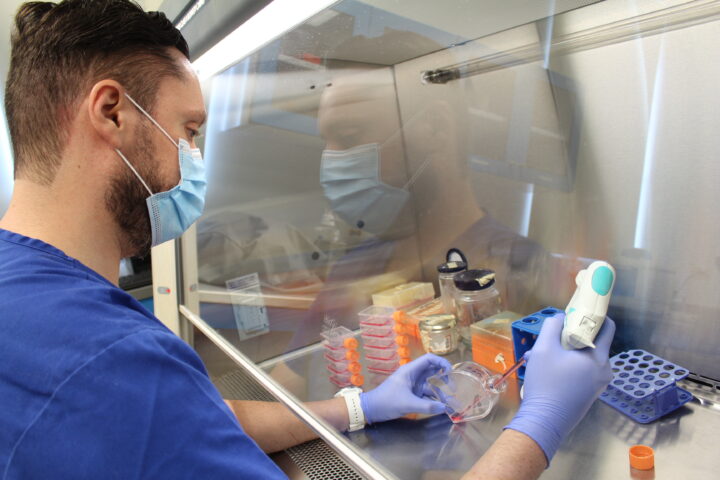
One of the most relevant aspects of this outbreak is that the international scientific community is already working on the complete genomic sequencing of samples obtained from infected patients.
On May 7, a preliminary complete sequence of an isolate identified in a Swiss resident linked to the outbreak was published on the international platform Virological.org. This type of analysis allows researchers to compare mutations, reconstruct transmission chains, and assess whether genetic changes associated with greater virulence, pathogenicity, or human adaptation exist.
International laboratories are currently working on sequencing and phylogenomic analysis of samples obtained from patients associated with the outbreak. Teams from the Swiss National Reference Center for Emerging Viral Infections and the University of Zurich have already published preliminary complete sequences of the Andes virus associated with the event, while other scientific groups are conducting evolutionary comparisons and phylogenetic reconstructions through collaborative platforms such as Nextstrain.
These studies aim to clarify possible transmission chains, identify relationships among cases, and detect potentially significant genetic changes in the virus.
What We Still Do Not Know
Despite these advances, important questions remain. Health authorities are still investigating the origin of the outbreak, specifically, whether it began through environmental exposure to rodents during one of the stopovers or whether human-to-human transmission played the predominant role aboard the cruise ship.
It is also not yet clear what factors determine why some individuals develop fulminant disease while others experience mild or moderate symptoms. Individual immunological differences, viral load, and possible genetic variations of the virus remain active areas of research.
In addition, there is currently no approved specific antiviral treatment against hantaviruses. Treatment continues to rely primarily on intensive supportive care, with emphasis on early respiratory management and timely critical care interventions.
Global Health in the Era of Zoonotic Diseases
Likely, the current outbreak will not become a major epidemic. But it would be a mistake to interpret it as a minor episode.
Rather, it is a reminder of how contemporary health threats operate: zoonotic viruses emerging within complex ecological contexts, transmission facilitated by global mobility, international chains of epidemiological surveillance, and the need for coordinated responses among countries.
The COVID-19 pandemic transformed our collective perception of infectious risk. However, outbreaks such as this hantavirus event remind us that preparedness for future threats does not depend solely on reacting to major crises, but on continuously strengthening microbiological surveillance, international scientific cooperation, and the capacity to detect early warning signs before they escalate.
In public health, small outbreaks often announce the biggest questions.
Official and Scientific Sources Consulted
- World Health Organization (WHO) – Disease Outbreak News: Hantavirus cluster linked to cruise ship travel
- Centers for Disease Control and Prevention (CDC) – Health Alert Network HAN 00528 (HAN 00528)
- Virological.org – Complete sequence of Orthohantavirus andesense virus: Swiss resident 2026
Author
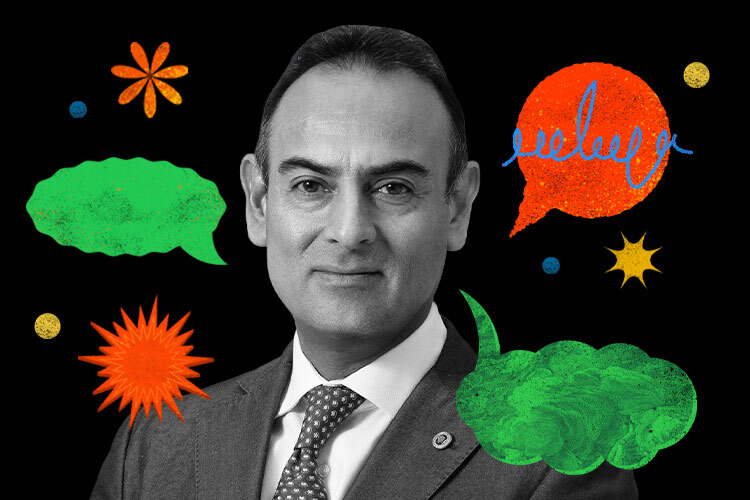
José Alberto Díaz Quiñonez is regional dean (Mexico City) of the School of Medicine and Health Sciences at Tecnológico de Monterrey. As a researcher, he is a member of several academic and scientific organizations, including Mexico’s National System of Researchers, the Mexican Academy of Sciences, and the Mexican Society of Public Health. He has published more than 100 original scientific articles.