

More than a decade ago, Tec de Monterrey imagined something unusual for a Mexican university: transforming the neighborhoods surrounding its campus into an ecosystem where students, researchers, entrepreneurs, companies, and residents could coexist and collaborate.
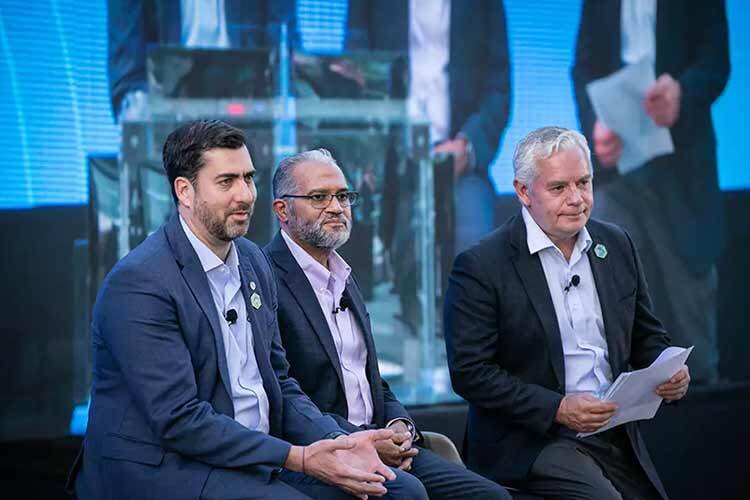
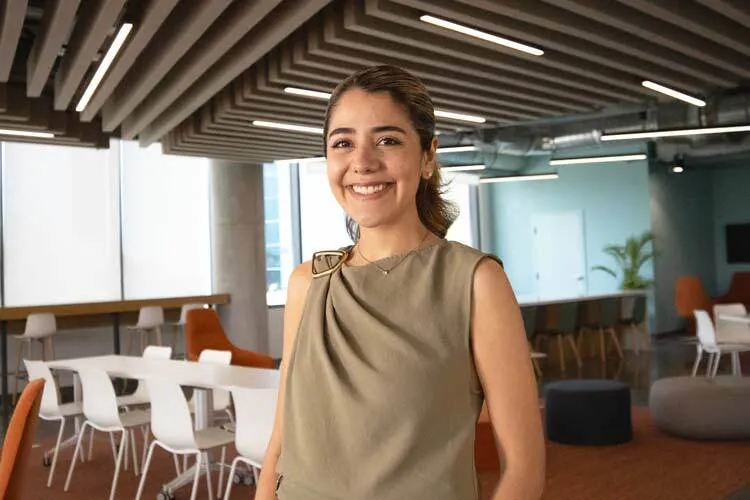
That vision became Distrito Tec. Now, the project is adding a new piece to the puzzle: The Eduardo Garza T. Innovation and Entrepreneurship Hub, designed to help ideas born in laboratories, classrooms, and startups find their way to market. “The Hub is the beating heart of the polygon that today is the Monterrey Innovation District,” says Jessica Fonseca, the Hub’s director.
The space officially opened on May 26 as part of the Monterrey Innovation District, an ecosystem led by Tec de Monterrey that seeks to accelerate connections between applied research, science-and-technology entrepreneurship, and industry.
But beyond being another startup building, the Hub represents a broader shift in how universities approach innovation and entrepreneurship.
“The university has gone from being an ivory tower to becoming a playground for innovative ideas,” says Ulrick Noel, director of the Eugenio Garza Lagüera Institute for Entrepreneurship. “That’s easy to say but very hard to sustain.”
The challenge of turning research into companies
Monterrey has long been one of Latin America’s strongest industrial cities. For decades, universities trained talent while private companies built some of the region’s largest industrial groups. But academic research rarely became commercial ventures. That is precisely the gap the Hub wants to close.
The startups it hopes to attract are not traditional companies that later adopt technology but ventures born directly from science, research, or scalable technological developments.
“We’ve always needed a space like this,” says Fonseca. “We just weren’t ready, or our culture hadn’t matured enough to bet on bringing science and technology to market faster.” The Hub’s premise is that moment has finally arrived.
Two buildings, one innovation ecosystem
The Monterrey Innovation District now has two physical anchors designed to work together. The first is Expedition FEMSA, which has operated for over a year and focuses on applied research with industry partners. The second is the Hub, whose role is to take knowledge generated inside Expedition, Tec itself, and external entrepreneurial projects—including dormant patents with commercial potential—and connect them with teams, investors, and resources capable of bringing them to market.
Noel describes the relationship simply: Expedition is part of the hardware, while the Institute for Entrepreneurship acts as the software, activating the ecosystem.
“The focus has been on how we make these spaces come alive and become what they’re supposed to be: places to experiment, create, and potentially scale,” he says.
A building designed around collaboration
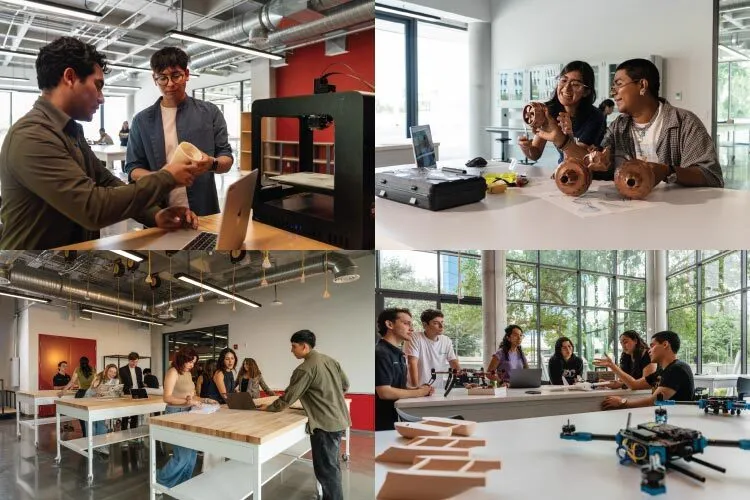
The Hub’s architecture reflects that logic of growth and interaction. Its ground floor opens directly onto the city, inviting people from Distrito Tec into public spaces that include a craft brewery and a showroom where startups can display prototypes and products.
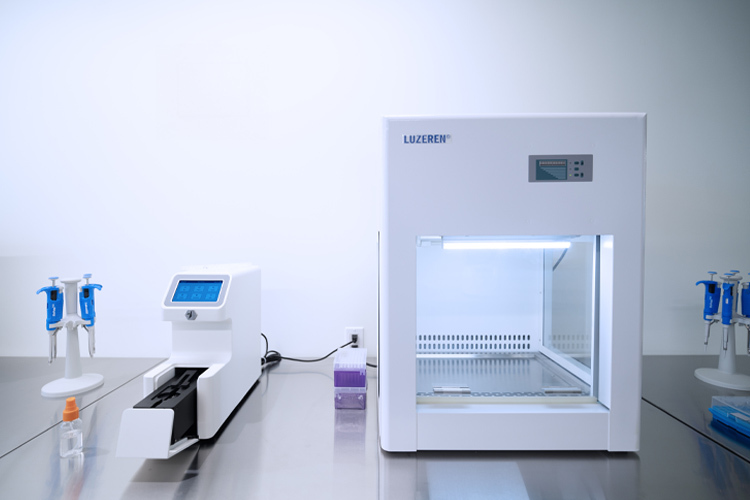
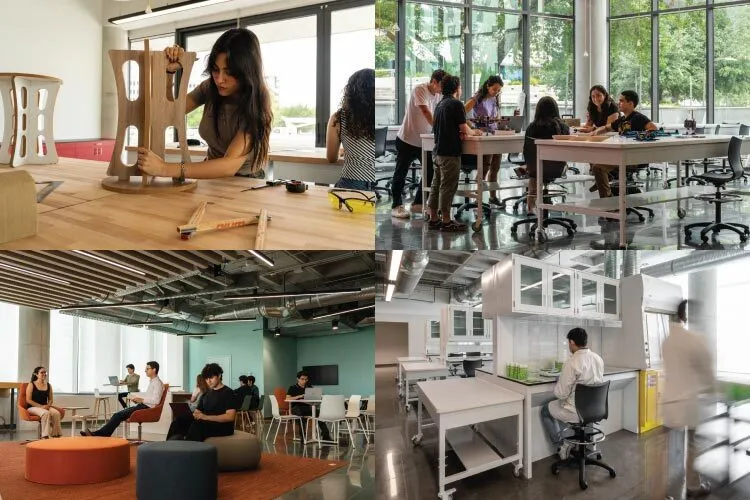
Further inside are modular laboratories and hangars designed to adapt to different stages of development, from proof of concept to small-scale manufacturing. “We’re democratizing innovation and giving our talent the opportunity to stay, rather than having to leave for other ecosystems,” says Fonseca.
The so-called startup garages, located between the second and fourth floors, are reserved for more advanced ventures. But they also serve another purpose: making entrepreneurial growth visible. The idea is that founders arriving with early-stage projects can physically see where their companies could one day end up.
The real challenge is talent
For Noel, the greatest risk in projects like this is assuming that infrastructure alone creates innovation. A modern building in a strategic location guarantees little if the talent capable of activating the ecosystem never arrives.
That challenge — building critical mass — is central to every emerging entrepreneurial ecosystem. The Hub’s model draws inspiration from Station F in Paris, one of the world’s largest startup campuses.
The strategy is to attract corporations, investment funds, accelerators, and government institutions that can, in turn, bring their own networks, founders, and opportunities.
Fonseca describes it as a “hub of hubs.” “Bring in the right partners, and those partners will attract their own partners and clients,” she says. “In five years, the Hub has to be the startup hub of Latin America.”
Building a culture of “give first”
Part of the Hub’s vision also involves building a different entrepreneurial culture. One requirement for joining the ecosystem is a willingness to actively contribute through mentorship, collaboration, and knowledge sharing.
Fonseca calls it a “give first” philosophy: entrepreneurs who receive support should also help others grow. For her, collaboration is not an extra feature of the ecosystem—it is a necessary condition for making it sustainable.
Noel measures success differently. “I’m not interested in having the building look brand new in ten years,” he says. “I’d like it to need renovating, to need a fresh coat of paint. That would mean it was used, that it was worn in. If it’s still pristine, then we didn’t do our job.”
Were you interested in this story? Do you want to publish it? Contact our content editor to learn more marianaleonm@tec.mx.