
Parkinson’s disease is the world’s most common neurodegenerative movement disorder. It is also the fastest-growing. In 2021, approximately 11.8 million people were living with the disease, and that number is projected to exceed 25 million by 2050.
Mexico figures prominently in these projections. Along with Indonesia, it is expected to become one of the 10 countries with the highest Parkinson’s disease burden for the first time, with an estimated increase of 171%.
Population aging accounts for much of this growth, but not all of it.
Parkinson’s Disease and Agricultural Activity
For more than 40 years, researchers have known that certain chemicals can damage the dopamine-producing neurons that are lost in people with Parkinson’s disease. These substances include some pesticides, such as paraquat, as well as industrial solvents and air pollution.
Several of these pesticides remain authorized for use in Mexico.
With this question in mind, researchers at the Tec de Monterrey’s Institute of Neurology and Neurosurgery at the Zambrano Hellion Medical Center examined how the disease is distributed across Mexico’s 32 states and whether its prevalence overlaps with areas of intensive agricultural activity.
The study, “The Green Parkinson’s Belt: Agricultural Regions Associated With Increased Parkinson’s Disease Burden in Mexico,” analyzed Parkinson’s cases reported to the Ministry of Health’s National Epidemiological Surveillance System between 2015 and 2024. Researchers calculated the average annual number of cases in each state and compared those figures with population data from the 2020 National Census conducted by INEGI, Mexico’s national statistics agency.
This allowed them to estimate the number of cases per 100,000 inhabitants. They also used data from the 2022 Agricultural Census to determine the amount of farmland in each state and applied statistical tools to measure how unevenly the disease is distributed geographically.
Findings: The Green Parkinson’s Belt
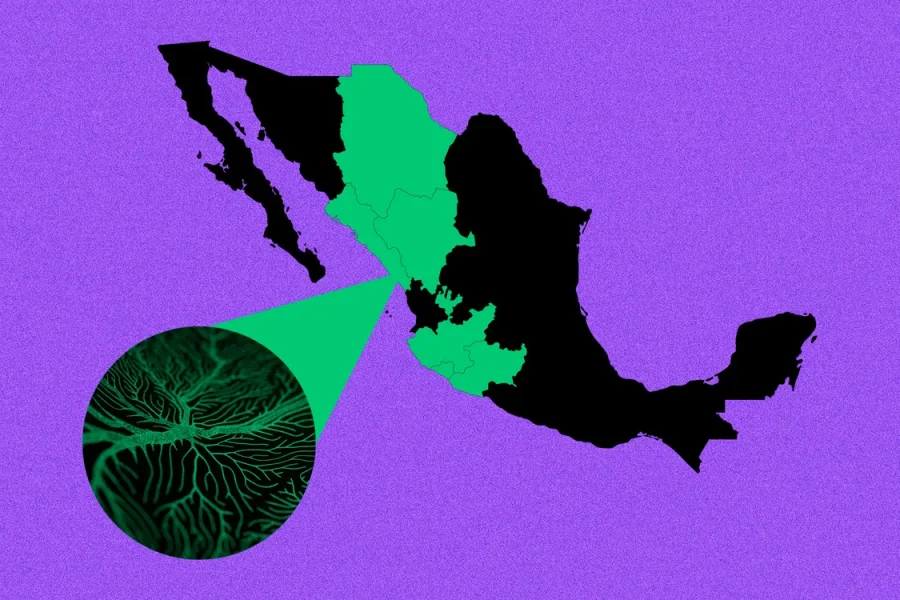
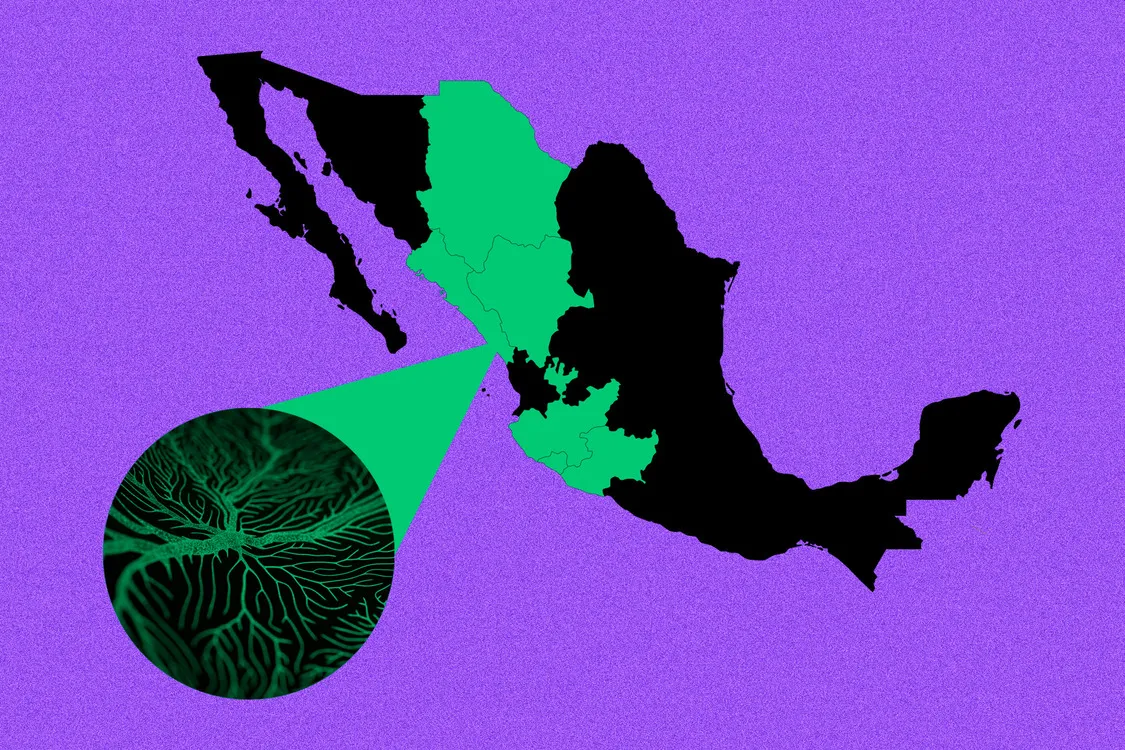
Parkinson’s disease is not evenly distributed across Mexico. Colima had the highest prevalence, with 38.8 cases per 100,000 inhabitants, followed by Durango (21.4), Sinaloa (14.9), Morelos (14.8), and Chihuahua (13.7). The average across the remaining states was 4.9 cases per 100,000 inhabitants.
When researchers grouped the states, they identified two regions with higher concentrations of cases. The first, in northern Mexico, includes Chihuahua, Durango, and Sinaloa, with a prevalence 2.6 times higher than in the rest of the country. The second, in western Mexico, spans Jalisco, Michoacán, and Colima, with a prevalence 54% higher.
Researchers call this region the Green Parkinson’s Belt because it overlaps with some of Mexico’s most intensive agricultural production areas, particularly those dedicated to growing tequila agave, avocados for export, and limes.
Over the past 15 years, the land devoted to these three crops has at least doubled. Pesticides associated with an increased risk of Parkinson’s disease in international research are routinely used in their production.
Each region appears to have its own story. In Chihuahua, one of the country’s largest automotive manufacturing corridors stands out, where solvents such as trichloroethylene have historically been used.
In Durango and Sinaloa, crops such as beans, corn, and tomatoes predominate, along with intensive agrochemical use. In Morelos, near Mexico City, air pollution may play an important role.
Rather than pointing to a single cause, the findings suggest a combination of environmental exposures.
What We Still Don’t Know
This research does not establish that pesticides cause Parkinson’s disease in Mexico. It is an ecological study, meaning it analyzes aggregated state-level data rather than information about individuals. Researchers were also unable to adjust the figures for age, the disease’s main risk factor. In addition, states with more neurologists and better access to health services are likely to diagnose and report more cases.
Therefore, the findings should be understood as a lead pointing to where further research is needed, not as a definitive conclusion.
If Mexico is on track to become one of the countries with the highest number of Parkinson’s cases worldwide, we need to understand where the disease is concentrated and which factors may be contributing to its spread. This study provides the most comprehensive national overview available to date, while also highlighting the limitations of Mexico’s health records.
Strengthening epidemiological surveillance, collecting data broken down by age and sex, and conducting studies that directly measure people’s exposure to pesticides and other pollutants are essential next steps toward understanding—and potentially preventing—a disease that will affect an increasing number of Mexican families.
.
Key reference
Martinez HR, Luna-Rangel FA, Gonzalez-Bedolla B, Armengol-Garcia C, Rebolledo-Garcia D, Rodriguez BL, Figueroa-Sanchez JA. The Green Parkinson’s Belt: agricultural regions associated with increased Parkinson’s disease burden in Mexico. Frontiers in Aging Neuroscience. 2026;18:1832314.
Author
Francisco A. Luna-Rangel. He holds a bachelor’s degree in Biosciences and a medical degree from the School of Medicine and Health Sciences at Tecnológico de Monterrey, Monterrey campus. He works at the Institute of Neurology and Neurosurgery at Zambrano Hellion Medical Center, TecSalud, and collaborates with Tecnológico de Monterrey’s School of Medicine and Health Sciences. His research focuses on movement disorders and the epidemiology of Parkinson’s disease in Latin American populations.