

Training early childhood educators can help improve their knowledge and reshape their beliefs about teaching. However, these changes do not always translate into better classroom practices due to factors such as working conditions, time constraints, and a lack of resources to put what they have learned into practice.
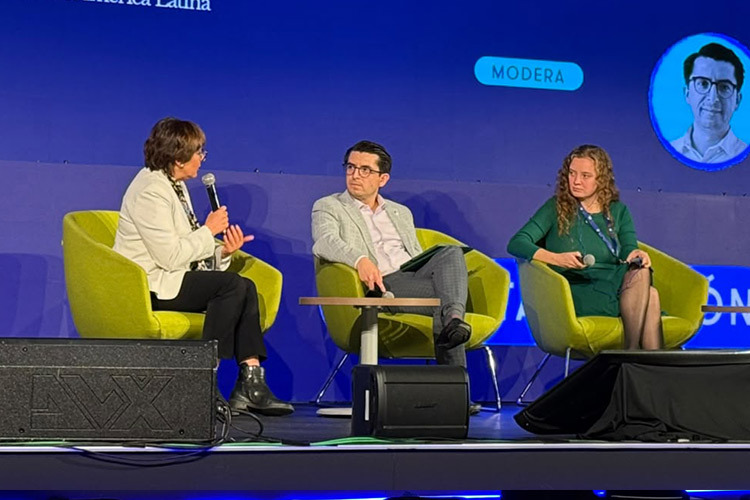
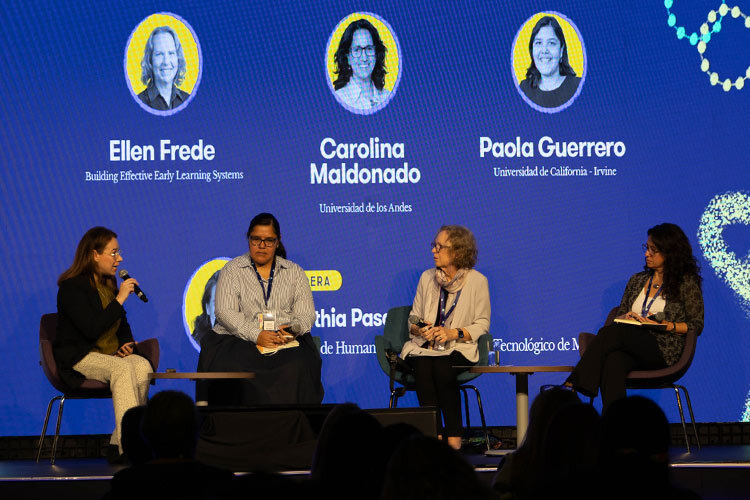
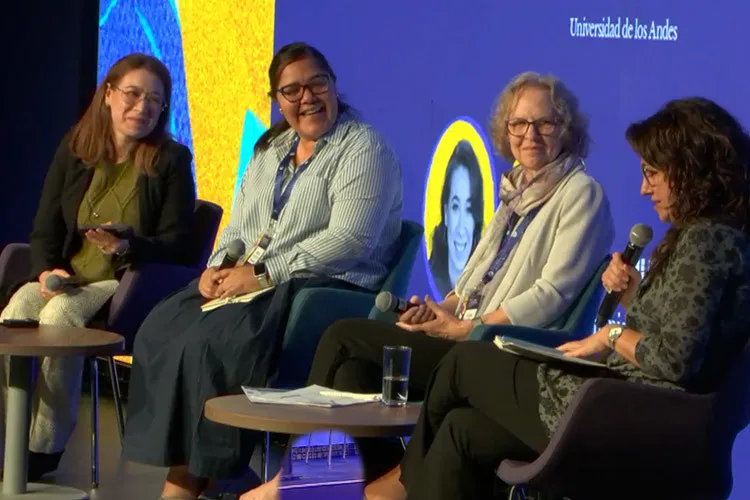
This was one of the challenges addressed by education experts during the panel Educational Agents at the Center of the System, held as part of the fourth edition of the International Forum on Early Childhood.
“Changing beliefs and knowledge seems easier than changing interactions,” said Carolina Maldonado, a professor at Universidad de los Andes and Global Visiting Faculty at the Center for Early Childhood of Tecnológico de Monterrey and Fundación FEMSA.
The panel also featured Paola Guerrero, an assistant professor at the University of California, Irvine, and Ellen Frede, principal consultant at Building Effective Early Learning Systems. It was moderated by Cynthia Pasquel, a researcher at Tec’s School of Humanities and Education (EHE) and the Center for Early Childhood.
The panelists discussed findings from studies conducted in Colombia, the United States, and Puerto Rico, highlighting the importance of strengthening educator training and ongoing support, as well as creating institutional conditions that enable educators to improve their classroom practices.
Teacher Training Does Not Always Transform Classroom Practices
Carolina Maldonado presented the results of an evaluation of two training programs for early childhood educators in Cartagena, Colombia. Both were developed by the organization aeioTU and aimed to strengthen educators’ teaching practices and expand the reach of its educational model.
The first program was implemented in 2019 through a cascade training model, in which a group of educators received training and were then expected to share what they had learned with their colleagues. In 2023, a second model was introduced, based on direct training for educators. Both programs consisted of 10 workshops and included classroom-based support.
The evaluations revealed challenges in sustaining participation throughout the programs. For example, attendance at workshops in the first program declined after the initial sessions. Although the 2023 program achieved more consistent participation, it also fell short of expectations.
The findings showed improvements in participants’ knowledge, beliefs, and motivation. For example, some reported changes in how they planned activities and used educational materials. However, when researchers observed what was happening in classrooms, they did not find comparable improvements in how educators interacted with children.
“When we looked at the quality of interactions through classroom observations, we found no significant changes over time in either program,” she explained.
The researcher emphasized the importance of designing programs that account for educators’ different needs and circumstances, ensure sufficient time for classroom-based support, and allow for ongoing evaluation and adjustments.
“Evaluation takes courage from those implementing a program. Sometimes receiving disappointing results is difficult, but it is part of the process of making corrections and learning. We learn from our mistakes.”

The Challenge Goes Beyond Supporting Educators
Paola Guerrero presented findings from studies conducted in Boston, United States, and Puerto Rico on teacher coaching, a strategy aimed at improving teaching practices and educational quality to support children’s learning and development.
In Boston, she examined the implementation of a preschool education model across 22 community-based centers. The program included educational materials and support from specialists who were already working with public school teachers.
Although the results showed improvements in classroom organization and positive relationships between educators and their coaches, challenges remained after three years of support, particularly in implementing educational activities related to mathematics, scientific thinking, and reading comprehension.
“The materials were there, the program included protected time, and teachers still told us: We’re not able to make it work with these resources. We need more time to keep going,” Guerrero said.
The researcher also presented a study conducted in Puerto Rico involving 71 public school teachers and 14 instructional coaches. An evaluation identified improvements in practices related to language development and vocabulary, although researchers also observed discrepancies between the activities teachers reported carrying out and those coaches actually observed in classrooms.
“We found that before the intervention, there was a very large gap between what teachers reported teaching and what coaches observed,” she said. “That gap did not close after coaching. It became slightly smaller in some areas, but it did not close in any of the cases.”
According to Guerrero, beyond providing coaching to educators, programs must be adapted to their working conditions and ensure they have the time, resources, and institutional support needed to incorporate what they have learned into their classroom practices.
The Importance of Sustaining Educational Efforts
Ellen Frede emphasized that improving the quality of early childhood education requires sustained efforts, as well as systems to evaluate and strengthen teaching practices over time.
She presented the experience of a preschool education program in New Jersey, United States, which combined ongoing teacher training, classroom coaching, improved working conditions, and evaluation mechanisms to identify areas for improvement.
Early evaluations revealed that little mathematics was being taught in classrooms and that children were making limited progress in this area. Based on this evidence, an assessment tool was developed to evaluate how mathematics was being taught in classrooms.
Educators also assessed their own practices and compared their reflections with observations from specialists to identify aspects of their teaching that needed improvement.
The model also brought together education authorities, school administrators, teachers, and researchers to establish learning goals and monitor children’s development. It benefited from political support and measures to improve teachers’ working conditions, including bringing their salaries in line with those of educators at other grade levels.
The researcher explained that the program took approximately five years to reach a strong level of implementation, while improvements in classroom quality were observed over an eight-year period.
“This was a complex, multi-layered system to ensure that we were making progress. And one thing I really want to point out about this is that it took time,” she said. “After five years, we were doing really well, and I was proud of the program, and that’s when we began the long-term study.”
According to Frede, evaluation should be an ongoing process that uses evidence to identify challenges and make adjustments, rather than being limited to a one-time assessment.
“I think that programs need to be flexible to the bad news and not say who got us lost, but how do we get back on track?” she said. “The most important thing is that continuous improvement system. It’s about persistence. It’s not going to happen overnight. There’s not a pill that makes this work, and I do think time matters.”
Did you find this story interesting? Would you like to publish it? Contact our content editor for more information: marianaleonm@tec.mx