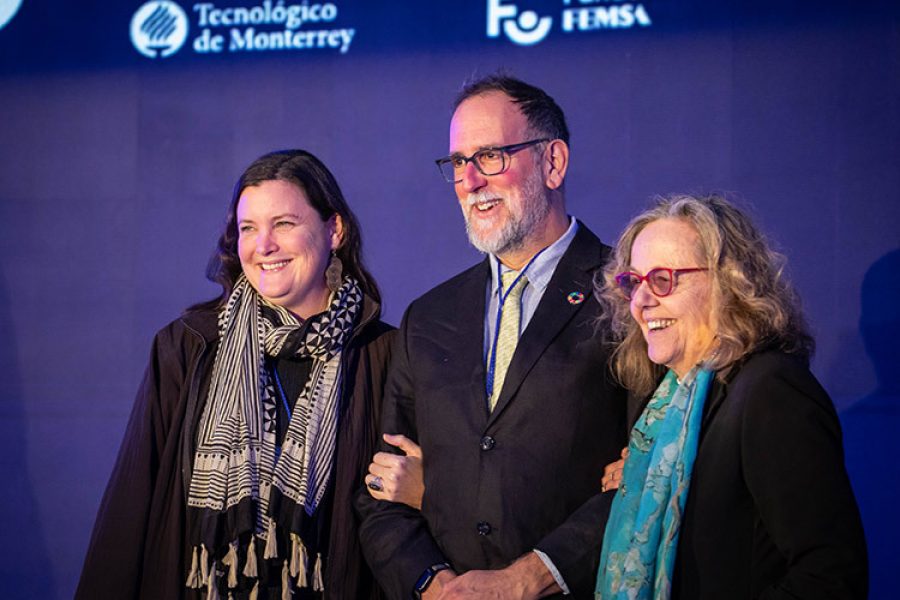


Rosanna Bonasia and Karina Coronado Apodaca, winners of the Premio Mujer Tec 2026 in the Environment category, agree that science changes when more women join the fields of science, technology, engineering, and mathematics. Spaces that, according to the latest UN report (2023) on the subject, remain predominantly male.
While they believe the gender gap is narrowing, both scientists feel that more women still need to occupy decision-making positions. “Including more women is not just a matter of justice; it is also a way to enrich science and bring it closer to society’s real problems,” says Bonasia. In that spirit, they highlight the case of Blanca Brambila Pérez, the third honoree in the same award category.
Blanca Brambila: A Pioneer of the Circular Economy in Mexico
After graduating from Tec de Monterrey, Blanca Brambila became director of sustainability at Heineken Mexico and is considered one of the pioneers of the circular economy in the country.

In that role, she promoted initiatives such as collecting bottles and cans at concerts for reuse, as well as programs to prevent harmful alcohol consumption. She also participated in grant ceremonies for research projects in areas like microplastic filtration in water and supported initiatives like BioUrban 2.0, an air-purifying device installed at the Heineken Monterrey plant.
Blanca Brambila passed away in March 2024. This posthumous award is, in part, a tribute to her legacy, one that opened doors for other women seeking careers in STEM.
Karina Coronado: Science to Detect Invisible Threats in Water

Karina Coronado’s daughter is five years old. “She doesn’t know how to write. She doesn’t like pencils or pens, but you put a lab coat and a micropipette in front of her and she is thrilled,” says the associate director in the Department of Sustainable and Civil Technologies at Tec de Monterrey’s Guadalajara campus.
There, she leads the Siprecia project, in collaboration with researchers such as Osiris Díaz Torres from the Universidad de las Américas Puebla and Mariel Alfaro, head of the Advanced Materials Manufacturing Processes area at Tec. The initiative, one of the projects that earned her the Premio Mujer Tec, aims to predict the risk of cyanotoxin presence in bodies of water.
Siprecia: A System to Anticipate Water Contamination Risks
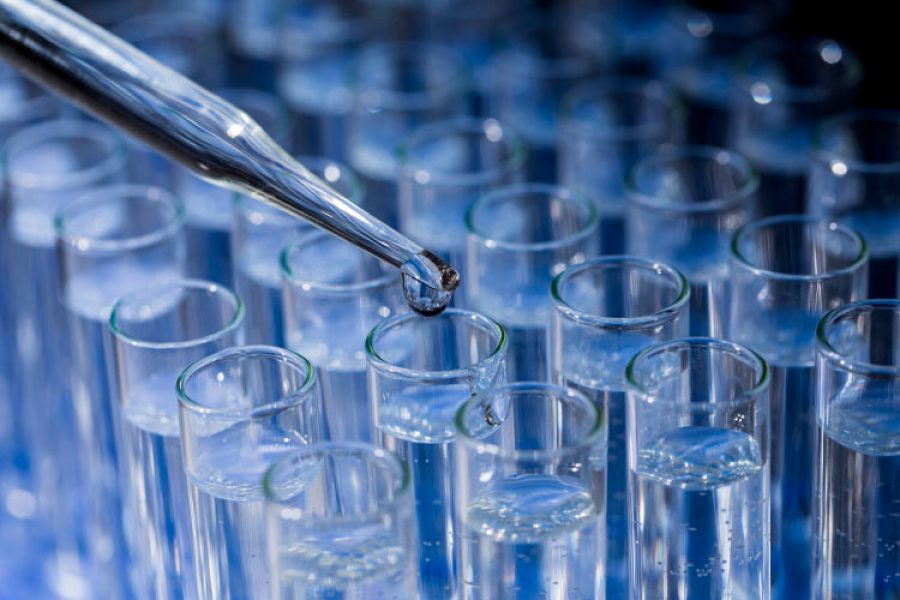
“Back home, when we see a river with a greenish layer on top, we call it ‘lama’. But that lama is actually made up of living organisms,” explains the biotechnologist. Some of these organisms are cyanobacteria, which under certain conditions can produce toxins harmful to human health.
They are most commonly found in polluted bodies of water, where excess nutrients favor their growth. However, measuring cyanotoxins requires advanced techniques that are not always available. In response, Coronado and her team developed an interface that uses variables such as weather conditions and water chemistry to generate an index estimating whether water from a river or lake may pose a health risk to nearby communities.
For the scientist, projects like this are only possible through collaboration across disciplines. That exchange of knowledge, she explains, is one of the defining characteristics of the initiatives she leads.
On Siprecia, she adds, “In this particular project, my intention, from my feminist side, was to show that women are present in every field and that we are capable of leading multidisciplinary projects.” For the researcher, the future of science is, by necessity, collaborative.
That same interdisciplinary approach is also at the heart of the work of other researchers recognized by the Premio Mujer Tec 2026.
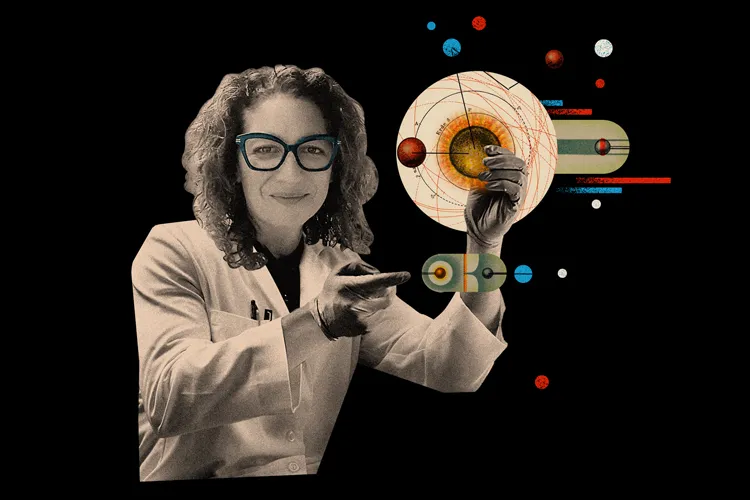
Rosanna Bonasia: Scientific Modeling for Natural Hazard Management
One example is the Water360 project, led by Rosanna Bonasia, a research professor in the Department of Sustainable and Civil Technologies at the School of Engineering and Sciences at Tecnológico de Monterrey’s Estado de México campus.
From this initiative, she coordinates a team of around twenty scientists who study water from multiple perspectives. Her research focuses on understanding how water behaves during floods and tsunamis, with the goal of anticipating and reducing the risks associated with these phenomena.
Water, however, was not the first fluid she studied. As a volcanologist, Bonasia completed her doctorate in computational fluid mechanics, modeling the behavior of volcanic ash in the atmosphere during an eruption.
In collaboration with other specialists, she contributed to developing tools to predict ash dispersal from Popocatépetl, one of Mexico’s most active and significant volcanoes. In fact, she explains, these are “the forecasts now published by the National Disaster Prevention Center (CENAPRED).” They now use this method to generate 72-hour ash dispersal forecasts in the atmosphere and assess the impact on air traffic.”
From Popocatepetl to the Study of Floods
Three years ago, upon joining Tecnológico de Monterrey, she brought that expertise to the study of water. Today she applies computational fluid mechanics models to predict variables such as water depth and velocity during flood events.
Within Tec, she highlights the presence of women in decision-making positions, an advancement she believes is still lacking in the broader scientific community. For Bonasia, the recognition also carries a responsibility for the future of environmental research: “The environment needs science, but it also needs collective awareness
Did you find this story interesting? Would you like to publish it? Contact our content editor for more information: marianaleonm@tec.mx