

In September 2025, a severe flood rendered Tec de Monterrey’s campus Querétaro unusable for two weeks and caused deaths in nearby communities. But instead of focusing solely on protecting the university’s infrastructure, its leaders considered the problem holistically and devised solutions to prevent another catastrophe across the region.
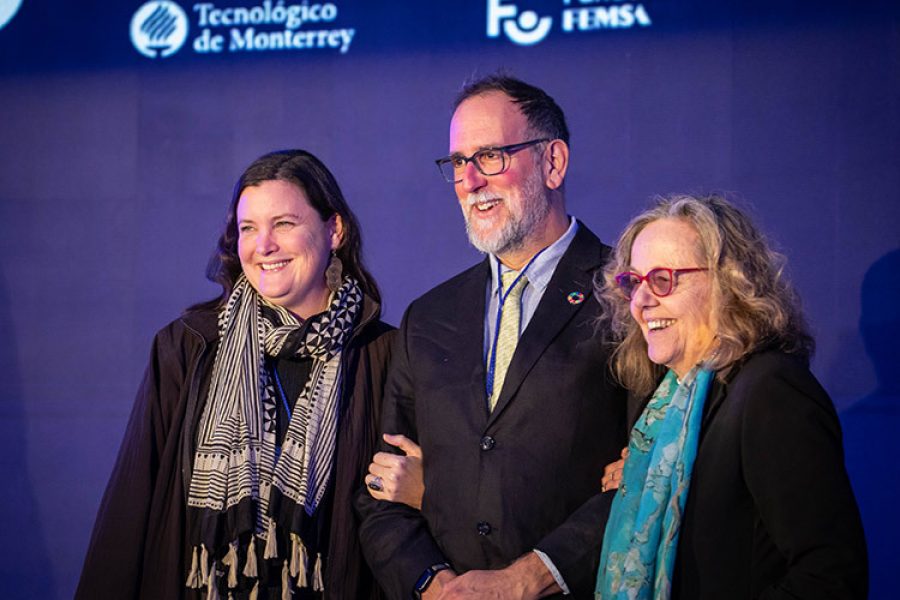
“Addressing those issues, there is temptation of fixing only your campus versus fixing the entire ecosystem around it,” said Juan Pablo Murra, rector of Tecnológico de Monterrey, during the 2026 United Nations Climate Change Conference (COP31).
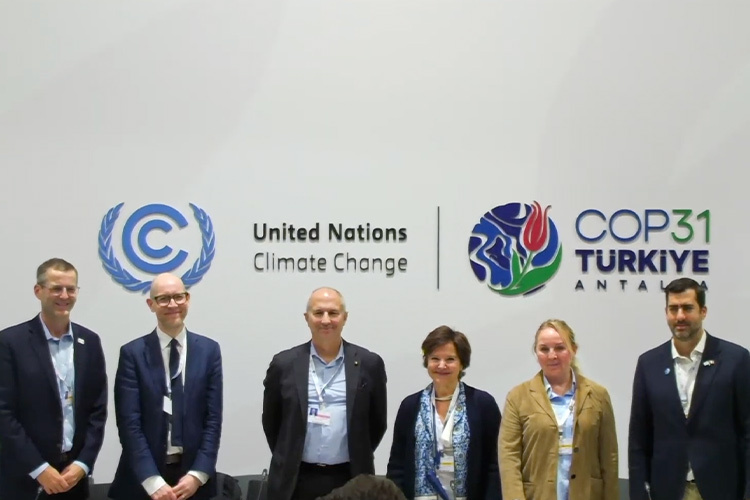
During the panel, Murra and representatives from universities in different countries around the world discussed how higher education institutions can collaborate to accelerate the implementation of responses to climate change.
The panel, moderated by Tim Carter, president of Second Nature, an organization that accelerates climate action in higher education in the United States, included Murra; Stephen Davison, from the University of Cambridge (United Kingdom); Gaye Teksoz, from the Middle East Technical University (Turkey); and Maurizio Tira, from the University of Brescia (Italy).
The conversation focused on the need for universities to go beyond researching and teaching about sustainability, to become true agents of transformation in the communities where they are located.
“I believe that campuses and universities actually possess the tools necessary to trigger change within their local communities,” Teksoz expressed.
Campuses as Laboratories for Solving Real-Life Problems
One of the proposals discussed during the panel to drive real change was to turn campuses into living laboratories, where students, researchers, governments and citizens collaborate to develop and test actions for real environmental problems, such as floods, water scarcity, loss of biodiversity or rising temperatures.
Instead of conducting isolated experiments, the idea is to leverage scientific knowledge to address people’s needs and assess whether interventions actually work.
In Turin, Italy, for example, collaboration between a university and the local government has made it possible to promote urban regeneration and sustainability projects, taking advantage of the technical expertise of researchers to support the city’s climate strategies.
“If a big university, maybe in a big city, takes a clear political position on some issues regarding climate change, they can easily reach the government, for example, or the Parliament,” Tira said.
The panelists also discussed how to involve students in solving these problems. One alternative is challenge-based learning, in which they work with businesses, governments, and organizations to develop proposals to address real-world challenges.
At Tec de Monterrey, for example, the educational model links students with companies, governments, civil organizations and communities that present them with these types of problems.
On the other hand, the possibility was raised of offering open courses on climate change and then connecting those who participate with universities in their regions to involve them in local environmental projects.
Measuring the Impact of Environmental Commitments
However, participants noted that a gap still exists between the sustainability commitments announced by universities and the actions they take. Many develop experimental projects, but few possess the mechanisms e to measure their results and long-term impact.
Another topic discussed was the role of university autonomy in relation to governments and political decisions. Participants pointed out that universities should contribute to the public debate on climate change with scientific evidence and adopt more critical stances without compromising their independence or the freedom of expression of their academics.
The discussion concluded with a call to strengthen international collaboration between universities, share experiences, and move from commitments to the implementation of solutions that benefit not only their university communities, but also the cities and regions where they are located.
“If we want to be here for the next 100 years, we need to fix it deeply, right? Not a quick fix,” Murra said.
Did you find this story interesting? Would you like to publish it? Contact our content editor to learn more at marianaleonm@tec.mx