

How can machine learning be used to study screen time and its impact on children’s development? What insights can be gained by analyzing documents from the time of the Colonization using artificial intelligence (AI) models?
These are just a few of the questions being explored at the Digital Society Lab, an initiative housed within the School of Humanities and Education (EHE) at Tecnológico de Monterrey. Here, researchers blend the humanities with innovation and digital technologies to tackle pressing social issues in Mexico and Latin America.
“The Digital Society Lab is a place where interdisciplinary and transdisciplinary research becomes a reality, where the voices of those experiencing social phenomena are central to project design,” says Luz María Moreno, Dean of Research at the EHE.
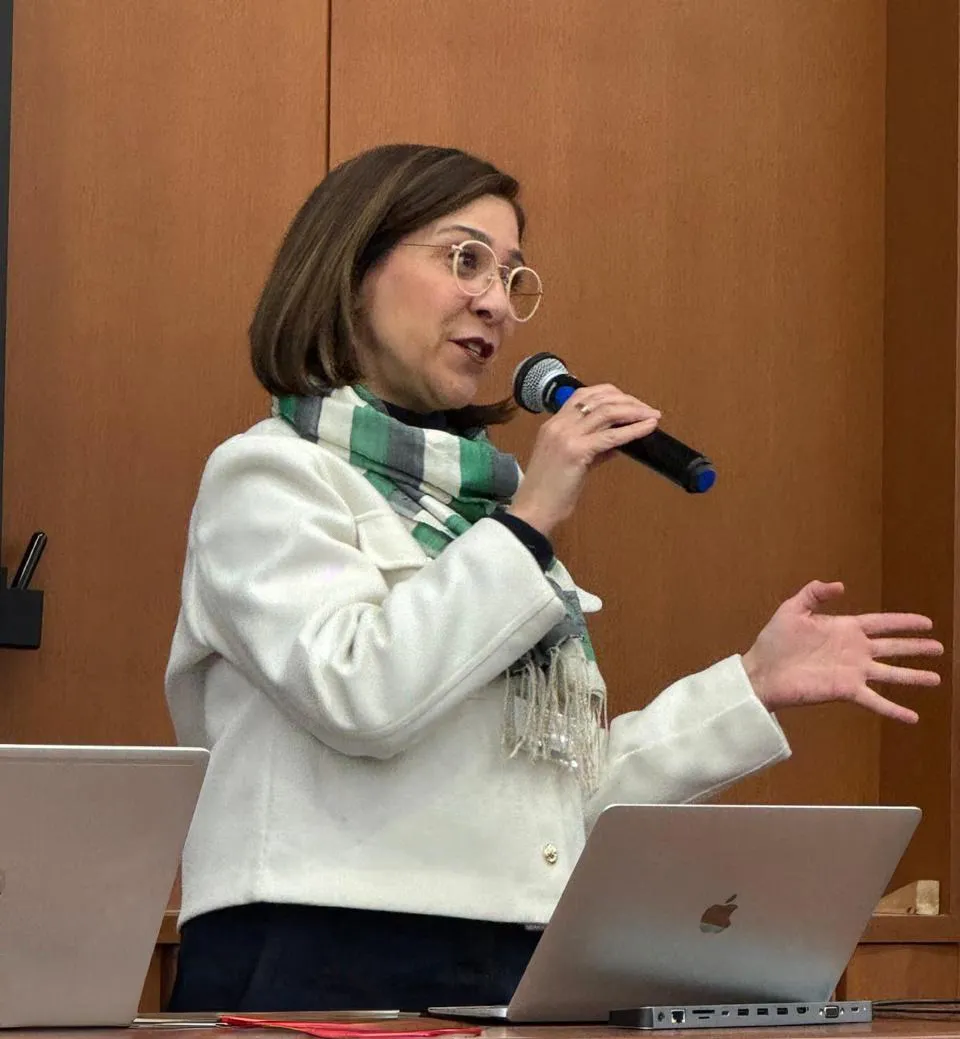
She explains that the lab is committed to applied research—that serves people and is guided by utility, ethics, and a strong sense of responsibility. The goal is for Tec, as a university, to listen to what’s happening in communities and respond with solutions rooted in the digital humanities.
In other words, combining technology with disciplines like history, literature, or philosophy to better understand and transform reality.
This ecosystem is made up of research hubs focused on three areas of impact, where lab researchers collaborate with communities, organizations, businesses, and governments on a wide range of projects.
Technologies to Revitalize Languages and Cultural Heritage
One of the lab’s research hubs leverages technology to help revitalize Indigenous languages and foster greater cultural exchange. Among the projects being developed in this area are:
Tsotsil Literacy with AI
In partnership with the state Department of Education in the Highlands of Chiapas, the EHE is leading an initiative to create a bilingual literacy platform that learns the Tsotsil language.
The aim is to enable communities with limited access to education to communicate in both Spanish and Tsotsil, making it easier for them to acquire additional skills. The platform is designed to work on both mobile devices and computers, even without internet access.
Ch’ulel Neurohumanities Lab
This project is also developing a space—modeled after a similar lab already operating at Tec de Monterrey—where the worldview of regional Indigenous peoples such as the Tsotsil, Tseltal, and Zoque is explored through their languages.
“In Tsotsil, when someone greets you, they’re referring to how your heart is doing—it’s not just a simple ‘hello.’ That’s why the lab is called Ch’ulel, a word that refers to consciousness, but one that’s tied to spirituality, the body, and the community,” explains the dean.
Fair Trade for Women Artisans
In partnership with the Center for Social Innovation (CIS) at Tec’s campus in San Cristóbal de Las Casas, Chiapas, a team from the lab is working to support Indigenous women’s cooperatives involved in traditional crafts by providing them with digital tools.
“We’re putting technology at the service of women artisans so they can market and distribute their products directly—cutting out the middlemen who often take a large share of their work’s value. The goal is to support them in building a system that gives them access to fair trade,” adds Stella Moreno.
Digitization of Historical Archives
This initiative is focused on preserving and digitizing historical materials such as manuscripts, chronicles, and visual records, allowing history to be reconstructed from different perspectives—especially those of Indigenous peoples, which have often been excluded.
Currently, the team is working on projects analyzing the colonial archives of Latin America, using AI models to digitize documents. This work is being carried out by researchers such as Patricia Murrieta, Paloma Vargas, and Carolina Sacristán.
Evaluating the Relationship Between Early Childhood and Technology
Another research hub within the Digital Society Lab focuses on studying the effects of digital technologies on the cognitive, emotional, and social development of young children during their early years. This team uses data analysis technologies and neuroscience to identify patterns and trends in how electronic devices are used and in the quality of content consumed during this critical stage of life.
Impact of Screen Time in Early Childhood
Researchers are currently investigating how early interactions with digital devices—such as smartphones and tablets—affect children’s development from birth to age six. In collaboration with the Early Childhood Center, a joint initiative of Tec de Monterrey and Fundación FEMSA, the team is studying factors such as the time children spend in front of screens and the role of caregivers in guiding and selecting content.
“This is a joint effort with the Early Childhood Center, which has a flagship project for a longitudinal study that takes multiple variables into account and uses technologies like machine learning. At the EHE, we’re working to understand the effects of screen use, and we’re aiming to compare those findings with similar data from other Latin American countries,” explains the dean.
Monitoring Digital Media and Disinformation
The lab’s third research hub is dedicated to monitoring and analyzing electronic media, with the goal of understanding and addressing the impact of disinformation in today’s digital society. The team develops strategies to strengthen critical thinking skills among people living in an environment saturated with information and multimedia content.
Digital Media Observatory
This project revolves around a digital platform that tracks and identifies dominant narratives across social media, blogs, and news sites in Mexico. An interdisciplinary team—made up of researchers, journalists, lawyers, engineers, and educators—is working to fight disinformation and promote media literacy through specific actions:
- creating open-access databases of digital content
- designing resources to teach people how to verify information and spot fake news
- developing tools like Verifactz, which assesses the accuracy of online content
- researching trends and viral phenomena
Applied Research, Collaboration, and Partnerships
The lab’s founding team is made up of 19 scholars who each pursue their own research agendas while also collaborating across the lab’s three core areas.
The lab has also worked with government entities in states like Chiapas, Tlaxcala, and Puebla to help address the specific needs of their communities.
Alejandro Martín del Campo, a researcher at the EHE and coordinator of the Digital Society Lab, emphasizes that collaboration between Tec faculty and external partners—such as civil society organizations, public institutions, universities, governments, and private companies—is key to the success of this research ecosystem.
“We’re building international academic partnerships, for example with the University of California at Berkeley, but also with private industry, because we believe in this triad. We want the projects developed in the lab to serve both the community and various industries,” says Martín del Campo. “This lab is designed to be a space where the challenges facing society can be addressed from both a technological and humanistic perspective.”
Were you interested in this story? Do you want to publish it? Contact our content editor to learn more marianaleonm@tec.mx