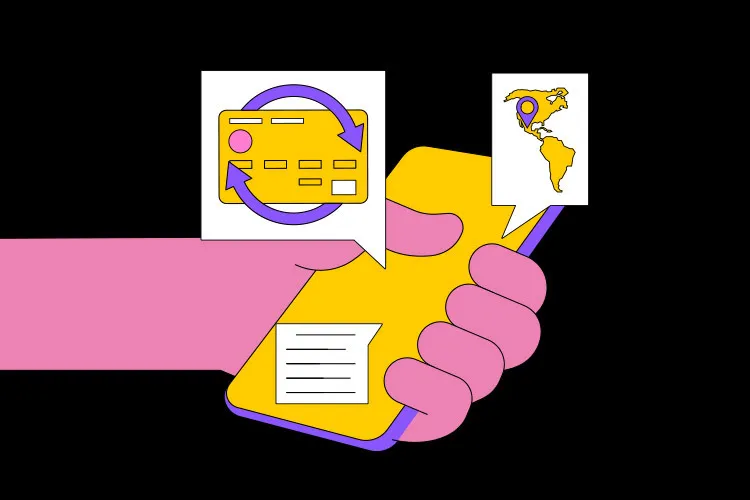


In northeastern Mexico, six out of every ten migrants, asylum seekers, and refugees have been turned away when trying to open a bank account, even though Mexican law allows them to do so with official identification. That is one of the key findings of the Financial Literacy Report: Inclusion and Remittances in Northeastern Mexico, a study conducted by researchers at Tecnológico de Monterrey in collaboration with the United Nations High Commissioner for Refugees (UNHCR).
Over the course of the study, researchers from the Tec’s School of Business and School of Social Sciences and Government identified significant gaps in financial inclusion for these communities, particularly when they encountered problems withdrawing cash or sending remittances. In many cases, banks requested additional documentation, forcing migrants to rely on intermediaries to transfer money to their families abroad.
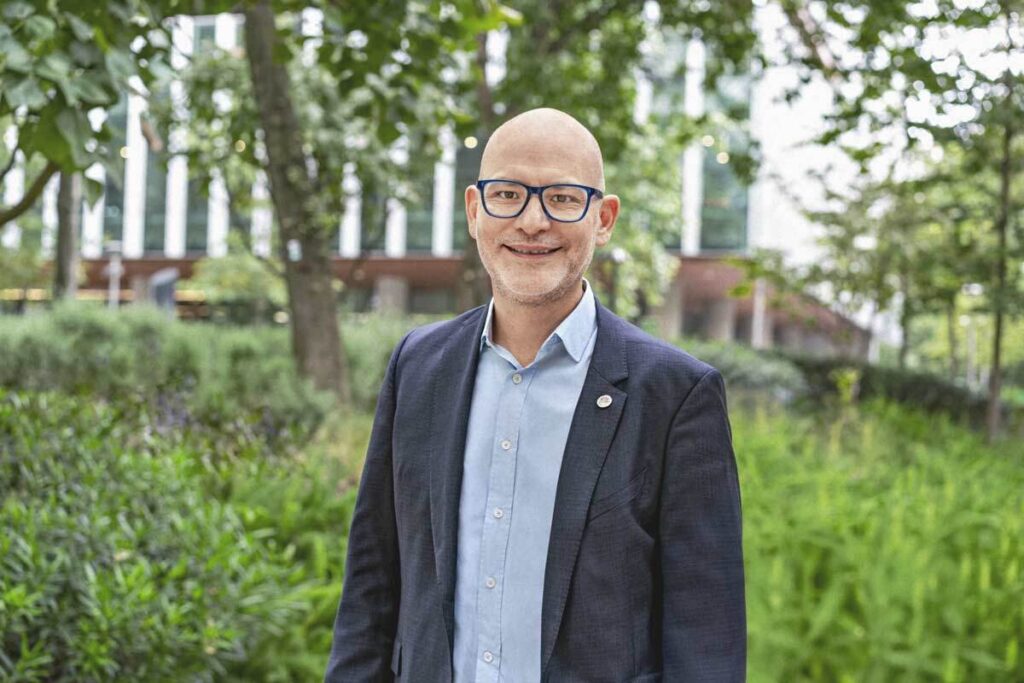
“The importance of ensuring that people on the move can access financial services lies in the fact that they are beginning to work or to join the economically active population,” explains Kathia Ramos, a research professor and director of the Bachelor’s Degree in Finance at the School of Business on the Monterrey campus.
The project took shape during a Tec Research Day, where scholars from different disciplines were reflecting on access to and use of financial tools among vulnerable groups. There, Ramos connected with Andrea Rodríguez, a researcher and director of the Nansen Clinic for Migration and Refugee Law at the School of Social Sciences and Government.
The clinic operates under the school’s Department of Law. It provides legal support to migrants, for example, by assisting with asylum applications through constitutional appeals and by offering representation in litigation related to the right to health care and financial inclusion.
Identifying a Structural Problem of Discrimination
As the team analyzed the data, they began to detect patterns that pointed to a deeper, structural problem—one that ultimately spurred them to undertake the study.
“Integration is the final step for an asylum seeker or a refugee to truly become part of a city’s social and economic life. Being able to join the Mexican financial system is the last link in that chain,” Rodríguez explains. “But how are they supposed to save money or, eventually, build assets if the Mexican financial system simply doesn’t allow them to?”
The team conducted more than 384 surveys with refugees, asylum seekers, and migrants on the move in the country’s northeastern region, primarily in the Monterrey metropolitan area. The questionnaire was designed by specialists in financial inclusion and migration law, who focused on three main areas: access to bank accounts, savings habits, and the sending and receiving of remittances.
The surveys were carried out on a voluntary and anonymous basis, with ACNUR providing support in reaching the population and coordinating logistics for data collection. To ensure broader representation in the final assessment, the survey was also translated into other languages, including Haitian Creole.
Among the findings identified by the team through the surveys are the following:
- 51% of respondents do not have a bank account.
- 60% said their application was rejected when they tried to open one, mainly due to issues related to the documentation required by financial institutions.
- Some 50.5% reported using intermediaries to send remittances, while 26.9% rely on them to receive money.
- Although 51.2% of respondents said they do save, 62.4 percent do so informally—that is, by keeping cash at home—thereby increasing the risk of theft or loss.
- In addition, 79% said they use cash as their primary method of payment, which likewise exposes them to the risk of losing money.
The study also found that more than 60% of those surveyed hold a positive view of the financial system. Some 42.2% rated it as “good,” and 20.4% described it as “excellent.”
Financial institutions block access
But why do migrants, asylum seekers, and refugees face such hurdles when trying to access the financial system? Andrea Rodríguez points to a combination of operational and institutional factors.
Article 115 of Mexico’s Credit Institutions Law establishes that individuals with regular immigration status may open bank accounts by presenting documents issued by Mexican authorities—primarily the National Migration Institute (INM)—such as a humanitarian visitor card, a permanent resident card, or the Unique Population Registry Code (CURP).
“Moreover, both the March 2022 reform and the August 2024 amendment explicitly reaffirm that ‘you must grant them access to the financial system’—in other words, it’s not optional,” Rodríguez says.
In practice, however, many bank branches demand additional documents not contemplated by the law and, in some cases, even request outdated paperwork. While the law allows applicants to present any one of the valid documents—meaning a single document should suffice—bank staff at the counter often require more than one. They apply an “and” instead of an “or,” Rodríguez adds, effectively restricting access.
“Financial inefficiency” comes at a higher cost for migrants
Kathia Ramos notes that, lacking access to formal financial services—even when they have the required documentation—migrants are often pushed to rely on intermediaries or third parties to send or receive money.
“Having to use an intermediary means paying more; that’s what we call financial inefficiency—being unable to access the system directly,” Ramos explains. Without a bank account, individuals have no formal way to document their income, nor can they build a financial history that would allow them to qualify for credit or bank loans, to, for instance, start a business or purchase a home.
The team hopes the report will reach well beyond academia by engaging banks and companies in working groups where they can present their findings and promote greater financial inclusion for these communities. They also plan to expand this line of research, advance initiatives and public policy proposals, produce academic publications, and share their findings at scholarly conferences.
Ultimately, the researchers hope the report will serve those who inspired the project in the first place: migrants and others on the move. “It can help them in many ways, even as a tool for empowerment—to say, ‘Hey, I also have the right to a bank account,’” Rodríguez says.
The report was published as part of the FAIR Research Series by the FAIR Center for Financial Access, Inclusion and Research at EGADE Business School of Tecnológico de Monterrey.
Did you find this story interesting? Would you like to publish it? Contact our content editor to learn more at marianaleonm@tec.mx