A little over a year ago, the oriGen Project celebrated the enrollment of its 100,000th participant and the close of its fieldwork. On October 8, during the oriGen Data Forum, the project announced its latest milestone: 100% of oriGen’s samples have been sequenced, for a total of 100,000 exomes, the part of DNA that contains the instructions for making proteins.
With this, the genomic, clinical, and epidemiological information from the cohort- the group of 100,000 participants who provided samples and health data- is now available for research projects under a new access policy.
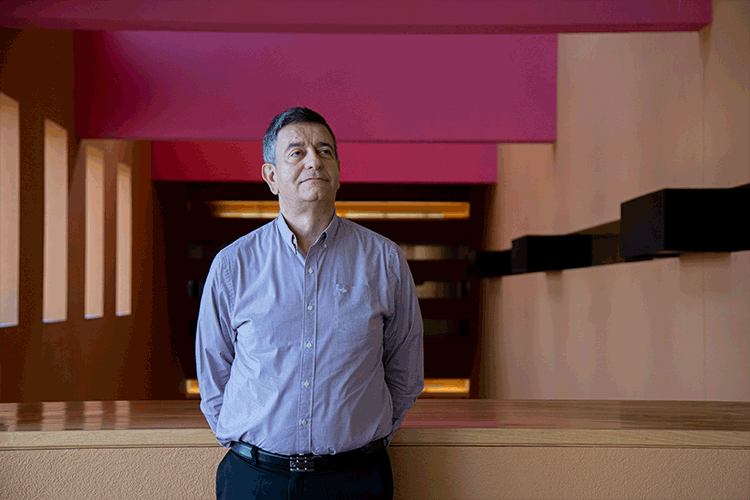
“We have gone from generating data to turning it into knowledge,” said Guillermo Torre, rector of TecSalud, at the forum.
By December, the project expects to have 10,000 whole genomes that, according to its general director, Pablo Kuri, will make up the most complete database of its kind in Latin America.
Regeneron Genetics Center carried out the sequencing, which took part in exchange for access to the data. The project also holds about 500,000 tubes of DNA, plasma and blood.
The project’s first results have already been published. In 1,427 whole genomes of participants recruited in the Monterrey metropolitan area, the team found nearly 100,000 single-letter DNA variants, and almost 3 million variants in total, that did not appear in the main reference databases, including that of the Mexico City Prospective Study, a UNAM–University of Oxford study that has tracked the health of more than 150,000 Mexico City residents since the late 1990s. The oriGen study was published on September 5 in the journal Nature Communications.
“We wanted to focus on capturing the greatest genetic diversity in the country,” explained oriGen’s scientific director, Víctor Treviño. To build the full cohort, the team traveled to 19 states, collecting data from one or two people per household and avoiding recruiting relatives. The result shows in the 1,427 genomes analyzed: only 17% of participants had a relative, even a distant one, in the group, compared with 71% in the Mexico City Prospective Study.
Diabetes Prevalence Across Age Groups
At what ages is diabetes most common in Mexico? To find out, Jaime Berumen’s team compared two cohorts: oriGen participants over 35 and those in the Mexico City Prospective Study. The age cutoff was needed because the latter only recruited people 35 and older, so the groups had to be comparable.
Counting both diagnosed and undiagnosed cases (people who have diabetes without knowing it), the disease reached almost 24% in oriGen and 19% in the Mexico City Prospective Study.
The gap between the two studies was even wider for prediabetes, when blood sugar levels are higher than normal but not yet high enough to be considered diabetes. Among younger adults, about 20% of oriGen participants had prediabetes, compared with 10% in the Mexico City Prospective Study. Part of that difference may be because the two cohorts were recruited about 25 years apart and with different measurement methods.
The age analysis also revealed distinct patterns. According to Berumen, prediabetes and undiagnosed diabetes increase until about age 50 or 55 and then level off. Diagnosed diabetes, by contrast, keeps rising with age as cases accumulate.
Obesity also weighs differently depending on age. Before age 52, people with obesity had 4.5 times higher odds of having undiagnosed diabetes; after that age, their odds were about three times higher. Berumen said he will submit these results this month to The Lancet Diabetes & Endocrinology.
A Mexican Model of Aging
oriGen’s first cohort includes people between 18 and 108 years old, with almost 32,000 over age 60 (13,492 men and 18,288 women). For Rocío Ortiz López, laboratory and repository lead for the project, this database makes it possible to study aging in Mexico, where, she said, there are no validated frailty models for its population; the existing ones were built with European and U.S. populations.
The researcher pointed out that patients are often evaluated the same way regardless of whether they are women or men, even though their health trajectories can be very different.
That is why, to build the country’s aging model, the team analyzed women and men separately: they age differently in metabolic terms, and the factors that most influence their decline are not the same either. In men, for example, alcohol consumption weighs more heavily; in women, the number of births.
Of the men analyzed, 1,816 reported drinking alcohol, and about 5% of them carried genetic variants that could affect how the body processes alcohol.
People who were older, had higher blood sugar or had diabetes tended to have fewer copies of mitochondrial DNA. These are preliminary results that have yet to be confirmed.
Artificial Intelligence to Estimate Visceral Fat and Metabolic Risk
The oriGen Health Research Center, created by the Tec and the University of Texas at Austin, began operating in March 2025. Its first protocol seeks an artificial intelligence model that estimates visceral fat from body measurements and genetic variables, without relying on methods such as MRI, which are expensive and hard to access.
In a pilot test with 41,466 oriGen participants, the analysis of body mass index (BMI) identified 120 variants in nine regions of the genome. The estimated heritability was 24.5%. In other words, genetics would explain roughly a quarter of the differences in BMI in this group.
“It’s not that genetics decides someone’s weight, but that it’s one of the pieces of the puzzle,” explained the center’s co-director, Alexandro Martagón. Three new projects have already been selected: a metabolic “digital biopsy,” a study of cognitive resilience, and another on genetic risk for breast, colorectal and gastric cancer.
Emanuel Martínez Ledesma, of the Tec’s Institute for Obesity Research, also presented preliminary results from his project. His starting point was that BMI does not reflect the metabolic state of about 30% of people.
Using oriGen’s questionnaire responses and blood chemistry data, his team trained a model that predicts BMI and checks who it gets wrong. Errors were more frequent among people who met three or more criteria for metabolic syndrome.
In a second analysis, the team crossed 12 cardiometabolic diseases with 49 nutrition and lifestyle variables and found associations, not cause-and-effect relationships. Cooking with oil more than five days a week was associated with high cholesterol and triglycerides; sleeping more than six hours, with a lower probability of obesity; and having smoked more than 100 cigarettes, in women, with heart attack. The goal is a library of models that lets a person estimate their risk using questions or tests they already have.
How to Request Access to the Data
During a two-year embargo, the data are reserved for Mexican researchers or those working at institutions with agreements with the Tec, such as the University of Texas at Austin. Afterward, according to the paper, they will be opened to the international scientific community.
For those who want to access the data repository, requests go through a document review of up to four weeks. They are then evaluated by a five-member scientific committee chaired by Treviño. Applicants can request one of three levels: clinical and epidemiological information; that information plus genotypes; or exomes and genomes. Researchers must submit annual reports and return any data they generate.
For Javier Guzmán, the Tec’s vice president of research, oriGen’s impact will be measured not by the number of samples but by the research and collaborations that emerge and the questions that get answered. “Now, the next chapter is in your hands,” Guzmán said.
Were you interested in this story? Do you want to publish it? Contact our content editor to learn more marianaleonm@tec.mx