

In recent decades, probiotics have become a popular tool to strengthen the intestinal microbiota. Although their properties have been known since the early 20th century, they entered the mainstream in the 2000s with global interest increasing in recent years. In 2023, the international probiotics market was valued at $87.7 billion dollars and is projected to exceed $200 billion by 2030.
Their benefits, which have been documented in multiple scientific studies, range from intestinal and immune health to improvements in certain skin conditions. Although their most common use is for the improvement of intestinal health, recent studies suggest that some strains could also influence mood and stress levels. This has opened a new line of research into the properties of psychobiotics.
“There are microorganisms where regular consumption has been shown to have effects in reducing anxiety, depression, and stress,” explains Tomás García Cayuela, a researcher in biotechnology and food science and technology at the School of Engineering and Sciences at Tec de Monterrey.
From his laboratory on the Guadalajara campus, the expert and his team analyze the relationship between the intestine, nutrition, and emotional well-being.
What is the gut-brain axis?
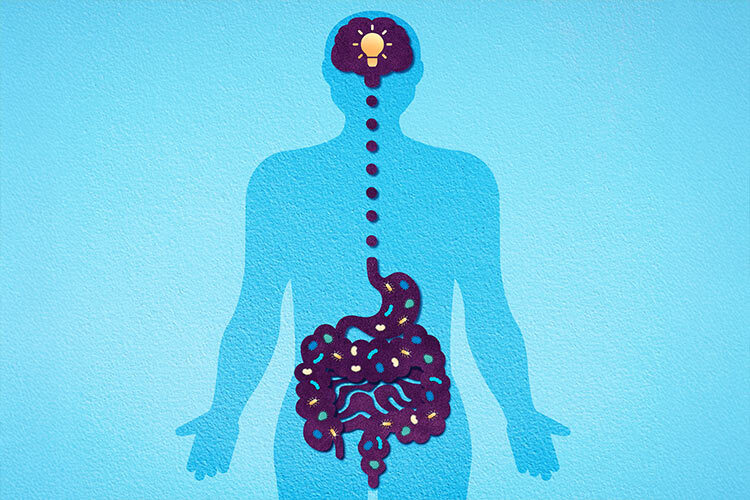
The gut-brain axis is a bidirectional communication system that connects the nervous system with the microbiota. When we eat, nutrients that aren’t absorbed reach the large intestine, where millions of microorganisms live and interact with intestinal cells and systems like the nervous, lymphatic, and immune systems.
“Signals go from the intestine to the brain, but also from the brain to the intestine,” says García. “The microorganisms in the intestine are the intermediaries of all that action.”
For example, when the body experiences stress, the brain releases cortisol, a hormone that can generate inflammation and stomach discomfort. This signaling occurs through three main routes: the endocrine system, neurotransmitters, and immune system molecules, plus the cortisol axis that coordinates the response between intestine and brain.
“The gamma-aminobutyric acid that is produced at the intestinal level is also produced by certain lactic bacteria,” explains García. “They give us that feeling of calm, they relax us. If those microorganisms don’t produce that neurotransmitter, then you’re going to feel stressed out.” For this system to work, the microbiota must remain in balance. If it deteriorates, the organism’s ability to synthesize neurotransmitters like serotonin, dopamine, and GABA also decreases.
From probiotics to psychobiotics
The term “psychobiotic” refers to specific strains of probiotics capable of modulating the gut-brain axis and supporting the production of neurotransmitters related to mental health. This line of research gained momentum from the studies of researcher John Cryan at the University of Cork and the book The Psychobiotic Revolution: Mood, Food, and the New Science of the Gut-Brain Connection (2017).
During the pandemic, academic interest grew even more. In 2020, García Cayuela’s group published an article in which they examined more than 700 scientific studies to evaluate how fermented foods could enhance a psychobiotic effect without the need for isolated supplements.
The authors identified a clear trend: the number of investigations is increasing, but there is still no methodological standard to evaluate which strains or formulations really work. “As far as we know, no systematic study has been conducted on the evaluation of possible psychobiotics according to their mechanism of action or experimental methodology,” they write in the mentioned article.
That’s where the researcher sees the biggest challenge. For example, in which bacterial strains? And what methodology should be followed to validate all the steps from the laboratory until it can be launched to market?” he explains.
Circular science: using waste to produce psychobiotics
The team also works on projects that combine intestinal health and sustainability. With support from the government of Jalisco, they have developed psychobiotic formulations from food industry byproducts, such as whey that is generated when cheese is produced and that many small companies discard.
“We use that whey as a culture medium to grow the probiotics that we know have some psychobiotic function,” explains the researcher.
The team also uses discarded fruits from Jalisco’s berry industry, which retain their nutritional properties, to cultivate probiotic strains capable of producing GABA. With these formulations, evaluated in collaboration with the Western Biomedical Research Center of the Mexican Social Security Institute (IMSS), they observed reduced inflammation, improved behavior, and less neuronal death in animal models of chronic stress.
What’s next for psychobiotics?
The group is now preparing for a new project focused on senile dementia in older adults, incorporating artificial intelligence to optimize combinations of strains and nutrients. This project is being carried out together with the Guadalajara Food Bank to take advantage of fruits that cannot be sold in super markets for consumption.
Their vision is to improve quality of life through nutrition and not just through supplements. Even so, the researcher clarifies that these developments do not replace medical treatments: “If we help enhance medication or reduce the dose due to side effects, then we’ve achieved a lot.”
The researcher emphasizes that the mechanisms that regulate mental health vary between individuals, so it’s important to discuss any treatment changes with a doctor. His advice: “It’s not necessary to oversaturate yourself with supplements. It’s necessary to know what needs each person has.”
Although psychobiotics are still in the research phase, caring for the microbiota is already part of recommendations for comprehensive well-being. A diet rich in fiber, fermented foods, and healthy habits remains the most accessible way to strengthen this biological connection between the intestine and the brain.