

Science has its share of strange phenomena, too. Take, for example, the females of a lizard species found on the island of Cozumel, Mexico: They don’t need males to reproduce. Instead, they clone themselves.
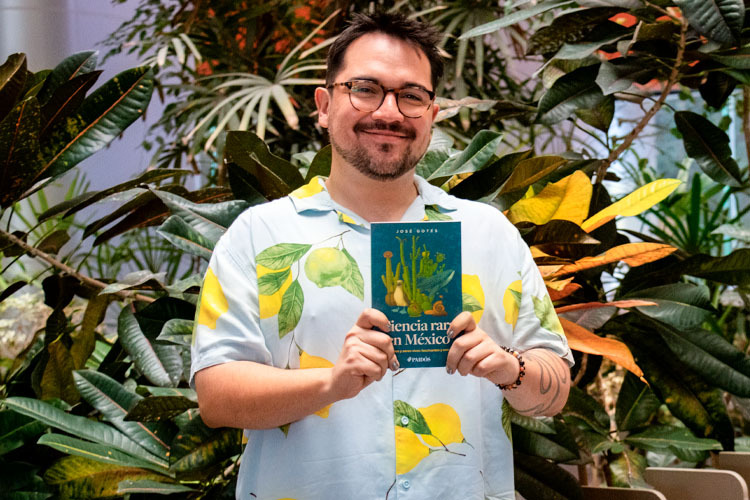
It’s just one of the fascinating facts that biologist and science communicator José Gotés explores in his book Strange Science in Mexico: Fascinating and Unusual Phenomena and Living Things, which takes readers on a journey through all 32 Mexican states while also recounting how science became part of his life.
Before the book came the 90-second videos on TikTok, Instagram, and YouTube, and with them, the challenge of communicating science in a fast-paced digital world where capturing people’s attention is no easy feat.
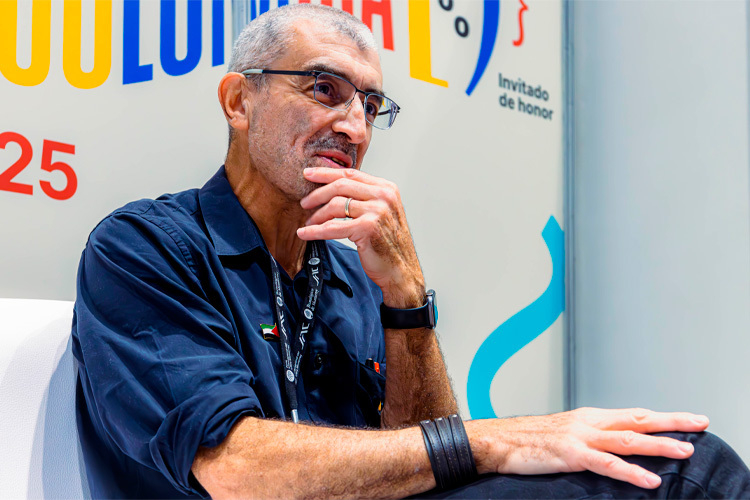
“I’m not entitled to anyone’s attention. I have to earn it, and I have to do that first with a hook and then with the content,” he says in an interview with TecScience during the 2026 Monterrey International Book Fair (FILMTY), organized by Tecnológico de Monterrey.
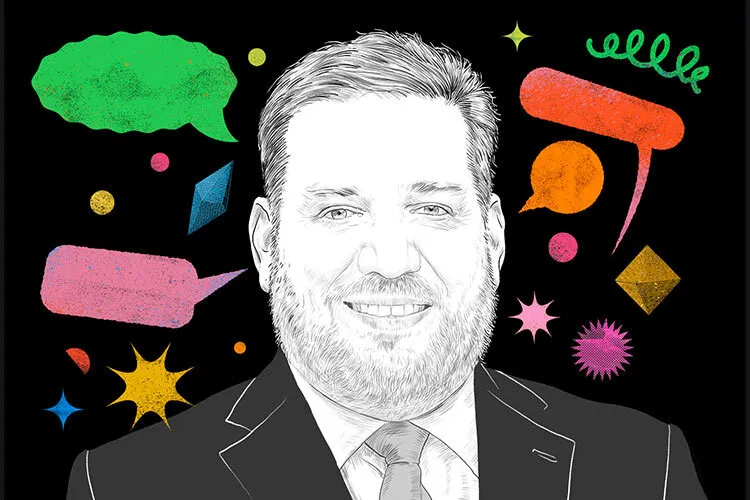
José Gotés and His Home Television Studio
The biologist was one of 50 content creators recognized by the international TikTok Change Makers 2025 program for making a positive impact on society. He also participated in the COP16 Biodiversity Conference in Cali, Colombia.
On TikTok, Gotés has amassed 250,000 followers, and his content has received more than 12 million likes. This success has helped him recognize the advantages of social media and see these platforms as an opportunity to bring scientific knowledge to new audiences.
Just as television and newspapers once played a key role in keeping the public informed, today’s social media platforms can reach vast audiences and spread messages to millions of people when content goes viral.
The science communicator also highlights the opportunity to interact directly with his followers, learn about their questions and concerns, and receive real-time feedback on the content he shares. In fact, he believes this feedback has played a crucial role in his growth as a science communicator.
Another advantage is the independence social media provides in producing and distributing information, without requiring the extensive resources typically associated with traditional media outlets.
“I have a television studio right in my own home. I do everything myself: research, scriptwriting, filming, and editing. I’ve learned about lighting and microphones,” the science communicator explains.
That independence also lets him respond immediately to trending topics without navigating complicated production processes. For example, even when he’s away from home, he can head to a public space, record a video, and upload it to his profile straight from his phone, sharing information in minutes.
Making Science Communication Fun Without Sacrificing Rigor
For Gotés, one of the biggest challenges in science communication is overcoming the aversion many people feel toward science, often because they associate it with negative school experiences, such as being scolded for poor grades or struggling to understand difficult concepts.
“What those of us who want to talk about science need to do is make every effort to move away from those negative associations and instead connect science to everyday things,” he explains.
Gotés’ strategy for breaking down these barriers and winning over audiences involves using humor and connecting scientific knowledge to everyday situations.
“One of the biggest advantages of social media is that we can use a lot of humor. I think memes, jokes, and double entendres are excellent ways to communicate just about anything, especially in Mexico and Latin America, where we really enjoy a good laugh,” he says.
But entertainment isn’t everything, the science communicator acknowledges. There needs to be a balance between humor, which hooks people’s attention, and scientific information that can spark their curiosity.
For example, his videos feature unusual facts and scientific curiosities that people may never have learned in school or even known existed. In that sense, he says that, as a science communicator, he has a responsibility to uphold scientific rigor, fact-check information, and consult reliable sources.
“I always try to be scientifically rigorous, to tell a story as honestly as possible, and to be transparent about my sources,” he says.
He even recalls that, at first, he wasn’t sure whether to include references in his content, worrying that audiences might find them unappealing. However, he soon discovered that his followers were also interested in learning about the scientific sources behind his posts.
From Screen to Page: Strange Science in Mexico
The science communicator has taken his scientific content from social media posts to the pages of a book. Gotés says Strange Science in Mexico gave him the chance to explore scientific stories in greater depth, with a level of detail that would be difficult to achieve in his TikTok videos.
The book brings together fascinating scientific facts and curiosities from across Mexico that he has discovered during work trips, expeditions, and even vacations.
He also offers a more personal look at his relationship with science, from his family’s influence on his decision to become a biologist to more intimate experiences, including having his heart broken.
Gotés is among the authors attending FILMTY 2026, taking place October 10–18 at Cintermex, with El Colegio Nacional as the guest of honor.
Were you interested in this story? Would you like to publish it? Contact our content editor to learn more: marianaleonm@tec.mx