
By Lydia Elena Pérez Pastrana and Iván García Kerdan
Single-use plastics are at the center of today’s environmental debate.
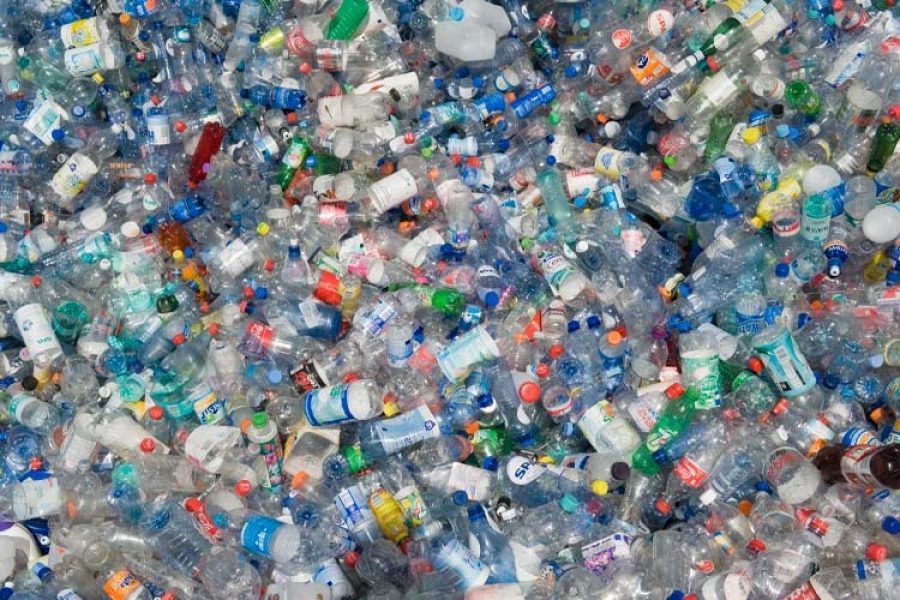
Globally, plastic production topped 400 million tons in 2022, driven largely by demand for single-use packaging—especially in agri-food systems.
While this packaging helps preserve food and expand access to basic goods, its production and disposal carry high environmental costs. Recycling is often framed as the solution, but it’s far from straightforward—and doesn’t always deliver meaningful reductions in impact.
A recent study, “Environmental performance of single-use plastic packaging: A life cycle assessment of end-of-life scenarios in the agri-food sector,” takes a broader view. Using life cycle assessment (LCA), it evaluates environmental impacts across every stage of a product’s life—from raw material extraction to final disposal.
The findings are stark: only about 9% of plastic is effectively recycled. The rest ends up in landfills, incinerators, or, worse, dispersed in the environment.
Rather than focusing solely on waste management, the study analyzed 102 different scenarios, combining plastic type, the product being packaged, recycled content, and end-of-life pathways to assess the impact of the entire packaging system.
Measuring recycling’s real impact
The researchers examined different material compositions—virgin plastics, blends with recycled content, and options that include energy recovery—alongside five end-of-life strategies: mechanical recycling, chemical recycling, incineration, incineration with energy recovery, and landfilling. They applied these scenarios to six common agri-food products: rice, beans, corn, vegetable oil, water, and detergent.
This approach makes clear that the question isn’t just which material is “better,” but under what conditions—and in which context.
Increasing recycled content does reduce impacts in some manufacturing stages. In other cases, however, the benefits are marginal—or offset by impacts during use or disposal.
Recycling matters, but its effectiveness hinges on real-world recovery rates, the quality of recycled material, and the infrastructure available to process it.
One of the study’s most important findings: the environmental footprint of packaging depends heavily on its contents. In many scenarios, the impacts associated with the product itself—particularly foods with high water footprints or intensive fertilizer use—far outweigh those of the plastic.
Take low-density polyethylene (LDPE) bags. The same bag used to package rice or vegetable oil can have a much higher environmental impact than when used for beans or corn—not because of the plastic, but because those products require more water, energy, and processing.
The takeaway is clear: evaluating packaging sustainability without considering its function can lead to incomplete conclusions. Swapping materials doesn’t offset the footprint of a resource-intensive product.
Not all plastics perform—or recycle—the same way. LDPE bags tended to show the highest environmental impacts, especially when paired with resource-intensive products and inefficient disposal methods.
By contrast, high-density polyethylene (HDPE) containers generally performed better, thanks to their durability and higher recyclability.
Polyethylene terephthalate (PET), widely recycled in Mexico, proved highly sensitive to end-of-life outcomes. It performs well when it’s actually recovered and recycled—but loses its advantage if it ends up as waste.
Polypropylene (PP), commonly used in caps, yogurt containers, and reusable packaging, showed wide variability. Its environmental impact isn’t fixed: it depends on how it’s used, how long it lasts, and what happens to it at the end of its life.
The Mexican context
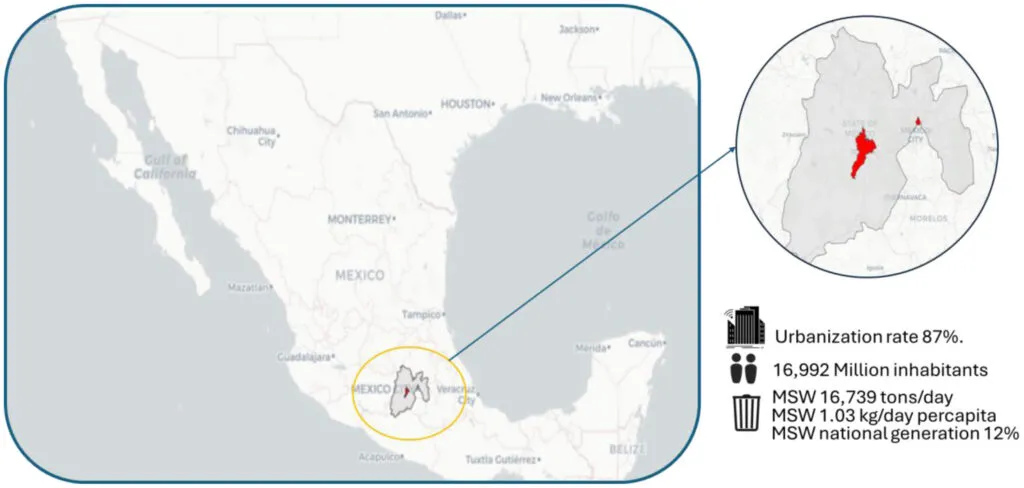
The State of Mexico served as the case study, home to nearly 17 million people. It generates about 16,739 tons of waste every day—roughly one kilogram per person—with a significant share made up of packaging (32%) and plastics (13%), including PET, HDPE, PP, and LDPE.
Municipalities such as Toluca and Tlalnepantla, marked by high consumption and waste generation, illustrate how—within a high-volume waste context, where the state accounts for about 12% of the national total—the impact of packaging cannot be analyzed in isolation, but as part of a local system shaped by both consumption patterns and waste management practices.
In practical terms, this means it’s not enough for a material to be “better” in theory. If it’s used at scale or poorly managed, its impact grows just the same.
In Mexico, material recovery relies heavily on informal recyclers—key actors who are rarely included in environmental assessments. Accounting for their role provides a more realistic picture of the waste management system and reinforces the idea that there are no one-size-fits-all solutions.
The findings challenge the notion that plastic sustainability can be solved simply by switching materials or increasing recycling rates. In many cases, the greatest environmental gains come from rethinking what is packaged, how it’s consumed, and how waste is managed—through a systems-level lens.
There is no such thing as an “ideal” plastic in the abstract. Sustainability depends on a combination of factors: the product type, packaging design, its useful life, and the efficiency of the waste management system it enters.
References
- Plastic Europe, “Plastics the fast Facts 2023-1,” Brussels, Oct. 2023. Accessed: Mar. 26, 2024. [Online]. Available: Circular Economy for Plastics – A European Overview’ report, early 2024.
- “ISO 14040:2006 – Environmental management — Life cycle assessment — Principles and framework.” Accessed: Sep. 29, 2025. [Online].
- L. Perez-Pastrana, Z. Guevara, E. Castillo, J. Ascencio Gutierrez, R. Bustamante-Bello, and I. García Kerdan, “Environmental performance of single-use plastic packaging: A life cycle assessment of end-of-life scenarios in the agri-food sector,” Cleaner and Responsible Consumption, vol. 20, p. 100383, 2026
- R. Hossain, M. T. Islam, A. Ghose, and V. Sahajwalla, “Full circle: Challenges and prospects for plastic waste management in Australia to achieve circular economy,” J Clean Prod, vol. 368, p. 133127, Sep. 2022
- P. Prajapati et al., “Critical review on technological advancements for effective waste management of municipal solid waste — Updates and way forward: Advancements in Municipal Solid Waste Management,” Environ Technol Innov, vol. 23, 2021
- J. Treviño Aguado, “PLAN DE MANEJO ECOCE,” CDMX, Nov. 2019. Accessed: Oct. 23, 2023. [Online]. Available: https://www.ecoce.mx/plan_nacional
- Ecología y Compromiso Empresarial, “2020: El Reciclaje en México es la mejor solución para el cuidado del medio ambiente y generación de empleos,” ECOCE, 2020.
- “Informe de 20 años ECOCE”
- B. Espinosa-Aquino, X. Gabarrell Durany, and R. Quirós Vargas. “The Role of Informal Waste Management in Urban Metabolism: A Review of Eight Latin American Countries,” Sustainability (Switzerland), vol. 15, no. 3, Feb. 2023
Author
Lydia Elena Pérez Pastrana. PhD candidate in Engineering Sciences and a lecturer at Tecnológico de Monterrey. Her research focuses on life cycle assessment applied to plastic recycling and the circular economy, with an emphasis on evaluating the environmental impacts of materials and single-use packaging. Her work combines environmental analysis with machine learning–based surrogate models, contributing to decision-making in plastic waste management. She has also collaborated with TecScience as a science communicator on these topics.
Iván García Kerdan. Associate professor and division director at the School of Engineering and Sciences (EIC) at Tecnológico de Monterrey’s Santa Fe campus. His research centers on decarbonization, climate change, and the circular economy, with a focus on low-carbon buildings, energy simulation, and sustainable materials in dense urban environments. He has published more than 30 peer-reviewed scientific articles and is a member of Mexico’s National System of Researchers (SNI).