
By Yolanda Heredia-Escorza and Cynthia Pasquel-López
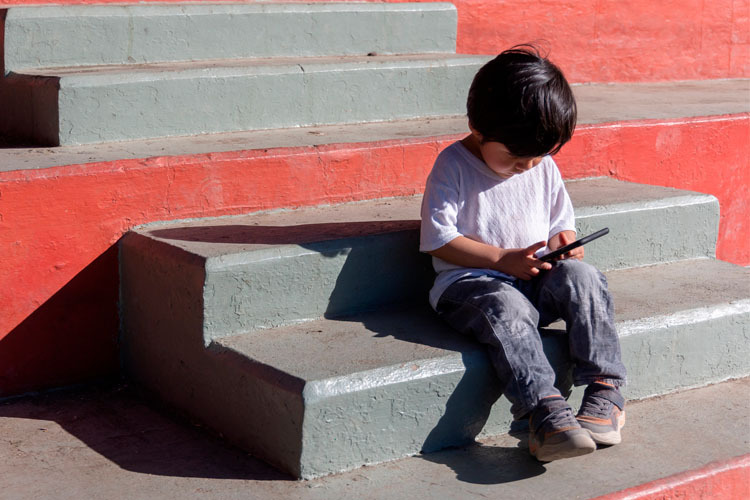
Literacy remains a persistent challenge in many parts of the world. In the southern Mexican state of Chiapas, researchers have been testing a tech-based solution: an educational app designed to support early reading and writing skills in children under eight.
The study, “The Impact of Educational Software on Literacy Learning in Childhood,” found that preschool students who used the app both at home and in the classroom outperformed those who used it only at home.
The same pattern held in elementary school. Students who engaged with the tool across both settings showed stronger performance than the control group. Even children who started with greater learning difficulties made significant gains, in some cases surpassing the average skill level for their grade.
These findings reinforce the idea that technology can serve as a personalized and systematic support in teaching—especially when it is consistently integrated into classroom practice.
Teaching children to read and write remains one of the core goals of education, as these skills open the door to written language and active participation in society. While most children can acquire literacy between the ages of five and six with adequate stimulation, those who do not face a heightened risk of cultural exclusion.
According to the United Nations, ensuring inclusive and quality education by 2030 is essential. Yet in Mexico, challenges persist: one in two 15-year-olds struggles to understand what they read.
In this context, educational technology and personalized learning tools offer new opportunities.
“Leo Leo”: What Is This App?
Phonological awareness—the ability to identify and manipulate the sound structures of language—is a complex skill. It is considered metalinguistic because it involves understanding that a grapheme represents a phoneme, and that combinations of sounds and letters form words.
Research in literacy development shows that structured educational technologies can strengthen key skills such as vocabulary and letter-sound correspondence, helping foster more autonomous learning.
Chiapas—a state rich in cultural and linguistic diversity, but also marked by high illiteracy rates and low educational attainment—served as the setting for this project. Researchers used the Leo Leo app to promote early phonetic skills that underpin literacy, while also measuring its impact.
The initiative provided 361 tablets to participating schools and trained teachers in both the pedagogical and evaluative use of the technology.
The project assessed both the effectiveness of the teaching methodology and the technological tool, focusing on three key dimensions: skill development, the relationship between consistent use and learning outcomes, and the impact on students with greater initial difficulties.
The study design included two experimental groups and one control group across preschool and elementary levels. A total of 1,273 children from 32 schools participated. Group 1 used the app both at school and at home, Group 2 used it only at home, and Group 3 served as the control group with no intervention.
“Leo Leo” (Spanish for “I read, I read”) incorporates video game elements and artificial intelligence to adapt to users’ needs. It offers interactive activities, reading and writing exercises, and content tailored to different skill levels.
Results
In preschool, the greatest gains were observed among children who completed at least 70% of the program, with particularly strong outcomes when the app was used both at home and in the classroom.
In elementary school, results again favored students who used the tool in both settings.
The study also found a clear link between literacy gains and consistent, sustained use of the app—underscoring its potential as a technological tool for developing reading and writing skills, especially when embedded in everyday teaching practices.
Importantly, “Leo Leo” showed strong effects among students who began with lower skill levels. In preschool, children with the lowest initial scores improved significantly whether they used the app at home only or in both environments, ultimately surpassing grade-level averages.
A similar pattern emerged in elementary school, where lower-performing students who used the app—either at home or in both settings—also exceeded grade-level averages.
These findings highlight that students with the greatest initial challenges benefit the most from systematic use of educational technology, particularly when it is integrated across both school and home environments.
A similar project is now underway in the northern state of Nuevo León, this time with a larger sample designed to strengthen the reliability of the findings.
Note: This project reflects a collaborative effort among the Center for Early Childhood, the School of Humanities and Education at Tecnológico de Monterrey, the Inter-American Development Bank, Wumbox (developer of the Leo Leo app), and the Chiapas Ministry of Education, all working to improve literacy skills among kindergarten and first-grade students.
Authors
Yolanda Heredia-Escorza. Clinical psychologist from Universidad Iberoamericana, holds a master’s degree in education from Universidad Regiomontana, and a Ph.D. in comparative social welfare policy from UANL and The University of Texas. She is a professor-researcher at the School of Humanities and Education at Tecnológico de Monterrey. She has conducted research and consulting work, supervised more than 50 theses and dissertations, published multiple academic works, and is a Level I member of Mexico’s National System of Researchers (SNI).
Cynthia Pasquel-López. She holds a Ph.D. in Educational Innovation from Tecnológico de Monterrey. She has experience designing, implementing, and evaluating educational projects focused on early childhood, technology-mediated learning, and the development of parents, teachers, and professionals. Her work is characterized by the integration of innovative methodologies and the strategic use of digital tools to promote meaningful learning.