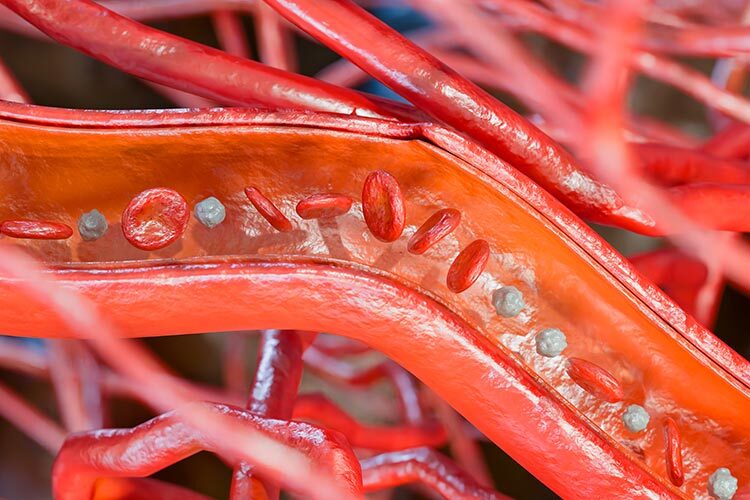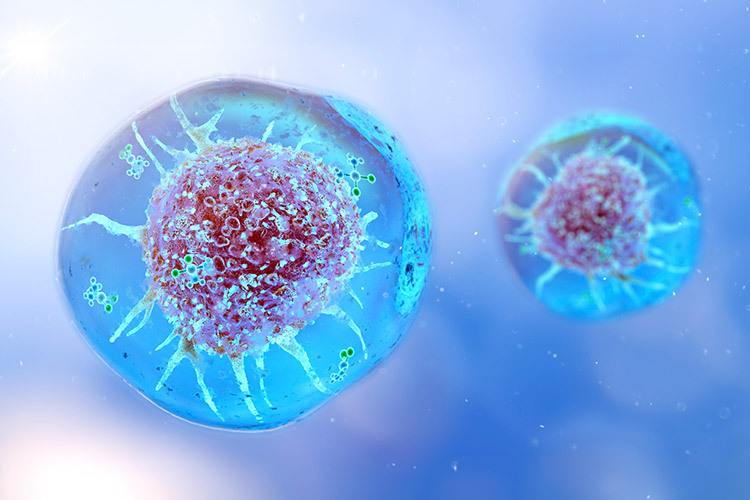


Imagine tiny particles traveling through the bloodstream or tissues. Suddenly, when they recognize a specific substance, they open up and release their contents. This behavior could pave the way for smart drug delivery materials designed to help patients with diabetes and other diseases.
Nicholas Peppas, a professor and director of the Institute for Biomaterials, Drug Delivery, and Regenerative Medicine at the University of Texas at Austin, presented preliminary findings during his keynote address at the International Conference on Biofabrication 2026, held at Tecnológico de Monterrey.
Among the research projects Peppas showcased were materials capable of recognizing glucose and distinguishing it from other sugars, such as galactose. This ability could be harnessed to develop systems that detect changes in glucose levels and respond by releasing insulin.
“I want something that will also detect the early stages of the disease and will start releasing a particular compound,” Peppas explained, describing one of his research goals. “Recognition is very important. That’s why we call it intelligence.”
Peppas emphasized that advances in this area of smart materials research could open up new possibilities for diagnosing and treating a wide range of diseases.
Engineering Smart Materials at the Molecular Level
The smart materials Peppas works with are structures designed to recognize specific substances and respond to conditions in their surroundings. According to the researcher, these properties could be harnessed to develop new medical tools.
Among the materials used in his research are hydrogels, structures made up of polymer networks—long chains of interconnected molecules—that can absorb and retain large amounts of water. They can be engineered to respond to specific stimuli, such as changes in the chemical conditions of their environment.
To enable these materials to recognize specific molecules, Peppas and his team use a technique known as molecular imprinting. The process involves using a target molecule as a template to create tiny cavities within the material. Once the molecule is removed, the cavities retain features that allow them to recognize that same molecule when it comes into contact with the material again.
“The template can be a small molecule, or it can be part of a cell. You remove the template, and you have the cavities,” he explained. “These are usually nanocavities that will recognize just this particular template.”
However, giving a material the ability to recognize molecules also presents challenges. According to Peppas, substances such as magnesium, calcium, and even certain lipids can complicate the fabrication of these structures. He added that his team is studying how these materials interact with biological fluids, rather than just water, to replicate conditions as closely as possible to those found inside a living organism.

Smart Materials That Recognize, Respond, and Release Medications
For Peppas, the goal is clear: to combine the ability to recognize specific substances, respond to their presence, and release compounds that can be used as medical treatments—all within a single material.
He shared the results of an experiment in which his team attached a fluorescent marker to glucose to determine whether the materials could recognize it. When comparing two systems, they found that only one was able to identify the glucose. The material could also distinguish it from other sugars, such as galactose, a feature that could eventually be harnessed to develop systems that automatically release insulin when glucose is detected.
In this context, Peppas explained that one of the challenges with certain treatments is that patients must decide when to administer their medications. Drawing on his own experience, he recalled receiving interferon beta injections for 15 years after being diagnosed with multiple sclerosis, only to discover later that the diagnosis had been incorrect.
He noted that treatments like these can be difficult for patients to manage, sometimes leading them to stop taking their medications because of the discomfort involved. Given these challenges, he emphasized the importance of developing smart materials that could one day deliver treatments autonomously in response to signals from the body, particularly for diseases that require frequent, long-term treatment.
Another application he presented involves Sjögren’s syndrome, an autoimmune disease that primarily affects the glands responsible for producing tears and saliva. His team developed a material capable of recognizing three compounds associated with the disease simultaneously, whereas other techniques require each compound to be analyzed separately.
“We created these three-dimensional systems, and we have a system now that can recognize three compounds together,” he explained. This capability could eventually be used to develop tools that help detect the disease.
Peppas also discussed the potential of these materials in other areas of biomedicine, including tissue engineering. Their ability to recognize specific substances could be harnessed to promote interactions between cells and the materials, helping support the formation of new tissues. He also highlighted their potential use in treatments aimed at repairing damaged bones.
Smart Materials Designed to Help People
Although smart materials have the potential to transform the diagnosis and treatment of certain diseases, significant challenges remain before some of these innovations can be used in medical applications.
Peppas emphasized the importance of evaluating the safety of these materials, including toxicity studies and assessments of potential adverse effects. He also stressed the need to investigate how they interact with biological tissues and fluids, since their behavior can vary depending on the conditions of their environment.
“I don’t want you to spend four years developing the system, and then you go to the FDA and the FDA says, ‘I’m sorry, we cannot approve this one.’ It’s too late!”
Despite these scientific challenges, however, Peppas argued that the ultimate goal of this research should go beyond simply demonstrating that the technology works in the laboratory.
What ultimately matters, he said, is turning these advances into practical solutions that improve people’s lives, from making medications easier to administer to helping detect diseases.
“What we do is still fundamental. It still requires mathematical expressions, chemistry, and so on, but it is also applied to human beings,” he told young researchers. “Work on problems that help the patients and go to the most underserved areas of Mexico.”
Did you find this story interesting? Would you like to publish it? Contact our content editor to learn more: marianaleonm@tec.mx