

What are the most pressing challenges in Latin America to ensure that children grow up in safe, nurturing, and equitable environments? Academics and experts from leading universities specializing in early childhood research gathered to reflect on the region’s key issues.
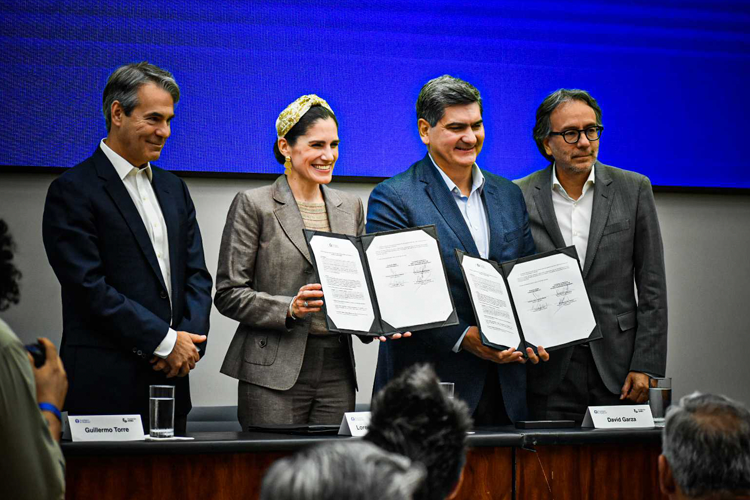
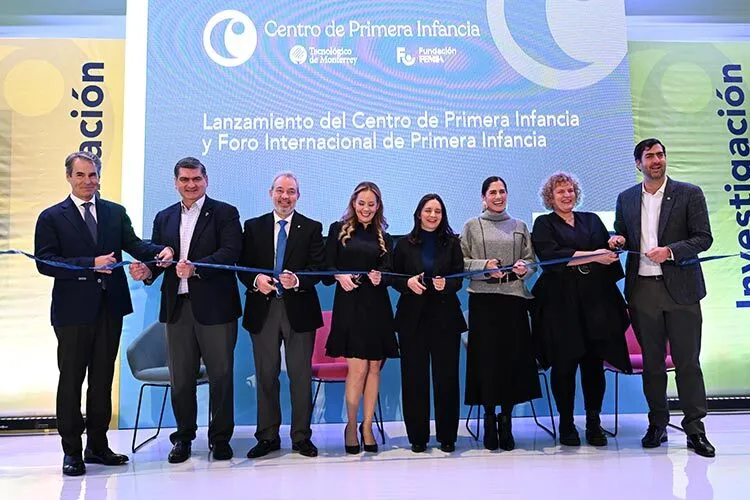
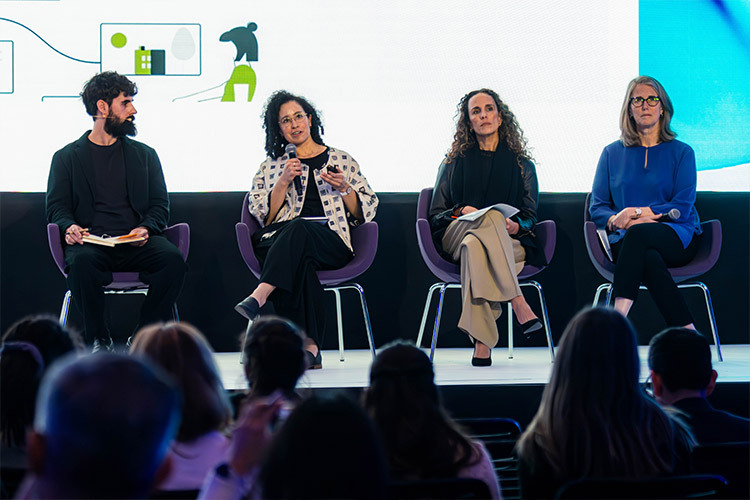
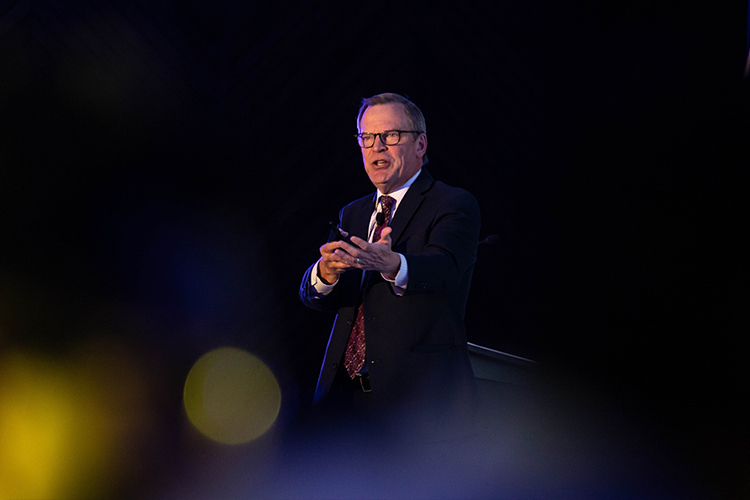
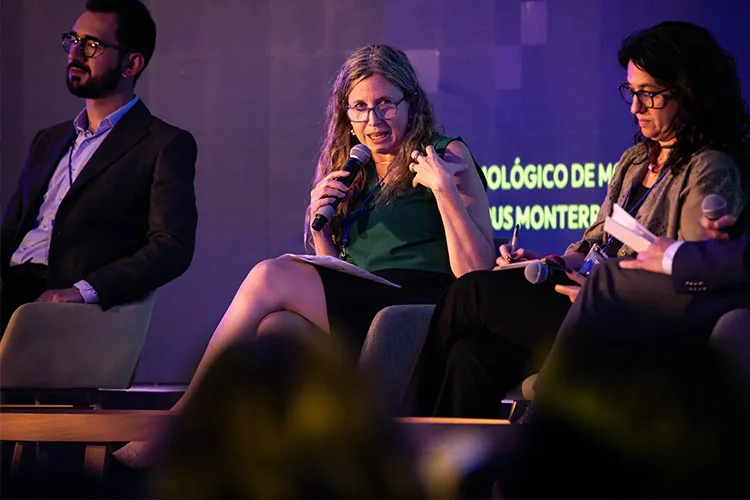
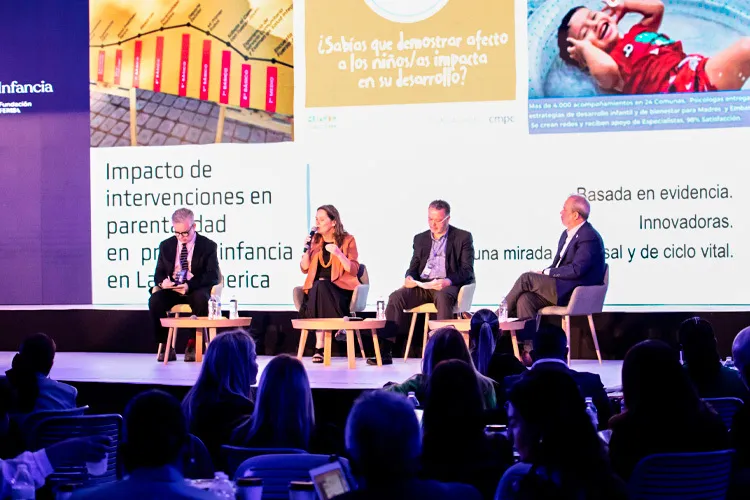
They participated in the panel titled The Early Childhood Agenda in Latin America: Gaps and Priorities for the Next 10 Years, held during the third edition of the International Early Childhood Forum, organized by the Center for Early Childhood at Tecnológico de Monterrey and the FEMSA Foundation.
The discussion, moderated by Manuel Pérez, director of the Center, featured researchers from the National Institute for Early Education Research (NIEER) at Rutgers University, New York University, Universidad de los Andes in Colombia, and the Pontificia Universidad Católica de Chile.
Among the most urgent challenges identified by the experts for the early childhood agenda over the coming decade are:
1. Promoting Research and the Use of Evidence in Public Policy
Milagros Nores, a researcher from Rutgers University, emphasized the importance of generating contextualized evidence through research to understand early childhood development across the region. Through projects and tools such as longitudinal surveys and population-level assessments, researchers have been able to identify the gaps that Latin American children face in their early years and how these gaps evolve.
“Developmental gaps emerge early, persist over time, and tend to be wider in countries with greater inequality in the region,” Nores explained. “We need to understand how much these gaps matter, when they begin, and where we need to intervene. There are opportunities to weave together policies and programs and strengthen them by using research to show us what matters, where we’re going, and how we get there.”
The NIEER professor pointed out that Latin America already has examples of early childhood programs that have proven to be effective, offering high returns on investment. However, despite this existing evidence, it is essential to assess the quality of program implementation to identify which components are most effective, for which populations, and under what conditions. This approach will also help generate region-specific knowledge to guide long-term policymaking—without relying solely on models developed in other contexts.
2. Improving the Assessment and Monitoring of Educational Quality
Carolina Maldonado, a professor at Universidad de los Andes in Colombia, noted that for years, educational quality has been measured primarily through factors like infrastructure, teacher-to-student ratios, or academic indicators. However, when it comes to early childhood development, she argued that a better approach focuses on evaluating the quality of daily interactions and experiences children have within educational centers—what she called the “heart” of quality.
“Ensuring access to early education does not guarantee quality—and quality is what truly matters for children’s development,” she said. While early education is one of the most influential contexts for child development, countries in the region still lack sufficient data to determine what is being done well and what needs improvement in early learning environments.
Maldonado, a psychologist —and Global Visiting Faculty in the Center for Early Childhood—, also pointed out that less than 8% of published research on human development comes from the “majority world”—the regions where most of the world’s children actually live. This means that many of the theories, models, and tools used in Latin America originate in very different contexts and may not reflect the region’s priorities or specific needs. For this reason, there is an urgent need for evaluation and monitoring mechanisms that help generate local evidence to foster stimulating and equitable learning environments, with high-quality interactions from the earliest years.
3. Addressing the Impacts of Climate Change
Jorge Cuartas, a professor at New York University, explained that child development unfolds within an environment shaped not only by cultural and social contexts, but also by natural and physical ones. Climate change has a multifaceted impact around the world, creating risks linked to temperature, air quality, water, and soil. These environmental disruptions can affect the natural and ecological landscape and lead to mass displacement, destruction of infrastructure, and even school closures—all of which disrupt the daily lives of children.
“These are ecosystem-level changes, and we have good reason to believe they could ultimately impact early childhood development,” he said. “We already have evidence of how climate change affects biological systems and people’s physical health. But a question our research group has been exploring is: What evidence exists on the impact of climate change on children’s cognitive, social, and emotional development?”
By combining data from household surveys, climate information, and assessments of child development, Cuartas and his team have found that climate anomalies—such as heatwaves—have negative effects on early childhood development, particularly in vulnerable and high-risk settings. For example, extreme heat has been shown to increase levels of domestic violence, which in turn harms children’s well-being.
Also a researcher at Universidad de los Andes, Cuartas emphasized the need for more applied research projects and compelling narratives that drive action and support the design of interventions to confront the challenges posed by climate change and its effects on early childhood.
4. Understanding Latin American Family Contexts
Marigen Narea, a professor at the Pontificia Universidad Católica de Chile, highlighted the critical role that families play in early childhood development and the importance of strengthening them. Since 2019, her team has been tracking over a thousand families in Santiago to better understand the type and quality of care children receive, as well as the enabling factors and barriers families face within the Latin American context, where challenges such as inequality, violence, and social crises are common.
“We have longitudinal studies showing that developmental differences emerge very early on. For example, we’ve found disparities between children whose mothers have only a primary education versus those whose mothers have a university degree,” she explained. “In another nationally representative study, we aimed to go beyond simply labeling a family as ‘vulnerable.’ We need to understand what vulnerability actually means. Each family is different and faces unique circumstances.”
Through these studies, her team identified two key factors that help reduce developmental gaps: the mental health of caregivers and stimulation within the home. She noted that when these areas are compromised, there’s a greater risk of negative behaviors in children and reduced learning opportunities. In response, her team has developed intervention programs to support families by helping reduce depression and parental stress.
5. Revaluing and Strengthening Educators
Eduardo Escallón, a professor at Universidad de los Andes, spoke about the critical role teachers play in early childhood development through early education. Society has long held the belief that to be a good teacher, all one needs is charisma, passion, intuition, affection, patience, and goodwill. However, Escallón emphasized that teaching is a specialized profession that demands knowledge of child development, pedagogical skills, and ongoing training.
“Being a teacher is a profession—it’s learned in universities and requires specialized knowledge and specific skills,” he said. According to Escallón, teachers are the driving force behind child development through the high-quality interactions that help reduce toxic stress and foster the neural connections that shape brain architecture. They are the ones who can turn early education classrooms into nurturing environments filled with positive and meaningful experiences.
But achieving this requires elevating the status of teachers through fair working conditions and opportunities for continuous professional development—not just through evaluations, but with support networks and expert feedback. For Escallón, Global Visiting Faculty in the Center for Early Childhood, investing in the ongoing education of teachers is also an investment in the present and future of childhood, since they are the adults who spend the most time with young children during the most critical years of their development.
6. Closing Governance Gaps and Securing Stable, Sufficient Funding
Ernesto Treviño, a researcher at the Pontificia Universidad Católica de Chile, pointed out that one of the major gaps in Latin America—when comparing early childhood protection systems and public policies—is the lack of integration. Programs targeting young children often operate in silos, becoming burdensome for families. It’s as if each service—health, education, and social development—were designed for a different child. This fragmentation, he explained, stems largely from a lack of intersectoral governance.
“We see heterogeneity in quality that stems from varying standards and oversight, especially in decentralized models. In federal countries, when responsibilities are passed down to municipalities, it often creates these gaps,” Treviño said. “We also face limited access to protection, care, and early education services. In rural areas, there’s a lack of longitudinal evaluations and standardized monitoring systems. Most children live in certain regions, but the research often comes from elsewhere.”
Treviño emphasized that a major challenge lies in financing. Public investment in early childhood tends to be insufficient, and funding is often unstable due to political transitions. Achieving true integration, he argued, requires governance structures capable of supporting multiple, coordinated, and interconnected interventions, as well as long-term planning. Context matters too—there are no one-size-fits-all solutions, and policies must be tailored to meet the diverse needs of each territory.
Finally, he called on the academic community to take a more active role in influencing public policy: to view policymakers as allies, work alongside them, and not become discouraged when immediate impact isn’t visible. “Persist, offer support, and bring knowledge to the table,” he urged, “so we can drive meaningful action in favor of early childhood.”
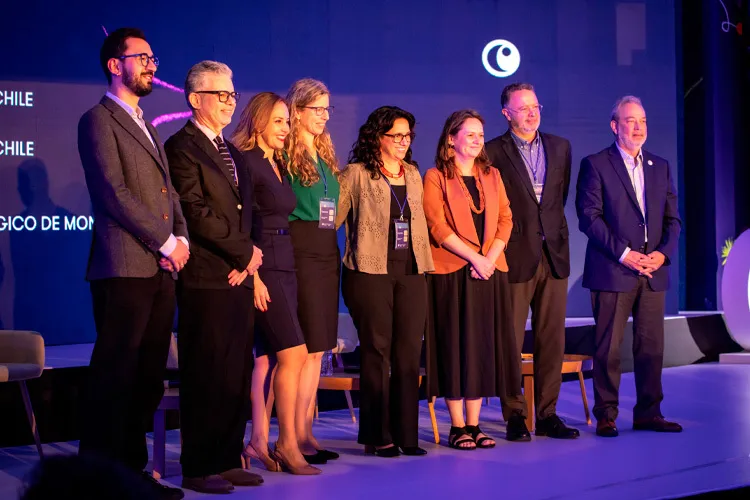
During the opening of the International Early Childhood Forum, Guillermo Torre, rector of TecSalud, emphasized that one of the main goals of such gatherings is to promote research and collaboration among universities, which should serve as catalysts for change—bringing together diverse fields of knowledge and disciplines to influence public policy and help shape a better future.
“If we truly want to create a more just world, we have to start in the earliest years,” he said. “We can’t talk about a better future for people and communities unless we create more justice and opportunities beginning in childhood.”
Did you find this story interesting? Would you like to publish it? Contact our content editor to learn more: marianaleonm@tec.mx