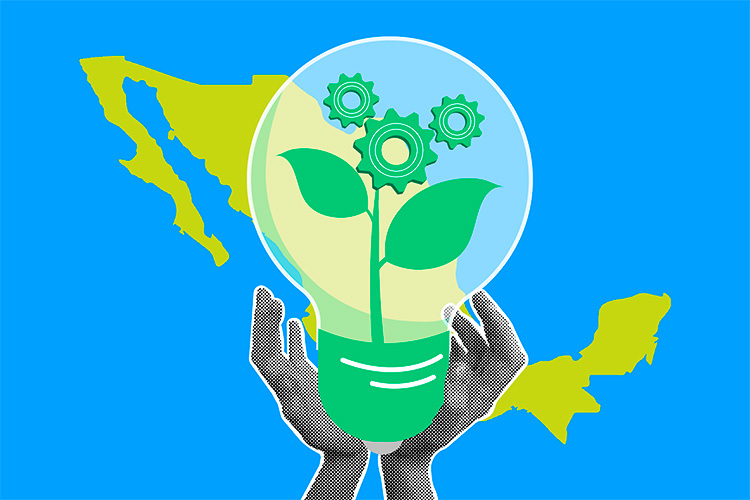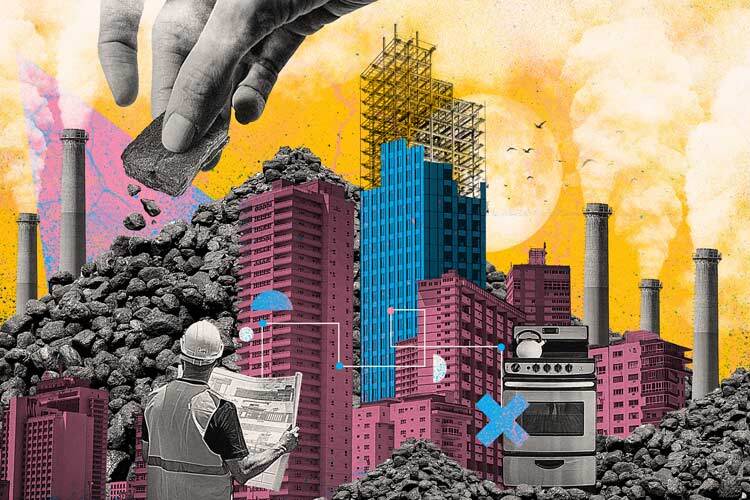


Decarbonizing homes is becoming a key strategy in the fight against climate change. Because residential buildings generate a significant share of greenhouse gas emissions, researchers at Tec de Monterrey are working with vulnerable communities in Chihuahua, Puebla, and Chiapas to design locally adapted energy transition pathways.
In practice, this means reducing carbon dioxide emissions associated with residential energy use, construction materials, and everyday activities. Strategies include lowering energy consumption, incorporating renewable energy sources, using materials with a smaller environmental footprint, and improving thermal comfort without relying on heating or air conditioning systems.
At the United Nations Climate Change Conference (COP29), Mexico’s government renewed its sustainability commitments, but the path to decarbonization is not entirely clear.
“What we saw is that the strategies came from the top down,” says Caribay Godoy, a researcher at the School of Architecture, Art and Design (EAAD) at Tec de Monterrey and part of the research group. “What’s happening in the communities isn’t being taken into account.”
With this in mind, Godoy and researchers from EAAD, the Autonomous University of Ciudad Juárez (UACJ) and the Autonomous University of Chiapas (UNACH) launched a project that promotes a participatory, equitable, and sustainable energy transition shaped by the communities themselves.
Their goal is to identify solutions that are not only viable, but also respond to the real needs of the communities and can be adopted in the long term.
“Many other interventions fail because there is no appropriation of technological resources by the inhabitants,” says Emanuele Giorgi, research professor at EAAD and leader of the research group.
Community-Led Decarbonization Strategies for Vulnerable Communities
The project is designed to be developed in three stages over two years and three months, although the times may vary.
The first stage consisted of selecting three communities in states with different climatic contexts: Chihuahua, Puebla and Chiapas to diagnose energy consumption and emissions associated with homes.
They also conducted workshops to get to know the residents, to understand their context, needs, concerns, and possibilities.
“The project understands vulnerability in a contextual way,” says Cecilia Hernández, a postdoctoral researcher at EAAD and part of the group. “The goal is to establish a cross-cutting methodology adaptable to each place.”
In Chihuahua, the work was carried out in the Paso del Norte and Rodolfo Aguilar neighborhoods. In Puebla, in the Emiliano Zapata district, and in Chiapas, in Chiapa de Corzo.
During the first stage, a “Life Stories” methodology was implemented, a participatory exercise through which the inhabitants shared experiences related to their community and their homes.
The workshops made it possible to document 44 life stories and build collaborative maps that help to understand the social, spatial and cultural dynamics of each territory.
Energy Transition Challenges in Chihuahua, Puebla, and Chiapas
Initial findings show that vulnerability conditions vary significantly across the three regions. While Chihuahua is characterized by predominantly cinder block construction with corrugated metal roofs, increasing exposure to heat, Puebla boasts a greater diversity of building materials and a growing interest in technologies such as solar water heaters.
In Chiapas, the challenges are more related to the transformation of family homes and the adaptation of inhabited spaces.
One of the most relevant findings was that residents show a high level of awareness about the effects of climate change and the energy problems of their homes, challenging the idea that these issues are foreign to communities with higher levels of vulnerability.
“Many people feel that the last few years have been more difficult due to the extreme temperatures,” says Hernández. Therefore, they are looking for ways to improve the comfort of their homes without increasing their expenses.
Strategies for Household Decarbonization
With this information, the project will move on to a second stage in which possible decarbonization strategies will be evaluated and implemented.
Among them are improvements to the building envelope, a strategy that consists of optimizing elements such as walls, roofs or windows to maintain comfortable temperature conditions without the need to install cooling or heating equipment.
They will also incorporate more efficient technologies for cooking food, such as electric stoves, and the use of renewable energies, such as solar or wind power, depending on which is abundant in the region.
Toward a Replicable Community Decarbonization Model for Mexico
The ultimate goal is to build a replicable methodology that allows for the design of decarbonization routes for homes adapted to different contexts in the country.
“To guarantee a good quality of life, working on housing is fundamental,” says Giorgi.
To do this, in a third phase the researchers will replicate the interventions carried out on digital twins and evaluate their impact on energy consumption and emissions of homes.
Beyond reducing emissions, the initiative seeks to demonstrate that the energy transition can also improve quality of life, strengthen local capacities, enhance climate resilience, and help communities adapt to climate change.
If the methodology works, it could become a tool for other communities across the country to design their own decarbonization and energy transition pathways. “These new alternatives can transform communities, and decarbonize in the process,” Godoy concludes.
Did you find this story interesting? Would you like to publish it? Contact our content editor to learn more: marianaleonm@tec.mx