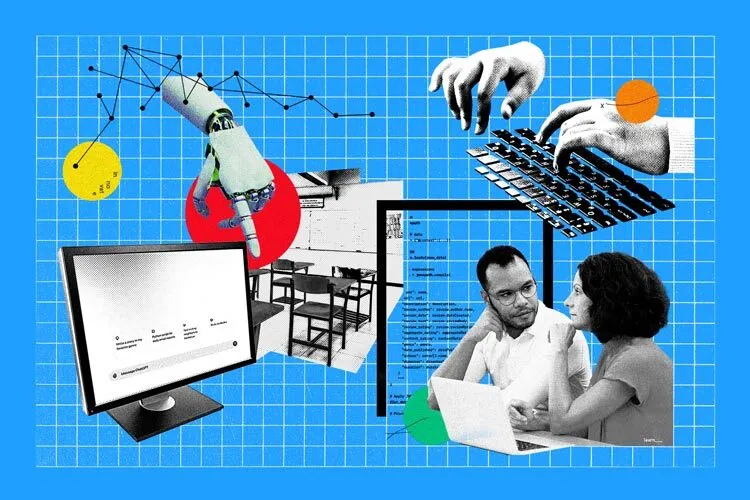


Artificial intelligence (AI) is already part of our daily lives—especially for young people. It powers social media platforms and search engines. Yet, when it comes to education and AI, the conversation tends to focus solely on how students use the technology to learn, rather than how they might use it to develop critical thinking or understand how AI systems are actually built.
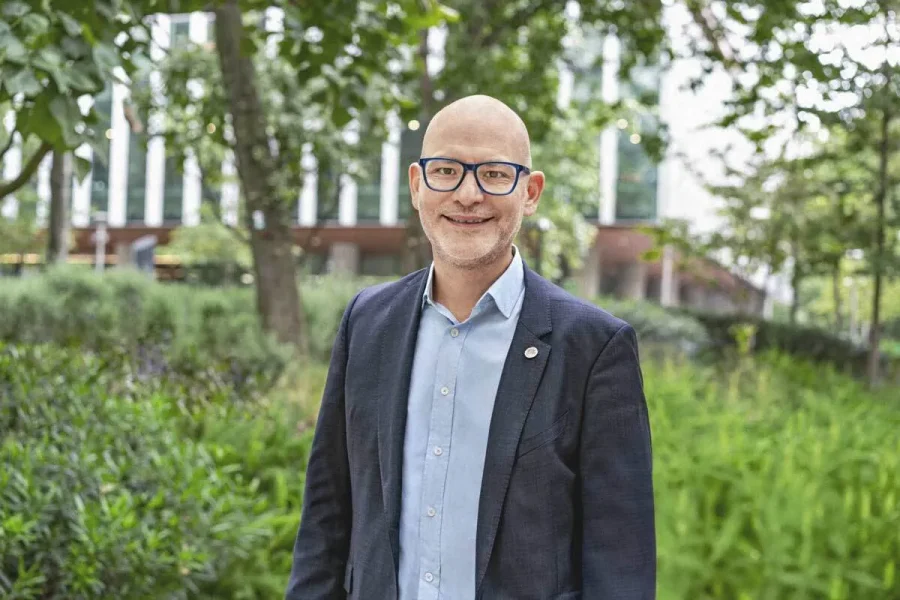
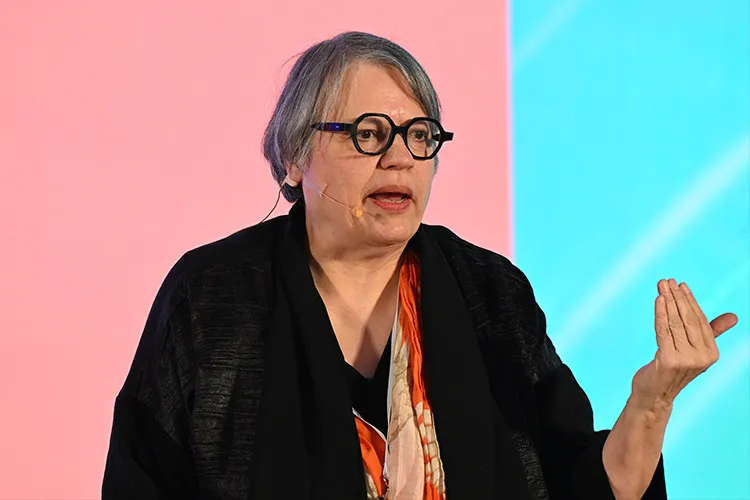
That was the perspective shared by Yasmin Kafai, Professor of Learning Sciences at the University of Pennsylvania, during her keynote address titled “CreateAI: Empowering Youth as Future Designers of AI” at the IFE Conference 2026, hosted by the Institute for the Future of Education, Education Group at Tecnológico de Monterrey.
“Most of the attention is on children and students as AI users. So far, very little has focused on them as critical thinkers about the technology, and even less as designers,” said Kafai, who is also an expert in creating tools to support youth development and AI literacy.
AI Is Not a Black Box
The focus on youth as users is evident in how educational efforts are mostly geared toward teaching students to design prompts—the instructions given to an AI—and to use the technology as a task assistant. While Kafai acknowledged that these uses are important, she emphasized that they represent only a small fraction of the broader picture.
This limited approach stems from the belief that AI systems are “big and opaque,” she argued—in other words, black boxes whose inner workings are unknowable. But she urged audiences not to forget that these tools don’t “fall from the sky” or arise spontaneously; they are created by people.
Computational Empowerment for Students and Teachers
In response to this reality, the researcher spoke about the concept of “computational empowerment,” which she defined as the ability to understand digital technology and its impact on our lives and society at large.
“What is important is to computationally empower both teachers and students so they can engage creatively, critically, and with curiosity in the construction and deconstruction of technology,” she said. “It is not just the use. It is also understanding how the technology is made while making it.”
Deconstructing AI
Through this approach, young people can begin to develop critical thinking around the AI systems they interact with every day. One way to do this is through algorithmic audits—activities in which students analyze how algorithms work, test their behavior, and document the results.
Kafai gave the example of a high school project where students examined AI-powered TikTok filters. They found that regardless of the original image, one particular filter transformed all faces into feminine figures with Eurocentric features—successfully identifying algorithmic bias.
“Algorithm auditing doesn’t require any programming or coding experience. You also do not need access to the data or proprietary code, which was used to train the model,” Kafai explained. “The only thing that it requires is systematic analysis. Students can become designers of algorithm audits that don’t require any technical experience — they just need guidance.”
Constructing AI
This perspective focuses on enabling young people to build AI systems themselves, so they can gain a deeper understanding by designing and training their own small-scale language models. These tools are known as Baby GPTs—smaller versions of models like ChatGPT that are trained on limited datasets.
Kafai shared that in workshop settings, high school students used the open-source nanoGPT framework to create their own generative AI models. Throughout the process, they reflected on the differences between human and machine thinking, learned foundational concepts about neural networks and data use, and engaged in discussions about the ethics of using public data.
“Yes, high school students can build their own AI systems—this isn’t something reserved only for OpenAI engineers,” said Kafai. “Designing your own application is a very powerful and impactful way to learn and understand technology.”
At the end of her talk, the researcher called on the tech and education communities to develop simpler tools that allow students to explore how AI is built.
With the right guidance and room to experiment, young people can go on to build functional AI models. “We need many more tools for creating artificial intelligence,” she concluded.
Did you find this story interesting? Would you like to publish it? Contact our content editor to learn more at marianaleonm@tec.mx