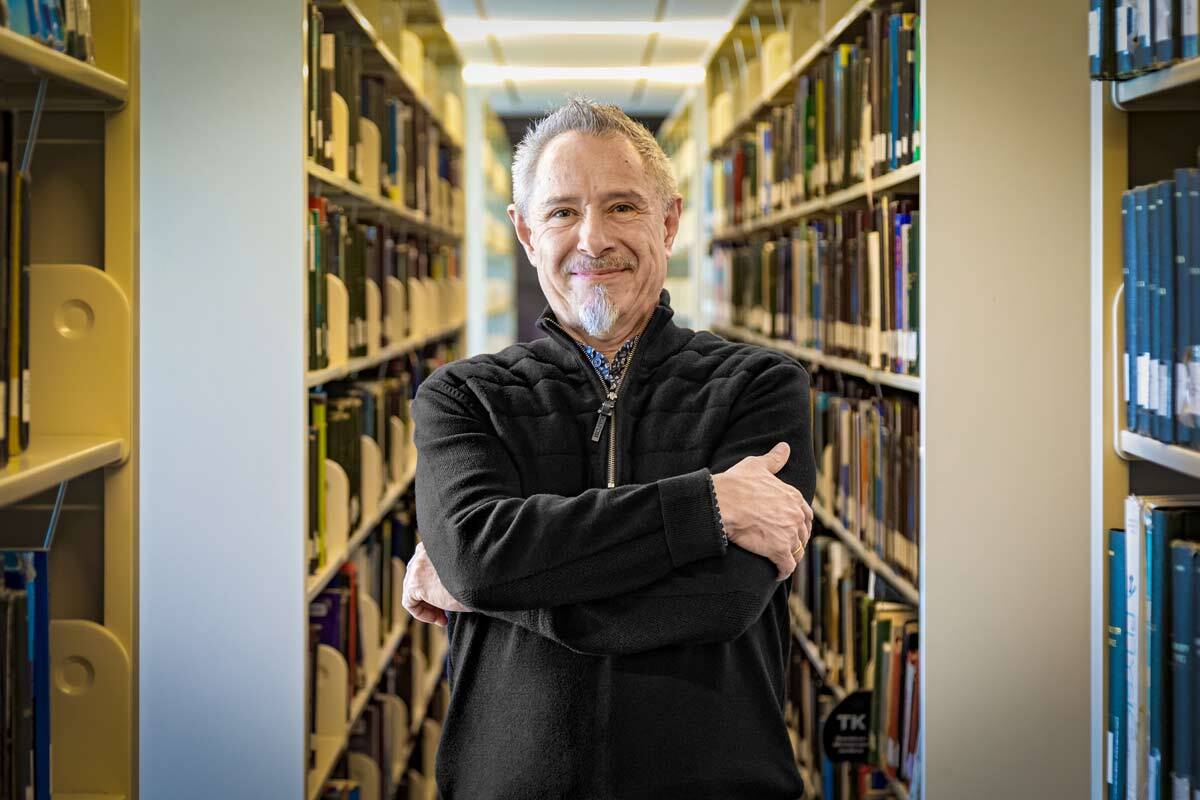


Artificial intelligence now dominates headlines, boardroom agendas, and everyday conversation. But when Raúl Monroy entered the field in the 1980s, AI was still a niche pursuit, spoken about mostly in specialized circles. He remembers that when he mentioned having a graduate degree in Artificial Intelligence, people reacted with curiosity—and more than a little doubt.
Research professor at the School of Engineering and Sciences at Tecnológico de Monterrey, Estado de México campus, Monroy has spent his career building machine learning systems for automation, cybersecurity, and natural language processing. He founded and leads a research group in advanced artificial intelligence, previously served as president of the Sociedad Mexicana de Inteligencia Artificial, and this year received the 2025 Insignia Award of the Rómulo Garza Prize for Research and Innovation.
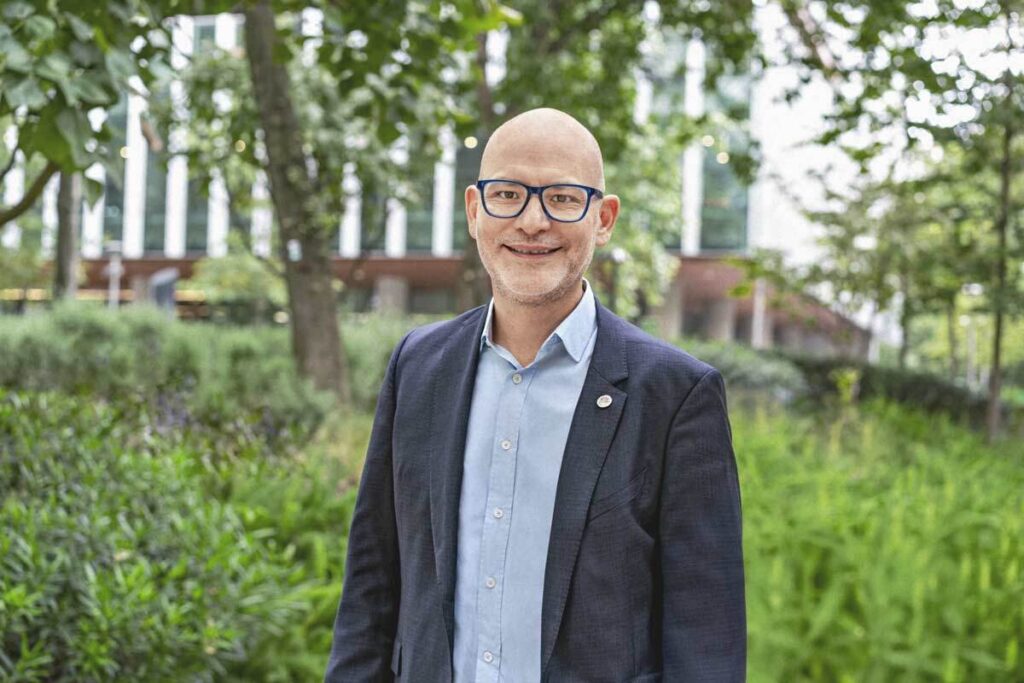
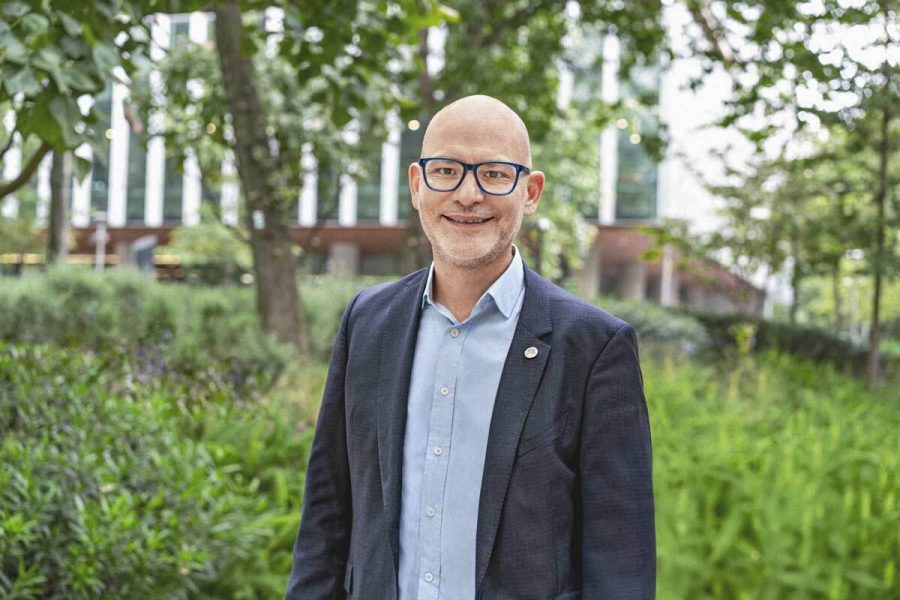
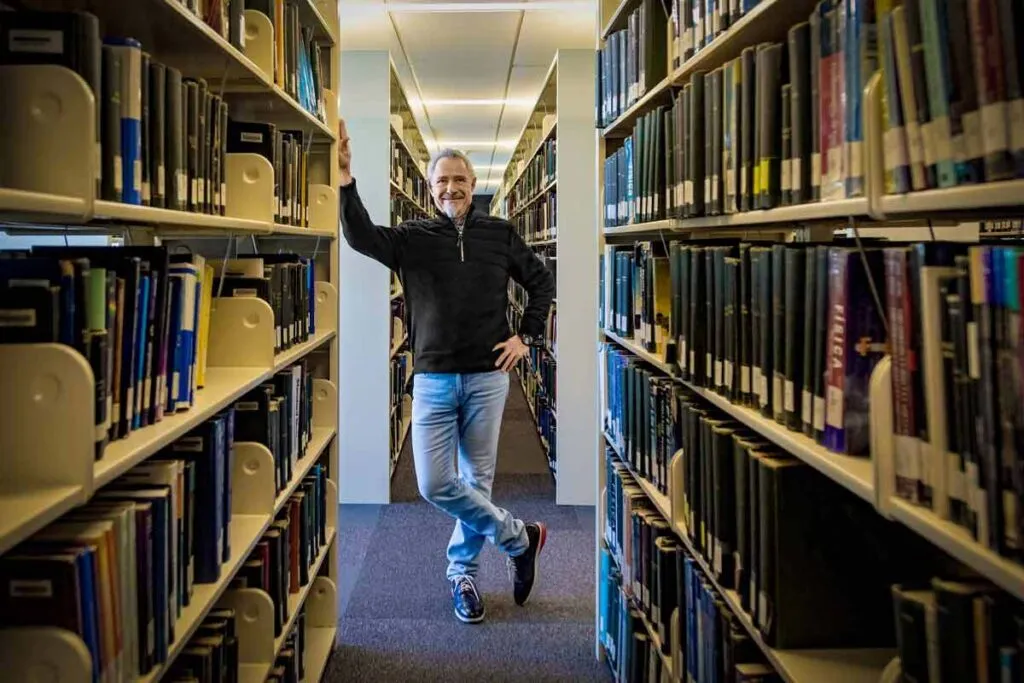
We meet in the library at the Monterrey campus. He arrives exactly on time, greeting me with a firm handshake and an easy smile. In front of the camera, he is relaxed, almost understated. But as the conversation turns to algorithms and research trajectories, his language sharpens—measured, precise, analytical—without losing warmth.
When we talk about his childhood, he pushes back gently against the idea of being a prodigy. “Curious,” he says, is the better word. He grew up in Acapulco, where his family ran an auto parts shop. His father, a mechanic, taught him to see the logic behind moving parts—the systems thinking that would later shape his work. As a teenager, he took apart radios and televisions, trying to understand what made them tick. That impulse followed him when he made a defining choice: leaving home to study engineering.
How did you decide to pursue a career in electronics?
In the early 1980s there were few higher-education options in either Acapulco or Chilpancingo. Universidad Autónoma Metropolitana (UAM), Iztapalapa campus, felt like a new kind of opportunity—one not weighed down by the institutional turmoil that still worried many parents after 1968.
I knew I wanted to be an engineer. I was drawn to the physical sciences, especially physics and mathematics. But I also wanted a path that could improve my economic situation. That combination—intellectual interest and the possibility of mobility—pushed me to study electronic engineering.
In 1985, after completing his undergraduate degree and working as a lab assistant at UAM, his thesis advisor, Emanuel Moya, invited him to join the Tec as an assistant professor at the Estado de México campus. He joined the Department of Computing—reluctantly at first, since his interests leaned toward communications—but two years later he encountered artificial intelligence, a turning point that would shape the rest of his career.
Over the decades, he has become one of Tec’s most experienced voices in AI, mentoring generations of students, publishing extensively, and building a sustained research agenda.
Is there an advantage to being a researcher at Tecnológico de Monterrey?
The institution gave me the opportunity to pursue graduate studies, and that creates a lasting sense of gratitude. I also find that things move here when you push for them—there isn’t the inertia you sometimes encounter elsewhere. It’s a competitive environment, but also a supportive one. Colleagues are engaged, and forums like the Research Congress—now Tec Science Summit—create real intellectual exchange.
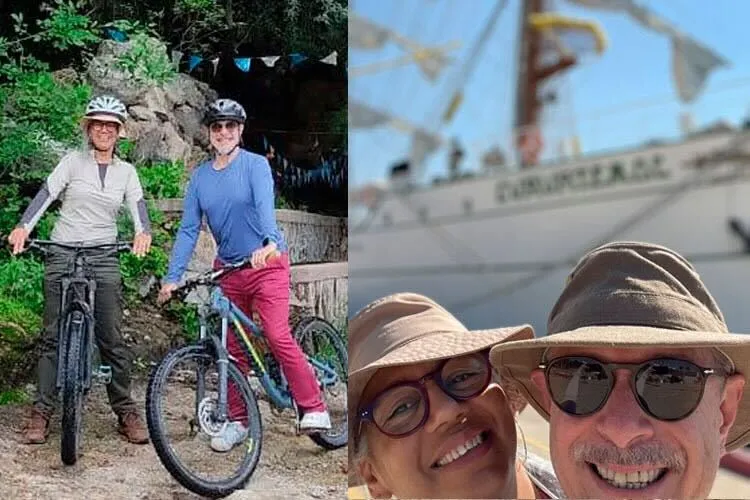
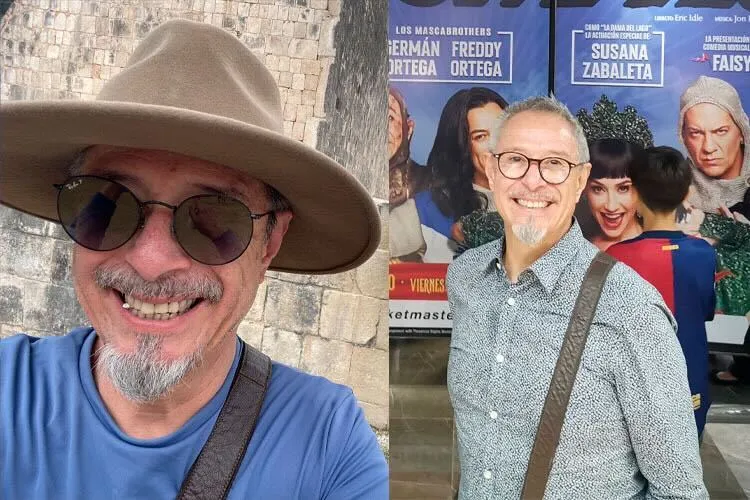
Raúl Monroy enjoys traveling and visiting research centers around the world. These trips give him space to exchange ideas, debate openly, and build relationships that extend beyond formal collaborations. (Photos: Courtesy)
AI: From Winters to a “Hot Summer”
Monroy describes AI as a field shaped by cycles of optimism and retrenchment. Today, he says, we are in what he calls a “hot summer.” There were times when even using the term made securing funding harder, and some graduate programs quietly avoided it. Yet interest persisted, and in 1987, Mexico formalized its national AI community through the Mexican Society of Artificial Intelligence.
Seeking deeper foundations, Monroy pursued a master’s in computer systems at the Tec and later a PhD in artificial intelligence at the University of Edinburgh. He went on to lead the national AI society from 2010 to 2012 and co-founded the Academia Mexicana de Computación in 2015.
He sees today’s landscape as both expansive—spanning dozens of subfields from planning to language to vision—and prone to inflated expectations.
Looking ahead, should we feel excited or worried about AI?
Both. One risk is that people accept what a chatbot says without questioning it. We are all exposed to narratives, and manipulation—intentional or not—is real.
At the same time, there is genuine progress. Problems that once lacked treatment because of time or resource constraints can now be approached differently. AI is improving how we design and validate complex systems. What we need is broader education so people can use these tools responsibly, and continued research to ensure they are robust and safe.
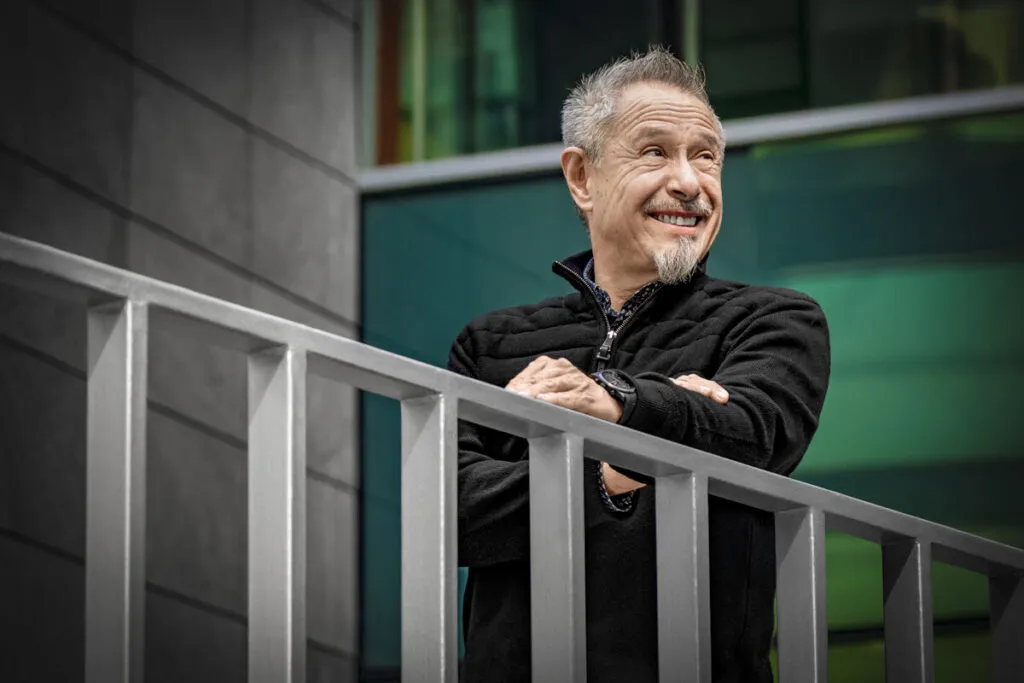
Life beyond research
Monroy is a Level 3 member of Mexico’s Sistema Nacional de Investigadoras e Investigadores, belongs to the Academia Mexicana de Ciencias, and has been a visiting researcher at the German Research Center for Artificial Intelligence in Saarbrücken. He often emphasizes that while research can be consuming, it cannot be all-consuming.
You’ve said that researchers need a balance between their personal and professional lives…
Balance is hard, especially when you’re ambitious. But you have to try to make room for family, for yourself, and to protect your mental health. Everything has its moment.
What is your relationship with your family like? (He pauses, looking upward before answering.)
My wife (Claudia Fraustro) and I have been married for 35 years. Our children, Diego and Daniela, are adults now, and they make me very proud. I’ve always tried to keep work from taking over home life—focusing instead on shared activities, time together, sports. They’re interested in what I do, but more importantly, they support me as a person.
Do you have hobbies?
I love reading, especially novels. I’m drawn to Latin American writers like Roberto Bolaño, Julio Cortázar, Mario Benedetti, and more recent voices such as Mario Bellatin and Xavier Velasco. I also enjoy long walks—whether in the woods or in a city—and visiting museums such as the Museo del Estanquillo, which always has compelling exhibitions.
Recognition—and What Comes With It
Monroy has received the Rómulo Garza Prize before, including third place in 2011 as a coauthor of a research article. But the Insignia Award marks a different milestone: the institution’s highest distinction for a lifetime of research excellence.
How will this award shape your work going forward?
I hope it opens doors, but more importantly, that it strengthens the research group. Recognition like this carries responsibility—the obligation to keep contributing.
Who do you dedicate the award to?
I feel proud, but above all grateful—to the institution, to my students and colleagues, and to the many people who have supported me along the way. And of course to my wife and children. I may receive the award, but it represents the work of many.
Did you find this story interesting? Would you like to publish it? Contact our content editor to learn more at marianaleonm@tec.mx