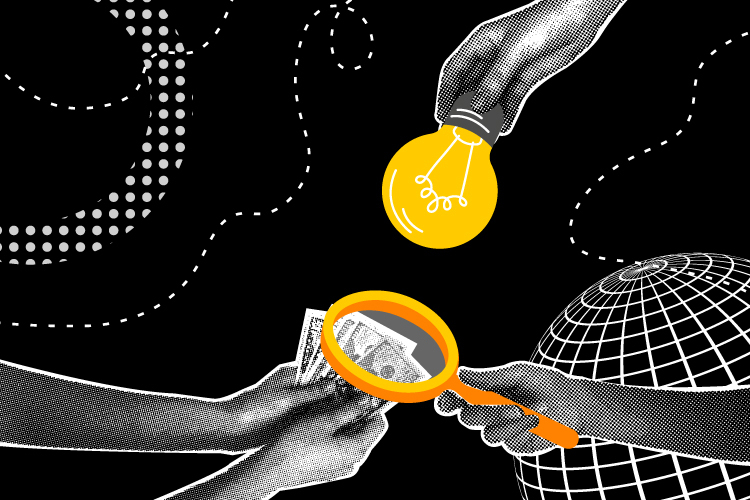


Reducing corruption is one of the commitments of the United Nations Sustainable Development Goals (SDGs). Target 16.5 states that countries must substantially reduce corruption in all its forms by 2030. The problem is that, until now, it was unclear how to measure whether this goal was being met.
To try to solve this difficulty, a group of researchers from Tec de Monterrey developed the Multidimensional Index of Progress against Corruption (MIPAC).
The proposal starts by questioning two key aspects of the goal; one: what are all forms of corruption? and two: what constitutes a substantial reduction?

The two existing and most widely used indicators for measuring progress in combating corruption focus on bribery, and there is no concrete definition of exactly what constitutes a significant reduction. Nor is there a uniform baseline year for comparing progress across countries.
“Corruption is not black and white,” says Bonnie Palifka, a research professor at the School of Social Sciences and Government at Tec de Monterrey and one of the developers of MIPAC.
To build an alternative, researchers Palifka, Giovanna Rodríguez and Rocío García combined two classifications: one based on corrupt acts and another on the sectors or spaces where they can occur.
They considered, among other phenomena, bribery, extortion, influence peddling, nepotism, conflicts of interest, misappropriation of public funds, fraud, embezzlement, vote buying and illegal campaign financing.
By cross-referencing these categories with the different sectors and actors involved, they constructed a conceptual universe of 260 possible dimensions of corruption.
How Does MIPAC Work?
Once they had defined their universe of possibilities, they reviewed publicly available international databases that covered two points in time. They found comparable and sufficient information to analyze 19 dimensions.
“One of the biggest challenges is the availability of data to measure the different types of corruption in all countries,” Palifka points out. “Island nations have very little data.”
This is complex because it depends largely on the countries themselves collecting and reporting them consistently.
Once the dimensions were defined, the analysis was based on data from 186 countries, taking 2015 as the reference year and comparing it with the most recent year available for each dimension.
To address the issue of substantial reduction, the researchers established a specific threshold for each dimension, calculated from the variation between countries in 2015 and the level of corruption in each one.
Thus, the methodology seeks to prevent any small change from being considered significant and, at the same time, to ensure that countries that already had low levels of corruption are not put at a disadvantage.
The final result is not an overall rating of “more” or “less” corrupt. MIPAC counts in how many dimensions a country achieved a substantial reduction in corruption.
This allows us to distinguish between the breadth and depth of progress: it is not the same to improve slightly in many indicators as it is to achieve significant reductions in various forms of corruption.

Mexico has Made Little Progress Against Corruption
The MIPAC results show that 137 of the 186 countries analyzed, around 70%, improved substantially in at least one dimension.
The areas where countries made the most progress were bribery related to the police and bureaucratic procedures. In contrast, legislative bribery was the dimension with the least progress, with only five countries showing substantial improvement in it.
“This tells us that countries are at least making an effort to reduce it,” the researcher reflects.
In Mexico, the index registered improvements in nine of the thirteen available dimensions, but only three reached the substantial threshold, so it obtained a score of 3.
The importance of these results and this index lies in the fact that it allows us to identify on which fronts each country is making progress and where problems persist.
The Importance of Fighting Corruption
Combating corruption is important because it affects all sustainable development goals, according to the researchers.
If it exists, there is less investment in education, and it affects health in many ways. “During COVID, we saw it a lot; to get a bed for your loved one, you needed to pay a bribe or have connections,” Palifka recalls.
It also perpetuates poverty and harms the environment by allowing the overexploitation of natural resources and pollution, without consequences, by companies and factories.
“Everything, everything we don’t want is easier with corruption,” Palifka emphasizes.
The Future of MIPAC and the Fight Against Corruption
The authors acknowledge that the MIPAC still faces limitations such as data availability, as there is more information on citizen experiences than on corporate or private corruption. Furthermore, the index measures changes but does not explain why they occurred or whether they were a direct result of an anti-corruption policy.
Even so, its methodology can be updated as new data emerges and adapted to subnational scales or different objectives. It can also be used to guide public policies.
In the case of Mexico, for example, the researchers suggest that a MIPAC could be developed to compare federal entities. “We would like to see them at least adopt the method, to see how we are doing in the states or municipalities,” Palifka suggests.
So, rather than offering a definitive picture of global corruption, the index proposes a new way of observing its evolution: recognizing concrete progress without losing sight of the dimensions that remain behind.
In a phenomenon as complex and difficult to measure as corruption, knowing exactly where progress is being made can be as important as knowing where action is still needed.
“2030 is coming very soon and I’m not sure if countries are meeting this goal,” says Palifka.
Did you find this story interesting? Would you like to publish it? Contact our content editor to learn more: marianaleonm@tec.mx