

A four-decade career within the Tec research ecosystem in computational sciences and artificial intelligence (AI); the exploration of 3D printing techniques to design the foods of tomorrow; and a venture that reproduces synthetic models of human organs for clinical practice were recognized with the 2025 Rómulo Garza Research and Innovation Award.
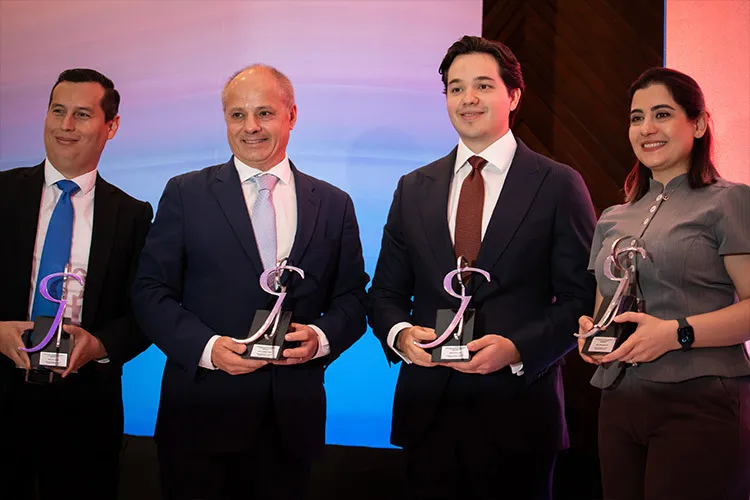
At this year’s ceremony, which honors the scientific work of faculty and students at Tecnológico de Monterrey, the award was presented to researchers Raúl Monroy; Viridiana Alejandra Tejada, Enrique Cuan, Mariana Morales, and Rubén Maldonado; and Héctor Alan Aguirre, Mario Alejandro Fabiani, Elnaz Hosseinzadeh, and Ángel Celis. In addition, three research projects led by graduate, undergraduate, and PrepaTec students received special recognition.
“I would like to congratulate the winners of the Rómulo Garza Award. Without a doubt, you have worked extremely hard to reach this moment. Your work inspires our community and strengthens the purpose we have declared: to transform the lives of people and communities through education,” said David Garza, Executive President of Tecnológico de Monterrey’s Educational Group.
The award was established 51 years ago in memory of Rómulo Garza, an entrepreneur and philanthropist who promoted research in Mexico. Today, the distinction is granted by Tecnológico de Monterrey and the company Xignux, organizations of which he was a founder and board member.
The award ceremony took place during the Tec Science Summit 2026, held at the Monterrey campus. Winners received the Rómulo Garza sculpture along with a financial incentive corresponding to their respective categories.
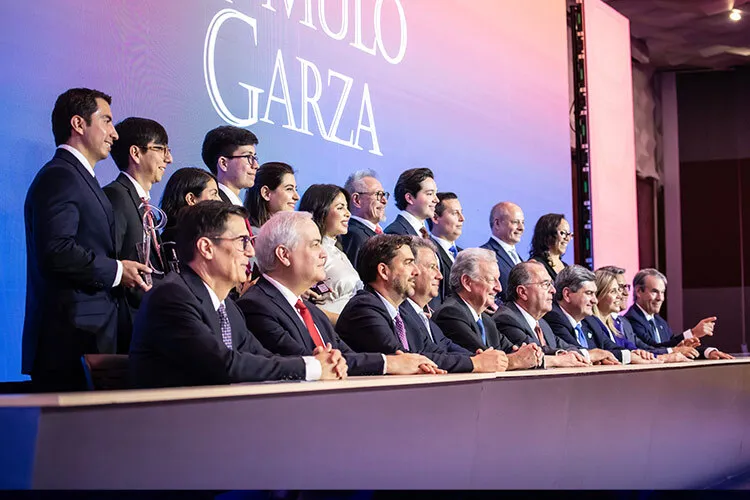
Rómulo Garza Award 2025: Recognizing 40 Years of Research at Tec
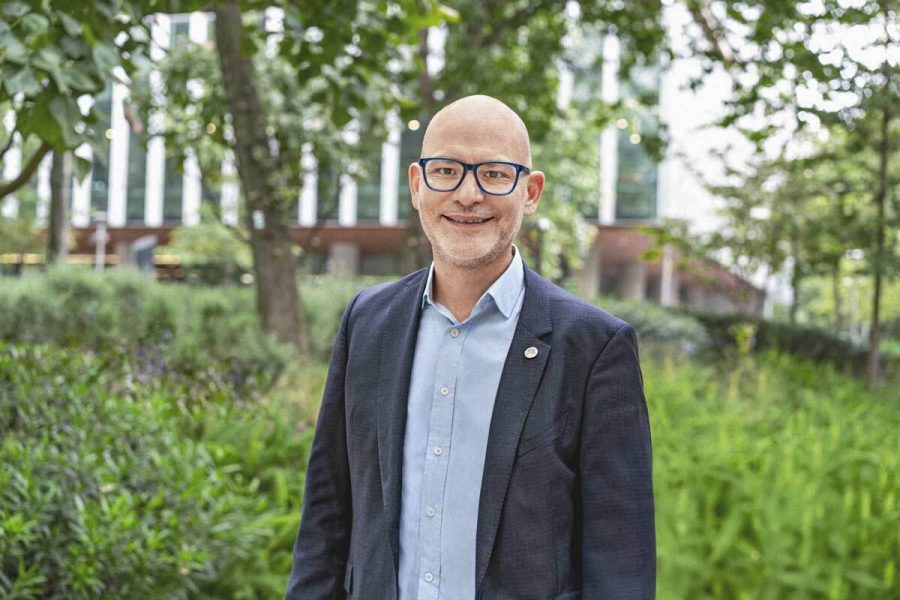
Raúl Monroy, a research professor at the School of Engineering and Sciences (EIC) at the Estado de México campus, was honored with the Insignia Award, which recognizes a career of scientific excellence. With 40 years at Tecnológico de Monterrey, Monroy has become an institutional benchmark and a key figure in the development of research in computational sciences and artificial intelligence, particularly in areas such as cybersecurity and biometrics.
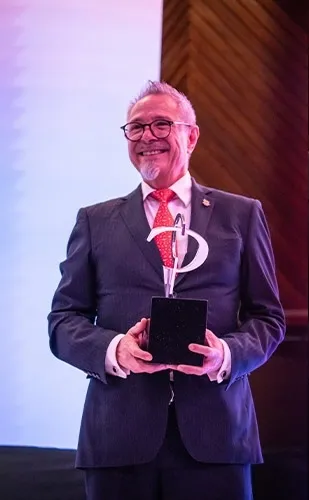
Through his work, he has made an impact both in the generation of knowledge and in the training of scientific talent within and beyond the institution. Over the course of his career, he has produced high-impact scientific contributions, with more than 120 indexed publications and consistent presence in top-tier scientific journals.
He is a Level III National Researcher and has been a member of Mexico’s National System of Researchers since 1999. His leadership is also reflected in the mentoring of new generations of researchers, as well as in securing funding for strategic projects. In addition, he has promoted the development of technological solutions with social impact, particularly in the area of digital security.
“I receive this award with great pride and gratitude, along with the responsibility it entails. This recognition reflects more than an individual journey; it is a shared story,” said Monroy. “It necessarily belongs to those who shaped me—not only my teachers, but also my students, colleagues, and the institutions that have supported my research.”
3D Printing for the Design of New Nutritious Foods
EIC researchers Viridiana Alejandra Tejada, Enrique Cuan, Mariana Morales, and Rubén Maldonado were recognized in the Scientific Articles category for a project that explored 3D food printing using more nutritious and complex recipes than those typically reported, due to the number and type of ingredients used to formulate the printing inks.
Their article, Evaluation of rheology and printability of 3D printing nutritious food with complex formulations, was published in Additive Manufacturing, one of the world’s most influential journals in the field (top 3% in the SJR ranking). The article has received 83 citations in Scopus and a CiteScore of 5.84, meaning it has been cited nearly six times more than the global average for the discipline, publication year, and document type.
In this study, the team explored methods such as rheology (the behavior and flow of a mixture when force is applied) and 3D printing as applied to food science, using nontraditional ingredients, agricultural byproducts, insects, and nutritional components. In the experiments, they tested different formulations with up to nine ingredients to create printable inks, analyzed how the mixtures flowed and deformed during printing, and evaluated whether they maintained their shape and stability when starch and different temperatures were applied.
“This research focuses on another application of additive manufacturing, in this case within biotechnology and food engineering. Opening up more ‘playing fields’ further highlights the importance of additive manufacturing,” said Cuan.
Personalized Anatomical Models with 3D Printing
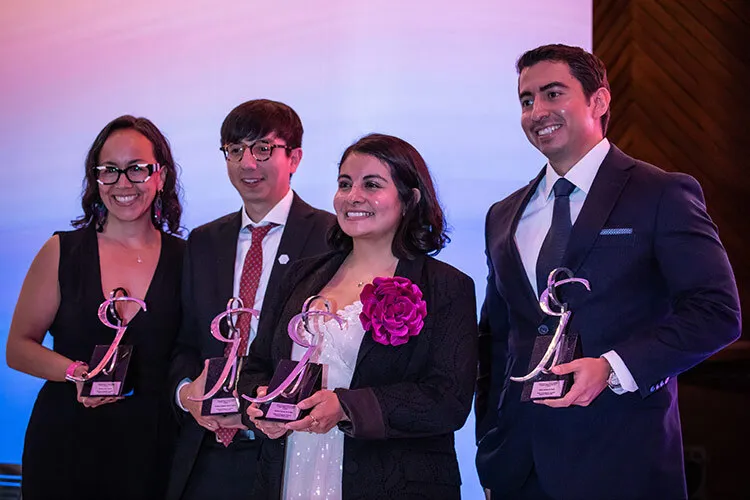
EIC researchers Héctor Alan Aguirre, Mario Alejandro Fabiani, Elnaz Hosseinzadeh, and Ángel Celis were recognized with the Rómulo Garza Award in the Entrepreneurship category for the science- and technology-based startup Maedditiva. Operating in the healthcare sector, the company manufactures customized 3D-printed anatomical models based on patient data.
These synthetic models are useful for medical and dental applications such as surgical planning, medical device testing, demonstrations, education and training, as well as clinical research.
The company offers a specialized, high-quality medical 3D printing service that allows hospitals, clinics, and specialists to request custom-made models that meet strict technical standards and use materials suitable for medical environments.
This category recognizes ventures that emerge from research conducted within the institution, generate positive impact, and help address major societal challenges.
“Receiving the award was a surprise. In terms of continuing the project, I see it as a boost of motivation and encouragement to keep moving forward with this phase of technology transfer toward commercialization,” said Aguirre.
Student Research Projects Honored
In addition, the Rómulo Garza Award recognized research projects carried out by graduate, undergraduate, and PrepaTec students.
In the graduate category, Carlos Fernando Ceballos, a PhD student in Biotechnology at the Monterrey campus, was recognized for his dissertation Bioprinting of spatially organized cancer models using chaotic flows. In this work, he developed more realistic cancer models in the laboratory through an innovative tissue-printing technology that creates structures mimicking the environments in which different cells coexist and migrate.
These models are capable of reproducing how tumors are organized and function in the human body. The goal is to overcome limitations of oncology treatments that work in the laboratory but fail to achieve the same results in patients, partly because traditional models do not reflect the true complexity of tumors.
By more accurately recreating these cellular interactions, the models provide a scenario that more closely resembles what occurs in the body. This approach enables the exploration of more personalized and precise alternatives for drug testing, studying disease progression, and analyzing responses to different treatments, while also reducing the need for animal testing.
At the undergraduate level, student Ximena Herrera, from the Mechatronics Engineering program at the León campus, was recognized for her project Optimizing Path Planning and Human Detection Using YOLO and an RRT Algorithm in Autonomous Robots. The project explores how to improve the way autonomous robots move and interact with people in different environments.
The work combines artificial intelligence tools that allow the robot to recognize people around it and move toward them safely, avoiding obstacles along its path. Tests conducted in simulated environments showed that the system can identify a person, calculate the most efficient route, and adjust its trajectory in real time as conditions change. As a result, the robot can navigate autonomously and respond effectively and safely to different situations, with potential applications in search and rescue, security, logistics, manufacturing, and healthcare.
Hans Enrique Velarde, a student at PrepaTec Eugenio Garza Lagüera, was also recognized for his project Magnetic and mechanical gear systems: Efficiency and durability for a Wind Energy Conversion System, in which he analyzed two types of gear systems—traditional and magnetic—for converting wind energy into electricity.
The objective was to determine which system offers greater efficiency and durability, since gear wear is one of the main causes of failures and high maintenance costs in wind turbines. In his experiment, Velarde designed and manufactured 3D-printed prototypes and evaluated the performance of both systems under the same conditions. According to the results, traditional gears can achieve higher speeds in the short term but experience faster wear. Magnetic gears, by contrast, offer smoother operation and greater long-term durability.
Did you find this story interesting? Would you like to publish it? Contact our content editor to learn more at marianaleonm@tec.mx