

For many university students and young researchers, facing their first scientific publication can feel like a monumental task. The blank page weighs as heavily as the data they have gathered and the research they have conducted.
In addition, the pressure to publish can turn writing into a test of endurance. However, far from being an innate talent, scientific writing is a skill that can be trained.
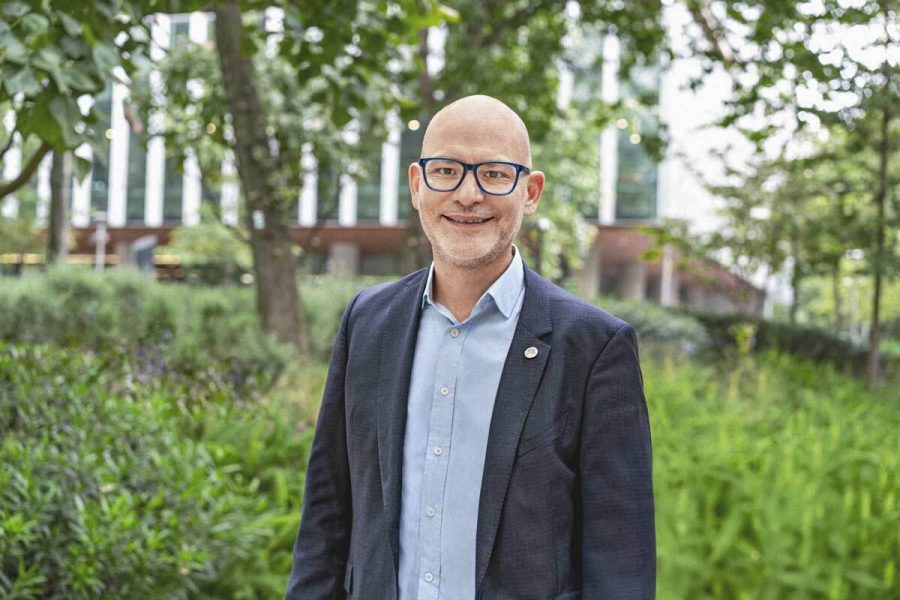
“Writing a scientific paper is complex, yes, but it is something that can be practiced,” explains Óscar Arias, Dean of Graduate Studies at the School of Medicine and Health Sciences at Tec de Monterrey, in an interview with TecScience. He compares it to training as an Olympic-level athlete: “If we want to compete at the Olympic level without preparation, we will surely end up injured. In academia, something very similar happens: you need consistency, mastery of the subject, technical skills, and a lot of practice.”
We teach research, but we don’t always teach writing
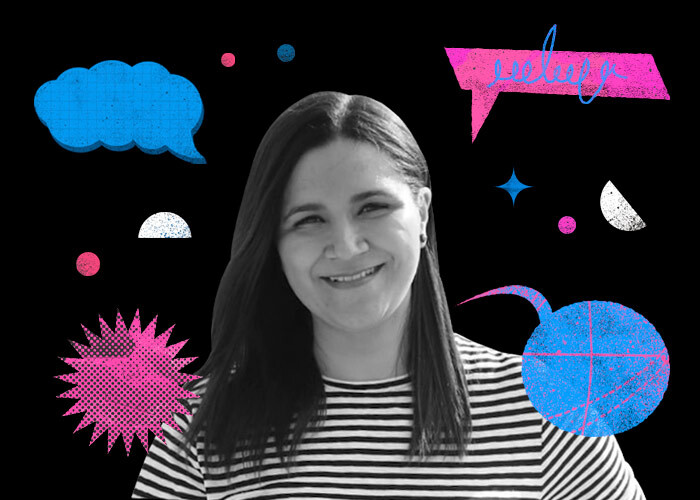
María Luisa del Prado is a research professor at the School of Engineering and Sciences at Tec de Monterrey and the only Mexican woman among the scientific editors of Elsevier’s Next family of journals. She notes that one of the major gaps in scientific training is writing. “We learn how to do research, but not necessarily how to write; that is a skill developed over time and through practice,” she says.
Although more courses and tools exist today, she acknowledges that academic writing is not always formally included in curricula, at either the undergraduate or graduate levels. “It should be part of the program,” suggested the researcher, who was recognized last year as one of the world’s most influential researchers due to the impact of her scientific publications.
The pressure increases when it comes to publishing in a scientific journal. “You defend a thesis before a committee you already know, so there may be more trust, but with a scientific article, you don’t know who will evaluate it,” she explains. The peer-review system adds rigor, but also uncertainty: “You don’t know into whose hands your manuscript will fall.”
There is also a widespread misconception among students: that a good scientific text must be complicated. “Many times, people confuse quality with complexity and countless references, when in reality it’s about finding your own voice and telling the scientific community what you discovered,” she says.
Where to Start Writing?
One of the most common questions when writing is where to begin. María Luisa del Prado suggests starting with the most tangible parts: “First, the methodology and the results, because you already did them and already have them. That gives you the sense that you’re moving forward.” The introduction, she explains, can be written later, once you are clear about which journal the article will be submitted to and what angle best suits it.
From his experience as a professor, Óscar Arias has detected a recurring pattern in theses and other scientific publications: too much background and too little discussion. “I’ve seen these with four or five chapters full of background information and very detailed methods, but increasingly shorter project results and a half-page discussion,” he notes.
For this reason, he explains that scientific papers should be structured like an hourglass: starting with a broad overview, narrowing down to the results, and then returning to the broader implications of those findings.
“The most complex part for many students is the discussion. That’s where you really see whether they master the field,” adds the researcher, who shares content related to scientific publishing on his X account, @OACerebro.
Still, he believes there is no formula or secret narrative, since everyone has their own writing style and method. However, he offers a practical recommendation: be clear about the central message so that the story does not become diluted. “It often happens that you talk about many things and, in the end, you run out of space to describe the results.”
This logic also applies to science communication texts. When an article begins with lengthy background information and leaves the findings for the end, it loses impact. In science communication, they agree, results should appear early to hook the reader.
Rejection Is Part of the Process
Another key lesson — and perhaps one of the most difficult — is learning to accept editorial rejection. “Having a paper rejected by a scientific journal does not define who you are or the quality of your research,” Del Prado emphasizes. From her experience as an editor, she explains that many factors beyond the author’s control play a role: journal saturation, thematic priorities, or the appearance of more novel studies.
Arias reinforces this idea: “Journals have very clear criteria, and you have to follow them.” Ignoring them, even with strong work, can lead to automatic rejection. Far from being a failure, both agree that reviewers’ comments often strengthen manuscripts and improve scientific narratives.
Even Einstein Faced Rejection
Writing a scientific article does not guarantee immediate publication. Not even prestige ensures acceptance. Throughout history, works by figures now considered unquestionable faced editorial rejection and criticism, not necessarily because of the quality of their ideas, but due to issues of form, structure, or editorial style.
“Even Albert Einstein had papers rejected because he did not follow a journal’s structure,” recalls Óscar Arias. Knowing this helps put into perspective a process that is new for those just entering research: writing science means learning to play by strict editorial rules and accepting that rejection is part of the journey.
Beyond the paper itself, communicating science has become an essential skill. “It’s not enough to do good research; you also have to know how to explain it,” Del Prado points out. This ability is key to securing collaborations and funding, and to bringing science closer to non-specialized audiences.
For Arias, a researcher must be able to present their work to specialists, but also explain it to non-experts. “That is also part of the research ecosystem,” he says.
Ultimately, writing science is not just about fulfilling an academic requirement. It is about learning to structure ideas, accept criticism, endure rejection, and tell a story with rigor — and to understand that even the greatest names in science had to learn to publish under the rules of the editorial game.
Using AI as a Tool
In the training of new researchers, the use of artificial intelligence (AI) is becoming an increasingly common resource to support tasks such as drafting, stylistic revision, and idea organization.
However, Arias stresses the importance of learning to use it as just another tool, and from an ethical standpoint. For him, AI can be a valuable support, as long as it does not replace the researcher’s intellectual process or deep understanding of the work being communicated.
He suggests that students learn to write independently before delegating tasks to these tools. Scientific writing, he explains, is an essential part of academic training. Therefore, AI should be used responsibly and as a complement to the learning process (for example, to automate repetitive tasks), “but always with honesty and transparency in its use.”