

Major global challenges in health, sustainability, industry, and education can be addressed with solutions born from research and innovation. That is the vision and guiding principle of the Tecnológico de Monterrey Education Group.
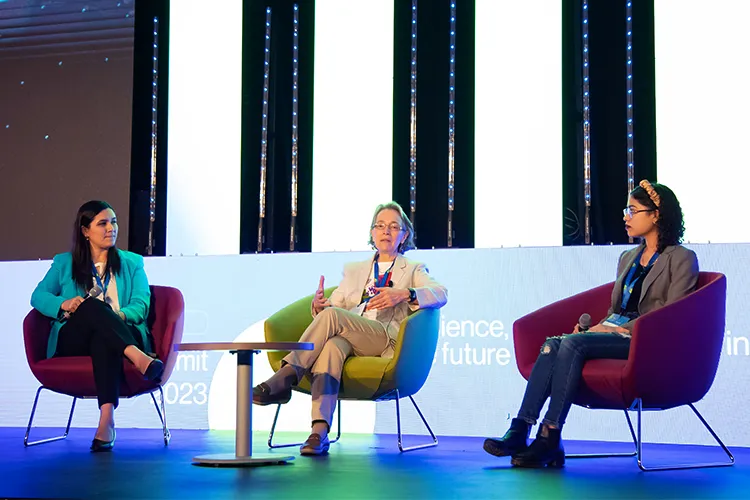
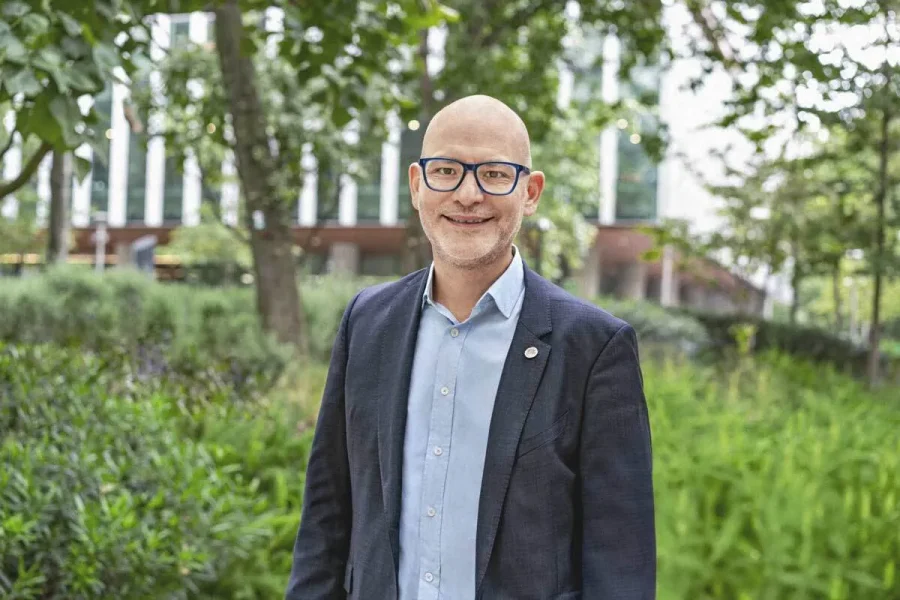
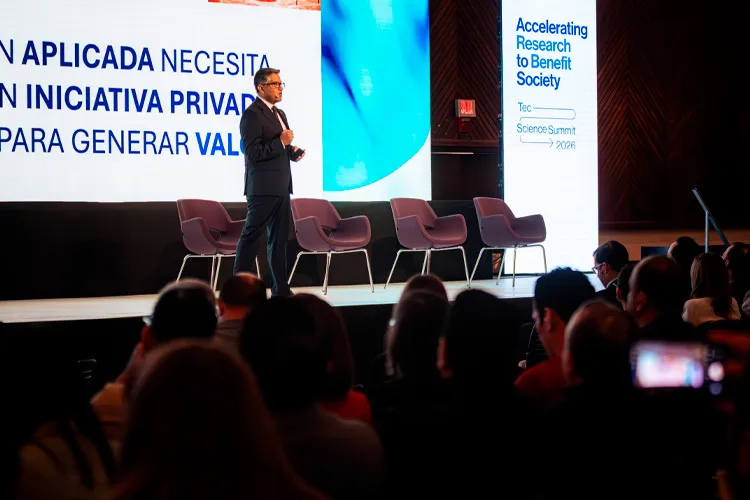
In his opening remarks at the Tec Science Summit 2026, Javier Guzmán, executive vice president of Research at the Education Group, noted that in the face of the complex times the world is going through, this ecosystem is betting on applied research to seek solutions to the most pressing challenges.
“At Tecnológico de Monterrey, we believe in applied research and in building strong partnerships so that it succeeds and truly delivers value to society,” he said. “We want to pursue applied research because it will have a real impact on society, on the economy, on well-being, and on the sustainability of our world.”
México faces urgent challenges, such as droughts affecting 80% of the country’s territory, high rates of childhood obesity, elevated levels of diabetes and hypertension, and 46 million people living in extreme poverty, among others. These issues must be tackled through innovation, collaboration, and a human-centered approach.
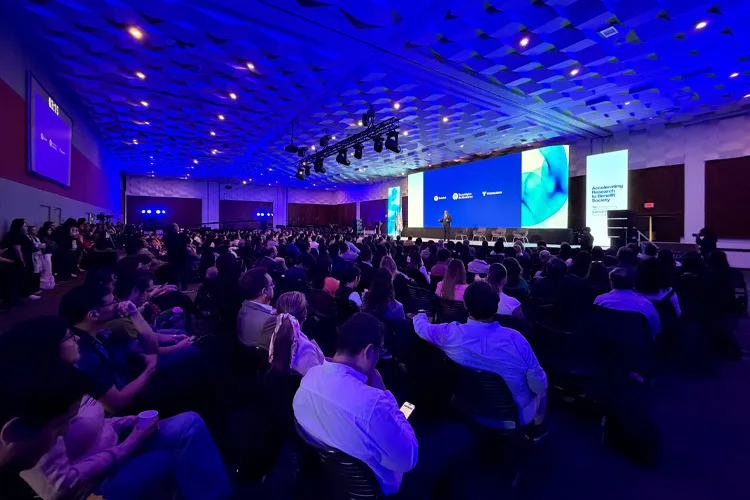
Tec Science Summit 2026: Generating Impact Through Knowledge
The Tecnológico de Monterrey Education Group aims to drive real and sustainable solutions to humanity’s greatest challenges through the strategic integration of knowledge, innovation, and cross-sector collaboration. Its efforts are anchored in three fundamental goals: improving people’s lives, protecting the planet, and fostering greater shared prosperity.
This scientific ecosystem includes 1,083 researchers, 705 of whom are members of Mexico’s National System of Researchers, 91 postdoctoral fellows, about 698 affiliated with schools and institutes, and 102 women researchers.
The group’s investment in research and innovation is focused on five key impact areas:
- Health
Through groundbreaking projects designed to transform public health and improve quality of life by combining genetics, biotechnology, and emerging medical technologies.
- Industrial Transformation
By advancing applied research to promote responsible industrial innovation in the development of smart materials, sustainable processes, and solutions that bridge science, industry, and environmental stewardship.
- Climate and Sustainability
Through research that weaves together science, innovation, and collaboration to confront climate change, accelerate decarbonization, safeguard ecosystems, and build a more sustainable future for communities and businesses alike.
- Education and Humanism
By leveraging research and technology to rethink education, expand opportunity, strengthen community engagement, and generate meaningful social impact.
- Prosperous Cities and Communities
Through initiatives that promote more equitable, inclusive, and resilient cities by means of applied research, innovation, and collaboration—enhancing mobility systems, preventing violence, and ultimately improving quality of life.
An ecosystem connected to academia and industry
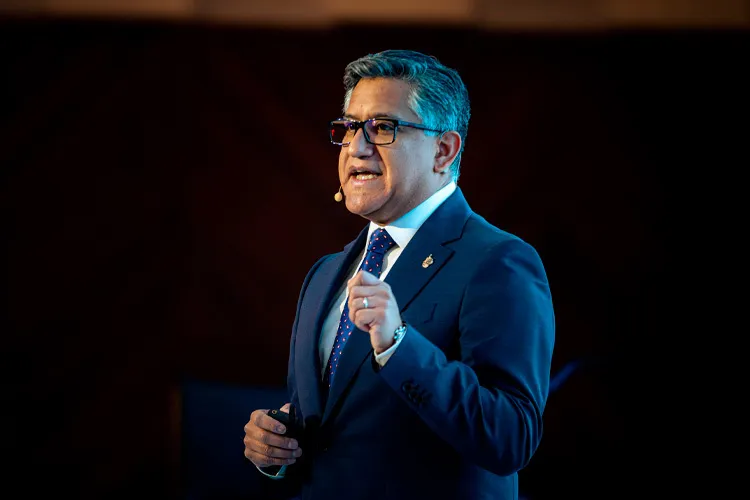
The executive emphasized that the research ecosystem also fosters strategic partnerships. This is reflected in more than 70 strategic alliances with universities, institutes, and research centers, as well as with industry stakeholders.
“Just last year, we collaborated with 140 companies on research projects,” he noted. “The quality of our research drives these interactions.”
Guzmán highlighted initiatives such as Proyecto oriGen, which mapped the genomes of 100,000 Mexicans along with their clinical data and now houses the largest genetic biobank in Latin America, enabling research collaborations with institutions such as The University of Texas at Austin. He also pointed to a mobility project involving automobiles carried out with Politecnico di Milano, which took part in the Carrera Panamericana.
In addition to the scientific work itself, these projects actively involve students. Today, 1,292 students participate in research initiatives through 44 science-focused graduate programs, including 789 doctoral students and 503 pursuing master’s degrees.
He also underscored the long-standing relationship with institutions such as the Massachusetts Institute of Technology (MIT), with which the group has collaborated for more than a decade, as well as newer partnerships, including one advanced with the Ragon Institute in collaboration with TecSalud.
Did you find this story interesting? Would you like to publish it? Contact our content editor for more information: marianaleonm@tec.mx