

A team at EGADE Business School incorporated video games as tools to develop soft skills, or “power skills,” in its graduate programs, particularly in courses such as Negotiation and in integrative projects within the Master of Business Administration (MBA).
Eloísa Pérez, Director of Educational Innovation at EGADE Business School at Tecnológico de Monterrey, explains that the team analyzed different video games to identify behaviors students could transfer to real life and to academic settings.
The team selected Minecraft, a game similar to Lego set in a virtual universe where players build with blocks, and Overcooked, which simulates the fast-paced dynamics of a restaurant kitchen, with each player assigned a specific task.
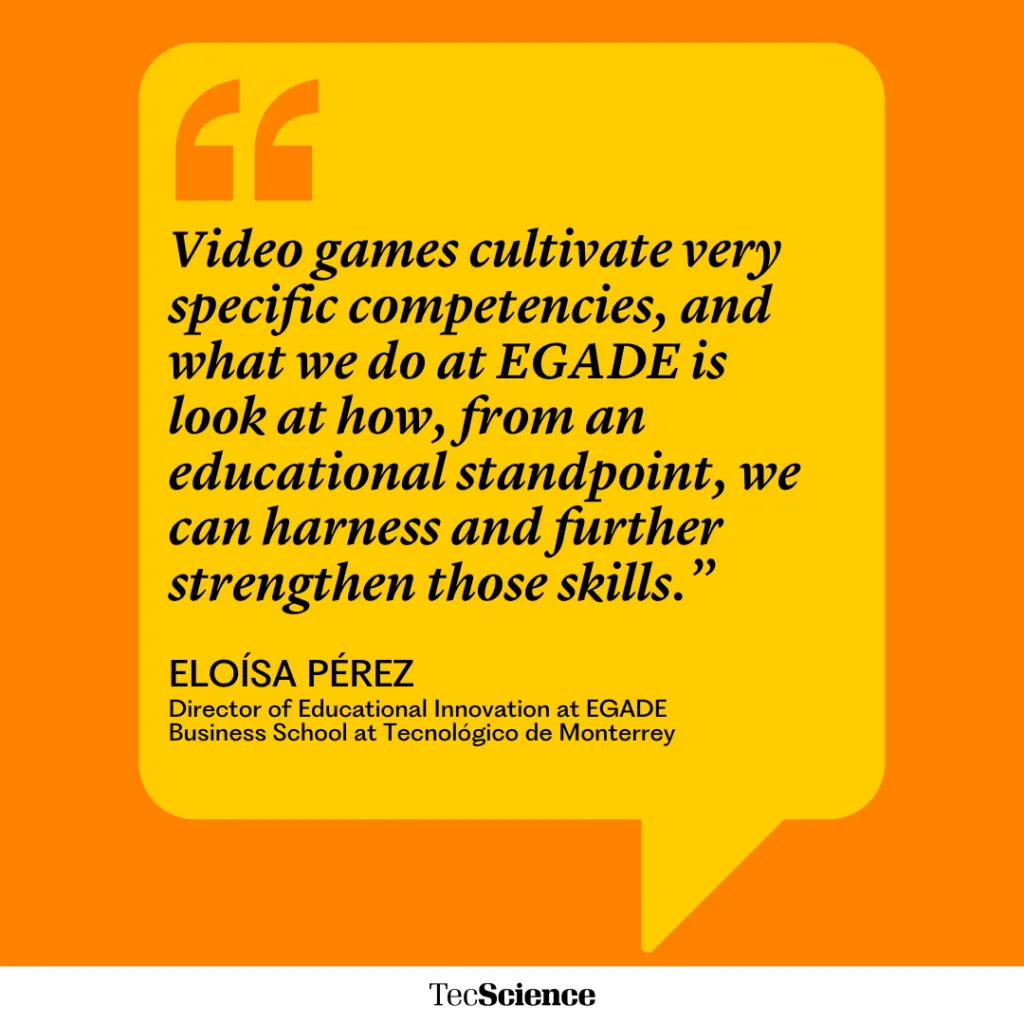
“Today, some recruiting departments are already taking gamers into account,” Pérez said. “Video games cultivate very specific competencies, and what we do at EGADE is look at how, from an educational standpoint, we can harness and further strengthen those skills students already bring with them so we can channel them into business capabilities.”
Video Games in Higher Education
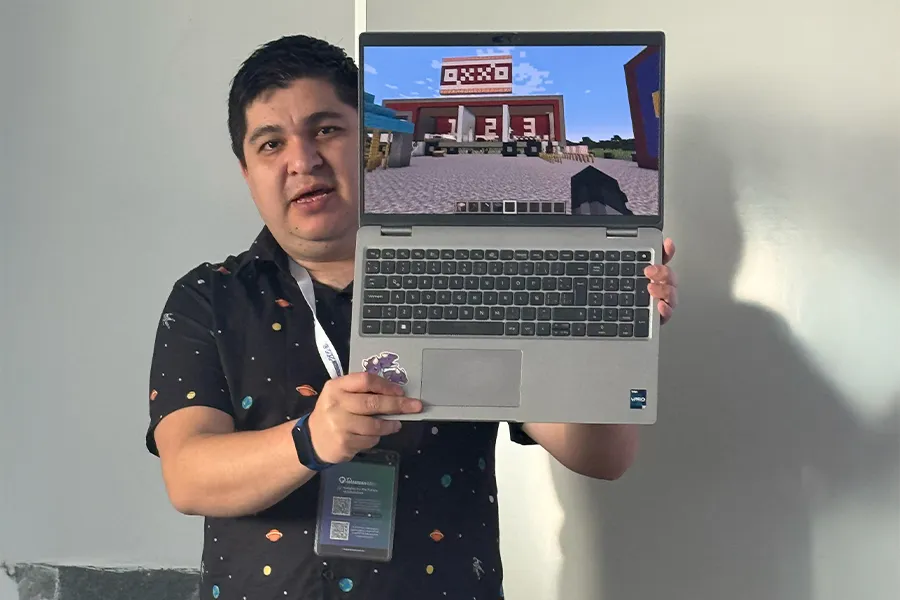
Omar Velasco, an educational solutions architect at EGADE Business School, spoke about the initiative during the networking session Level Up!: Exploring the Power of Video Games to Develop Soft Skills in Higher Education, held at the IFE Conference 2026, organized by the Institute for the Future of Education at Tecnológico de Monterrey.
“All the skills developed through video games, such as leadership, decision-making, and critical thinking, are essential in today’s workplace,” Velasco said during his presentation to researchers and university leaders.
Today, video games are part of everyday life for both students and working professionals, he noted. They are no longer confined to consoles or computers; instead, they travel with users on mobile devices through recreational apps and self-directed learning platforms like Duolingo.
Building Business Skills
But which video games can actually help develop skills? Velasco answered without hesitation: “All of them! What matters is the perspective we bring, and how we choose to use it to our advantage. It’s not just about playing for the sake of playing; it’s about understanding what this activity can do for me.”
In schools, for example, virtually any video game can be used if it is tied to a topic covered in class, has a clear objective, and is embedded within a broader educational methodology.
In other words, it doesn’t have to be a game specifically designed for educational purposes. Institutions can leverage commercially available titles and play them on smartphones or home consoles, as long as they are thoughtfully integrated into the learning experience.
Minecraft and Overcooked to Strengthen Power Skills
Minecraft has been used in academic experiences within courses and even in projects with real companies, such as the Impact Challenge by Oxxo. In that initiative, student teams developed prototypes and crafted creative solutions to challenges linked to the Sustainable Development Goals of the 2030 Agenda. The game was also incorporated into the Entrepreneurial Mindset course, which focuses on designing projects with social impact.
In both cases, the video game was combined with other teaching approaches, including challenge-based learning and design thinking. Through these experiences, students highlighted improvements in collaborative work, stronger team integration, and the development of critical thinking and creativity.
“We have a chapter published in a book about our experiences using Minecraft as an environment that can help foster students’ lateral thinking when they are designing a project,” Pérez added.
Meanwhile, Overcooked, a game built around simple kitchen tasks such as chopping ingredients, cooking, or washing dishes, demands tight coordination among players, since every mistake can affect the outcome. For that reason, it has been integrated into courses like Negotiation to identify the behaviors students display when negotiating, organizing themselves, and responding to pressure.
The use of commercial video games to develop skills is part of EGADE Business School’s initiative Business Learning in Graduate Education Through Immersive Gamification and Video Games, which was recently recognized with a High Commendation in the Best Innovation Strategy Award 2026 category at the AMBA & BGA Excellence Awards.
The team is now exploring new gaming options, such as Roblox and Keep Talking and Nobody Explodes, which leverage virtual reality to immerse students in simulated scenarios. In these controlled environments, mistakes carry no serious consequences—yet they still offer powerful learning opportunities.
Did you find this story interesting? Would you like to publish it? Contact our content editor to learn more at marianaleonm@tec.mx