

Metabolic dysfunction-associated fatty liver disease is estimated to affect more than 30% of the world’s population and can develop silently over many years. The condition is characterized by excessive fat buildup in liver cells. As it progresses, it can lead to inflammation, fibrosis, and even cirrhosis.
Linked to obesity and other metabolic disorders, the condition poses a major public health challenge because of its widespread prevalence and the difficulties involved in detecting it early.
Against this backdrop, researchers at Tecnológico de Monterrey are developing biofortified chickpea flour to investigate its potential to help prevent the disease.
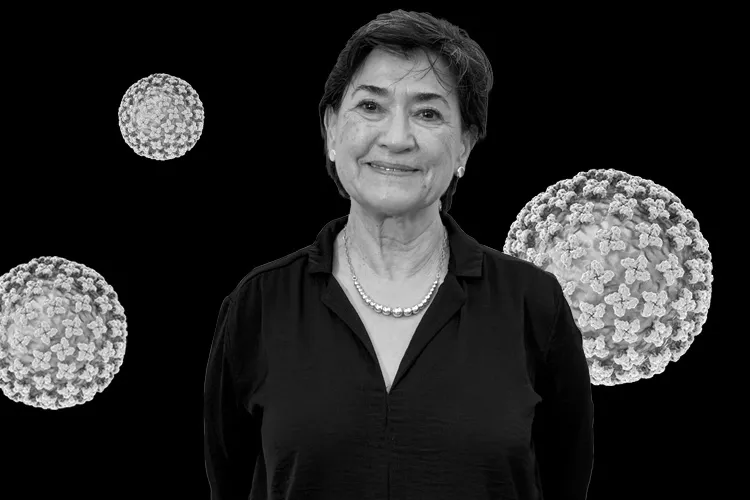
Marilena Antunes, a researcher at the Food and Clinical Nutrition for Health Unit of the Institute for Obesity Research and a professor at Tec’s School of Engineering and Sciences, explains that one of the project’s goals is to harness the nutritional properties of this legume.
The researchers also enriched the flour with minerals to investigate its potential effects on the metabolic abnormalities associated with the disease, which involve processes such as oxidative stress and inflammation. Specifically, they sought to determine whether biofortified chickpeas could reduce fat accumulation in liver cells.
“We’re seeing cases of fatty liver disease in people who are thin, young, and don’t necessarily smoke or drink alcohol,” the researcher says. “We started thinking, well, there must be something in our diets, and probably environmental factors as well, that are driving this condition in more and more people who are considered healthy, or at least appear healthy.”
The project builds on a research initiative launched several years ago by Sergio Serna and Janet Gutiérrez, focused on enriching grains with selenium through biofortification.

From Conventional Chickpeas to a Biofortified Ingredient
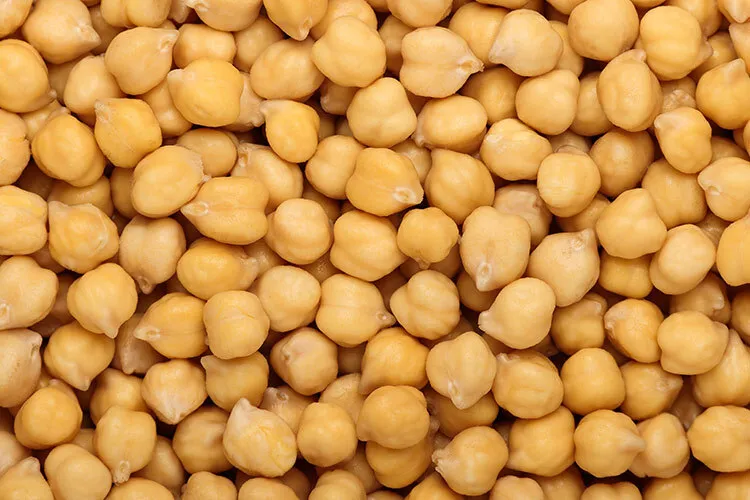
Chickpeas are known for their high plant-based protein and fiber content. They also provide minerals such as iron, magnesium, calcium, and phosphorus, along with folic acid. Mexico is also one of the world’s leading chickpea producers.https://worldpopulationreview.com/country-rankings/chickpea-production-by-country
To enhance their nutritional value, the researchers used a process known as biofortification, enriching the chickpeas with selenium and zinc as they germinated. Unlike conventional fortification, in which nutrients are added during food processing, biofortification aims to increase nutritional content while crops are growing or, as in this case, during germination.
Antunes explains that the researchers chose selenium because it is an essential micronutrient for the immune system and the body’s antioxidant defenses. Moreover, its availability is limited in various regions around the world. Zinc, meanwhile, plays a crucial role in growth, bone development, and immune function, particularly during childhood.
After germination, the researchers dried and ground the chickpeas into flour, a versatile ingredient that can be used in a wide range of foods while also making preservation and storage easier.
Researchers Evaluate the Effects of Biofortified Flour in the Lab
After producing the biofortified flour, the research team began a series of laboratory tests to assess its effects on fat accumulation in liver cells.
The first step involved subjecting the ingredient to simulated gastrointestinal digestion using solutions containing enzymes, salts, and varying levels of acidity to mimic conditions in the mouth, stomach, and intestines.
The researchers then collected the compounds released during digestion and tested their effects on liver cells grown in the laboratory, recreating some of the metabolic abnormalities associated with fatty liver disease.
“After 48 hours, we measured things like lipid and triglyceride accumulation, oxidative stress, and markers of inflammation, because ultimately, fatty liver disease involves a combination of many different abnormalities. It’s not just one factor,” she adds.
Early Results Show Promise
The in vitro tests showed that some of the formulations successfully reduced triglyceride accumulation in liver cells. To assess their effects, the research team tested two scenarios: one in which the cells were treated with the flour formulations before fat accumulation was induced, and another in which the cells had already developed this abnormality.
The first scenario allowed the researchers to evaluate a potential preventive effect, with some samples reducing triglyceride accumulation by 17.1% to 38.6%. In the second scenario, germinated chickpeas without biofortification and those enriched with selenium and zinc achieved reductions of approximately 21% and 20.5%, respectively.
Beyond lowering triglyceride levels, several formulations also showed effects on markers associated with inflammation. For example, in some cases, researchers observed reductions ranging from 25.1% to 34.7% in levels of interleukin-6, a molecule involved in inflammatory processes.
The team also observed increased activity of an enzyme that helps protect cells against oxidative stress.
“I wouldn’t want to suggest that it’s a cure-all that works on everything. It may have certain effects, but some will likely be stronger than others. Our goal is to continue this research to gain a thorough understanding of the underlying mechanisms,” Antunes says. “These preliminary findings already help us identify which pathways appear to be most strongly affected, such as those related to oxidative stress, so we can investigate further and better understand them at the basic science level.”
The team identified three promising formulations in the initial tests: germinated chickpeas without biofortification, chickpeas enriched with selenium, and chickpeas enriched with both selenium and zinc.
Developing a Biofortified Ingredient Consumers Will Embrace
Alongside their laboratory research, the scientists are working to develop food products incorporating the biofortified flour to evaluate how it performs in different applications. Early prototypes under consideration include muffins, snacks, and tortillas.
“Chickpeas have a particular flavor, as plant-based proteins often do, that many people may not find very appealing,” she says. “This ingredient could be wonderful, but if consumers don’t find it attractive, they simply won’t use it.”
The team plans to expand its research to three-dimensional cell models to study how cells respond under conditions that more closely resemble actual tissue.
The researchers then hope to conduct animal studies to determine whether the effects observed in the laboratory also occur in living organisms.
Antunes notes that before moving on to human studies, researchers will need to assess factors such as toxicity, the potential buildup of minerals in organs, and appropriate consumption levels.
“The important thing is to demonstrate that the ingredient works. After that, the next step would be to develop prototypes of different food products,” Antunes says.
Did this story interest you? Would you like to publish it? Contact our content editor to learn more: marianaleonm@tec.mx