

For years, health experts have warned us that too much cholesterol is very bad for our heart and cardiovascular system. However, little have they explained about the damage it can also do to our brain.
According to various studies, high cholesterol levels can cause memory loss, brain inflammation and other cognitive problems associated with neurodegenerative diseases, such as Alzheimer’s.
The mechanisms that explain how this happens are becoming increasingly clear thanks to a line of research that has been building for decades.
One of its key moments was when Ingemar Björkhem, a physician and researcher at the Karolinska Institutet in Stockholm, demonstrated that circulating cholesterol can indeed cross the blood-brain barrier –the structure that regulates the passage of substances and molecules from the blood into the brain. To do so, however, it must first be broken down into a smaller version called 27-hydroxycholesterol (27-OH).
Once defined, researchers such as Ángel Cedazo Minguez, also at Karolinska, continued to piece together the puzzle in order to understand how the abundance of this compound relates to neurodegeneration.
“Then I came in, trying to find the molecular mechanisms through which this excess harms the brain,” says Raúl Loera, a research professor at the School of Medicine and Health Sciences (EMCS), Chihuahua Campus, of the Tecnológico de Monterrey, who completed his postdoctoral research at Karolinska.
Loera has worked with transgenic animal models, cell cultures, and human studies to discover what happens to brain cells when there are large amounts of this lipid.
Excess Cholesterol in the Brain in Laboratory Studies
In the human body, when cholesterol levels rise due to genetic causes, metabolic diseases, diet, or age, an imbalance occurs that eventually affects the brain.
As this lipid increases, so does its 27-OH derivative, creating a gradient that pushes these molecules upward into the head.
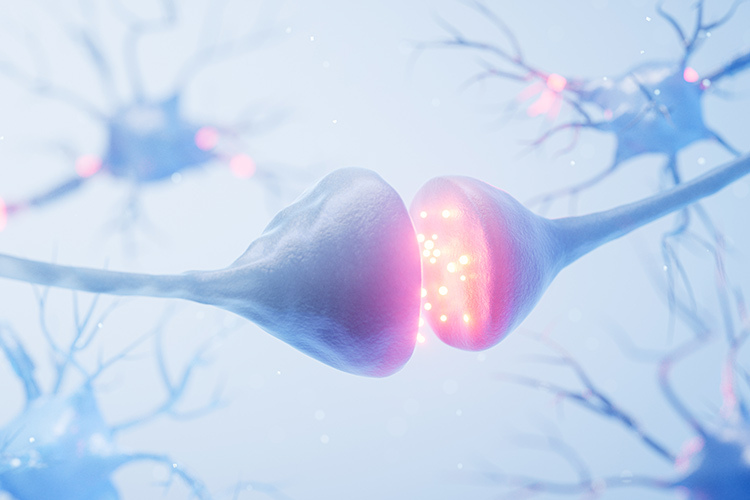
“Once inside, it starts interfering with important functions such as the connection between neurons, which correlates with Alzheimer’s disease,” says Loera.
To decipher this, the researchers worked with a transgenic animal model with permanently elevated levels of 27-OH. In this model, neurons in the hippocampus, a brain region essential for forming memories, showed a reduction in dendritic spines—the small protrusions where synapses form—affecting the way they communicate.
“That loss of connections is the first memory loss that patients with this disease report,” the expert explains.
Glutamate Toxicity and Brain Inflammation
Another mechanism they found in neuronal cultures is that excess 27-OH is toxic to oligodendrocytes, brain cells that have various functions, such as forming myelin—a layer made of lipids and proteins that hydrates, insulates, and protects nerves and neurons.
They also found that it damages the shape and function of hippocampal neurons and generates brain inflammation, affecting their performance.
In animal models, researches found that astrocytes—the brain cells that support and protect neurons—stop fulfilling their function of clearing up glutamate, a neurotransmitter crucial to learning and memory.
“The excessive glutamate accumulation is another sign of stress in the brain,” says Luis Enrique Arroyo, a researcher at Karolinska.
To confirm the link between excess 27-OH and memory loss, the researchers used a memory test called the Morris water maze in animal models and observed that those with elevated amounts of this derivative had difficulty remembering the location of a platform that was submerged underwater, compared to those who did not have this excess and could remember it.
Does this Happen in Humans Too?
Beyond laboratory experiments, Loera and his colleagues have conducted studies with humans to see if what they’ve found applies to us.
“We’ve studied it in blood, serum, cerebrospinal fluid, and tissue samples from deceased patients,” says Loera. They found that people with Alzheimer’s or cognitive impairment had elevated levels of 27-OH.
In an epidemiological study called FINGER, led by Miia Kivipelto of Karolinska, they measured levels of this compound in older adults with Alzheimer’s or cognitive impairment.
“According to Miia’s findings, when there is hypercholesterolemia (high cholesterol), people develop Alzheimer’s earlier and it progresses more quickly,” says Loera.
What Does This Mean for the Prevention and Treatment of Neurodegenerative Diseases?
With all this in mind, one would think the solution would be as simple as lowering cholesterol levels in the body, either by modifying the diet or taking medication. Unfortunately, researchers have found that this is not an effective strategy.
“When you lower cholesterol or clear 27-OH from the periphery, it doesn’t leave the brain –it stays elevated,” Loera says. For now, scientists are still searching for an explanation.
Meanwhile, another one of Loera’s goals is to find therapeutic targets that can stop the conversion of cholesterol to 27-OH, thus preventing it from reaching the brain. He also seeks to find molecules that can be controlled with drugs or therapies to reduce their levels in the brain.
Through an international collaboration between the Karolinska Institute and Tec de Monterrey, progress is expected soon in this line of research.
For now, the message for preventing the development of Alzheimer’s or other neurodegenerative diseases –in part– remains the same: to avoid high blood cholesterol levels by exercising and maintaining a healthy diet.
However, Loera stresses that it’s not about completely avoiding fat in our diet. Although excess cholesterol can be harmful to the body and brain, its absence is also dangerous.
Ultimately, cholesterol, along with other lipids and proteins, is essential for proper brain function. The important thing is to maintain a healthy balance, with neither too much of it nor too little.
“To date, Alzheimer’s is virtually incurable, so we must promote lifestyle choices that prevent neurodegeneration,” says Loera.
Were you interested in this story? Would you like to publish it? Contact our content editor to learn more: marianaleonm@tec.mx