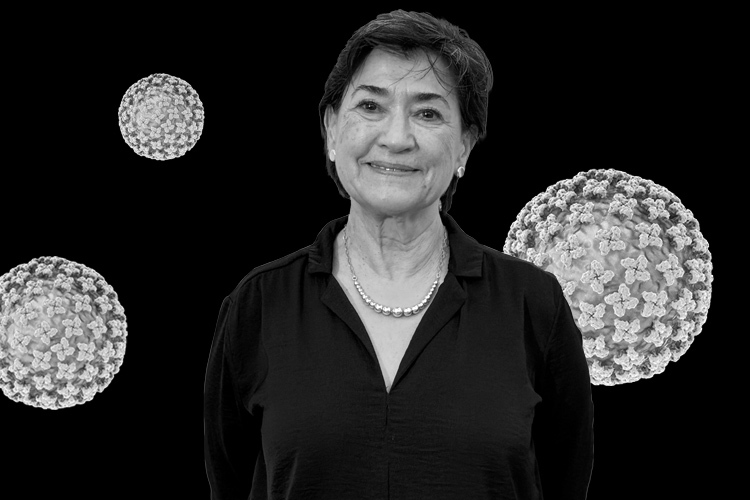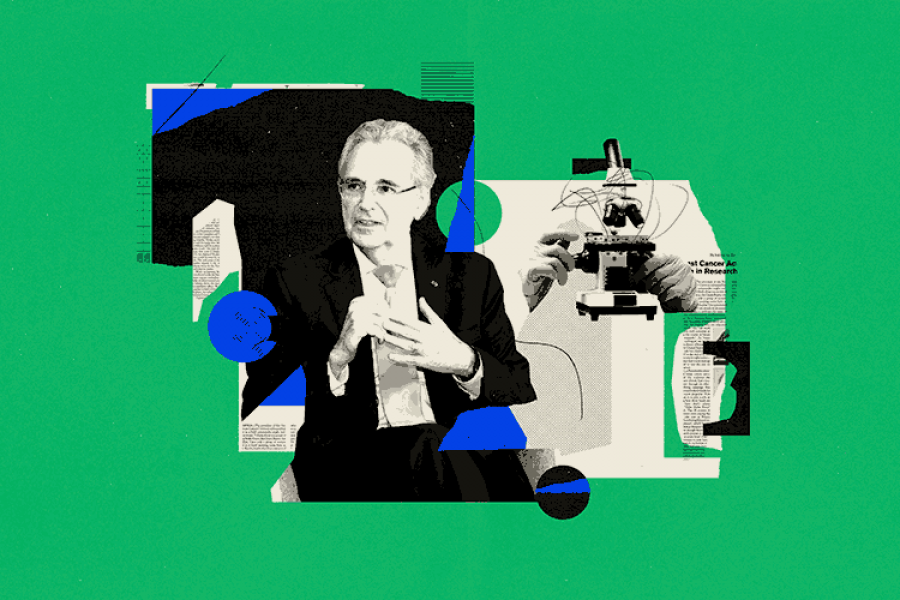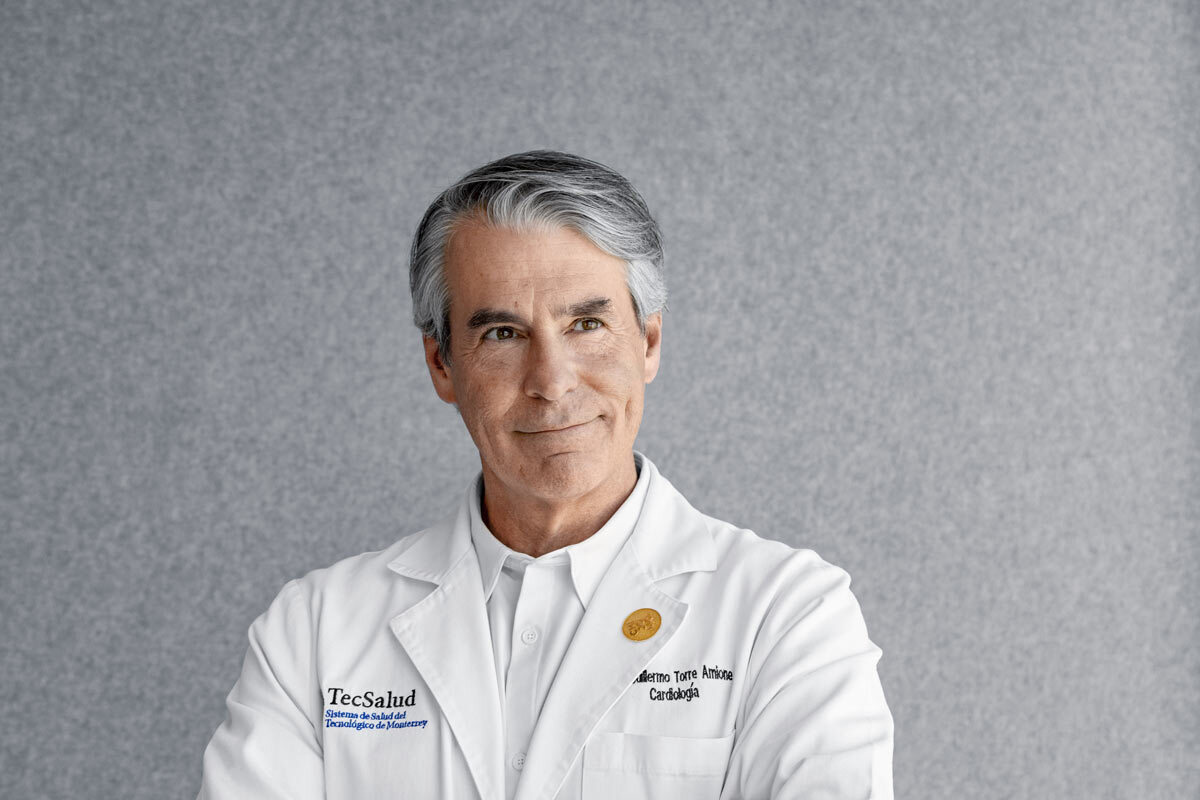


Guillermo Torre needs to spend some time in silence at least once a year. Whether in the mountains of California or the Grand Canyon, the president of TecSalud takes a few days each year to escape into nature. That, he says, is where he finds the peace of mind he needs to recharge and stay motivated.
“In my everyday life, I don’t give myself many opportunities to experience those moments,” says the cardiologist. “So for me, it’s a time for reflection, for peace, and for reconnecting with the ideas and principles that guide where I want to take my life.”
In 1985, he was part of the first graduating class of the Tec de Monterrey School of Medicine and Health Sciences. More than four decades later, he is president of TecSalud and a cardiologist at Hospital Zambrano-Hellion, which is ranked among the best hospitals nationally and internationally, including in cardiology, one of the country’s top-ranked specialties. Now, his team is working to position TecSalud as an academic medical center capable of fulfilling Torre’s ambitions.
“The most important thing we need to give a young person who enters Tec is the confidence that they are receiving the training they need to compete internationally, on equal footing with anyone,” he said.
When Torre isn’t traveling to the mountains, he likes to visit Chipinque, a forested area southwest of the Monterrey metropolitan area, where he reconnects with nature and spends time with his family.

Family as a School
In an interview, you mentioned that there are always a lot of people at your house, that your children and grandchildren are always dropping by. And that it was your family that taught you one of the most important lessons of your career.
Over the course of my life, I’ve learned not to give my problems too much importance. Honestly, I rarely complain—although my wife might tell you a slightly different story. But in general, my work in medicine and my role as a father to several children have trained me to work for others. I think that’s not a natural lesson for most people, but when you have a large family and a job like the one I’ve had, it’s very easy to learn that your life is dedicated to others and that you come second.
You don’t have your own office at Hospital Zambrano-Hellion. Is that part of the same philosophy of dedicating yourself to others?
TecSalud has had an open-door policy for many years. For me, setting that example is more important than having the privilege of an office; it feels like the right thing to do. I don’t think that hierarchical notion of positions is an appropriate strategy for our institution. For years, we’ve talked about turning the pyramid upside down. Besides, I’ve never needed a private office.
After graduating from Tec, Guillermo Torre moved to the University of Chicago to pursue a doctorate in immunology. As a married student with two children, he worked day and night at a public hospital to support his family and achieve the goals he had set for himself.
“I had enormous ambition,” Torre says. “I had to complete my clinical training and finish my research within a short period of time.” He completed his doctorate in two years and began his residency at Baylor College of Medicine in Houston. He stayed in the city—which he calls “Disneyland for doctors”—until 2010, serving as director of the Heart Failure and Heart Transplant Service at Methodist Hospital.

Two Paths to Understanding Health
You’ve talked about the difference between practicing medicine and doing science. How are those paths different?
Physicians learn how to treat sick people; it’s a skill acquired partly from books and partly through experience, by learning how other doctors do things, learning surgery, and learning from diagnoses. A physician’s job is to solve the patient’s problem. Being a physician doesn’t necessarily mean advancing our understanding of medical science.
Developing an answer to a health problem requires scientific capabilities that physicians don’t necessarily have. Someone who wants to discover how to prevent HIV doesn’t have to be a physician; they need knowledge or training in biology, and they will work in a laboratory to discover new ways of preventing HIV.
Do you think it’s necessary to have both skill sets today?
Clinical training helps you identify the most relevant questions in public health, but it doesn’t necessarily equip you to answer them. The training I received through a research doctorate and clinical training allowed me to work in translational medicine. In other words, I could answer a scientific question in the laboratory, determine which alternatives might improve a treatment, and then develop a strategy to reproduce it in more patients.
So, you need expertise in both fields, but not necessarily in the same person. We can solve important health problems by working collectively—physicians and researchers from different disciplines.

What would you tell someone trying to decide between the two paths, given the current health landscape?
I firmly believe in intuition, that force that comes from within and makes you believe in something. It’s like asking, “Why did I fall in love with my wife and not someone else?” It’s not something you can explain. The same thing happens in a scientific career when you devote yourself to it wholeheartedly. It’s a major investment of time and effort.
When you cure a patient—I just came from seeing a patient who had an arrhythmia, and we got rid of it—it’s an immediate satisfaction. In research, you have to learn to delay that gratification for a result that may take a long time. There are papers I’ve written that have taken eight years to see the light of day. But when you see your work published and realize that other people find it relevant to their own research, you know it was worth it.
TecSalud is evolving into an academic medical center that integrates research, education, and clinical care. What kind of professionals are you seeking to train at TecSalud?
The most important seed we plant in our students concerns empowerment. Not accepting mediocrity as the standard, but always pursuing excellence as the non-negotiable strategy in their training.
Excellence means doing the best you can with the resources and abilities you have, but also understanding when real circumstances impose limitations.
That’s the first point. The second is learning to work as a team. It’s something they have to experience and see working in practice before they can truly do it themselves. All the sciences—not just medicine—have become so complex and specialized that solving a problem requires developing strategies and collaborating across disciplines.
We also want young people entering Tec’s School of Medicine to know that the training they receive here will prepare them to compete internationally, on equal footing with anyone.

The Future of Medicine is in the Data
When he became president, Guillermo Torre wanted to radically transform the way medicine is practiced in Mexico. And he knew that the future would come through personalized medicine. This approach uses a person’s genetic profile to guide disease prevention, diagnosis, and treatment.
It means using all of a patient’s data and individual characteristics to identify the most likely effective treatment. Many of these advances in medicine have been made possible by projects such as the Human Genome Project, which mapped and sequenced the human genome for the first time. Since that project began in 1990, scientists around the world have developed their own versions. At TecSalud, this has taken the form of Proyecto Origen, which aims to build a genomic database of 100,000 Mexicans. As the project’s principal investigator, Torre says it has the potential to benefit not only the country’s health but humanity as a whole.
Did you see precision medicine as the future of TecSalud when you became president?
Did I see the future of medicine that way? Yes, I did. What did I think we would accomplish during my time at Tec? I don’t think so. Personalized medicine goes beyond us. It’s a global movement aimed at making medical practice more effective.
Last October, you published some results from Origen’s first cohort. What was the most important thing you wanted to convey with that first report?
We issued a first report simply to document that Origen is a viable project, with epidemiological data and the first analyses of ancestry in the Mexican population, and to announce that it will be open to the national and international scientific community.
Identifying questions based on Origen’s data will allow us to have a direct impact for the benefit of the Mexican community, and for that reason, we believe Origen creates value for humanity, regardless of who conducts the research.
And while his work in medicine and research continues to present him with new challenges, Guillermo Torre also pursues personal goals that push him outside his comfort zone. Mount Kilimanjaro remains on his list. A trip to Africa requires time—something he hasn’t been able to find so far.
“When I set a goal like that for myself, my training takes on a greater sense of purpose. I perform better,” the president says.
Did you find this story interesting? Would you like to publish it? Contact our content editor to learn more at marianaleonm@tec.mx