
By Lorena de la Paz Carrete Lucero
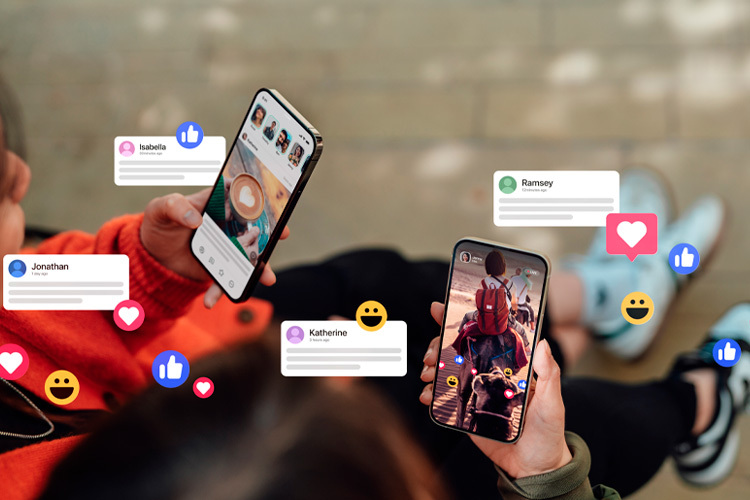
If you have ever bought something because a friend, an influencer, or even a stranger recommended it on Instagram or Facebook, you have participated in the phenomenon known as electronic word of mouth, or e-WOM.
e-WOM is defined as any positive or negative opinion about a product or service expressed by potential consumers and shared on the internet. This includes online reviews, social media posts, forum discussions, videos, and images that reflect evaluations and experiences with a range of products and services [1].
This phenomenon is transforming the way we consume, which is why researchers are studying how it works and how powerful it can be.
How to Study e-WOM
The study “Uncovering the receiver’s traits that moderate the effect of e-WOM valence on the purchase intentions of healthy food products” examines how individual characteristics influence the way consumers process e-WOM when purchasing healthy products.
The research, based on online interviews with 200 Mexican consumers, describes how participants were randomly assigned to one of two groups and presented with a fictional cereal brand. In one group, the cereal’s organic and health-related attributes were emphasized, while the other group was given information only about the origin of the brand name.
Researchers then measured participants’ brand expectations regarding the cereal’s nutritional value, health benefits, and product quality.
Next, participants were randomly assigned to another group, where they were shown comments from either a health influencer or an ordinary consumer expressing positive or negative opinions about the cereal. Researchers then measured their intentions to purchase the product.
The researchers also analyzed consumers’ psychographic and behavioral characteristics that could influence their decisions: how frequently they consumed cereal, how often they used social media, their level of health consciousness, and their susceptibility to social influence.
The Power of e-WOM
After validating the scales used to measure the study variables, the researchers applied the general linear model available in Minitab 21 statistical software to empirically analyze the effects of e-WOM.
One of the effects examined was social media use as a factor directly related to purchasing decisions. In other words, people who spend more time on platforms such as Facebook may be more susceptible to e-WOM.
The frequency with which consumers purchased healthy products was also associated with greater receptiveness to online comments. Likewise, health consciousness was associated with greater attention to online comments about healthy products: people who are more concerned about their well-being tend to pay closer attention to what others say about these products.
The study shows that a strong, positive brand image can significantly increase purchase intentions even before consumers see reviews or comments.
These findings illustrate how the nonconscious or semi-conscious processing of e-WOM, combined with individual consumer characteristics, can shape purchasing decisions. A consumer may think they chose a product simply because it is healthy, for example, when a recommendation they encountered on social media may actually have had a greater influence than they realized.
Negative e-WOM
The analysis also shows that frequent cereal consumers who evaluate a new healthy product based on their subjective and objective knowledge are less susceptible to negative e-WOM than infrequent cereal consumers, who may have less knowledge about healthy options within this product category.
Negative e-WOM also has a stronger detrimental effect on moderate social media users than on occasional or expert users. In other words, moderate social media use may increase the likelihood that consumers will pay attention to negative reviews.
The e-WOM phenomenon is redefining how we make purchasing decisions in the digital age. Consumers should be aware of how their individual characteristics may make them more susceptible to these influences. For companies, meanwhile, these findings offer insight into the mechanisms of persuasion and credibility that operate in today’s digital ecosystem.
References
- Liu, H., Jayawardhena, C., Shukla, P., Osburg, V.-S., & Yoganathan, V. (2024). Electronic word-of-mouth 2.0: The evolution of eWOM research in the new age. Journal of Business Research, 176, 114587
- Carrete, L., Arroyo, P., & Castillo, G. (2025). Uncovering the receiver’s traits that moderate the effect of e-WOM valence on the purchase intentions of healthy food products. Management Letters / Cuadernos de Gestión, 25(1), 103-119.
Author
Lorena de la Paz Carrete Lucero. Professor and researcher at the Tecnológico de Monterrey School of Business. She holds a Ph.D. in Management Sciences from Université Lyon 3 in France. She is a member of Mexico’s National System of Researchers and the Consumer Science and Marketing Strategy research group. Her research focuses on sustainable purchasing and consumption behaviors, healthy and eco-friendly brands, and social media. She is also a science writer for TecScience.