

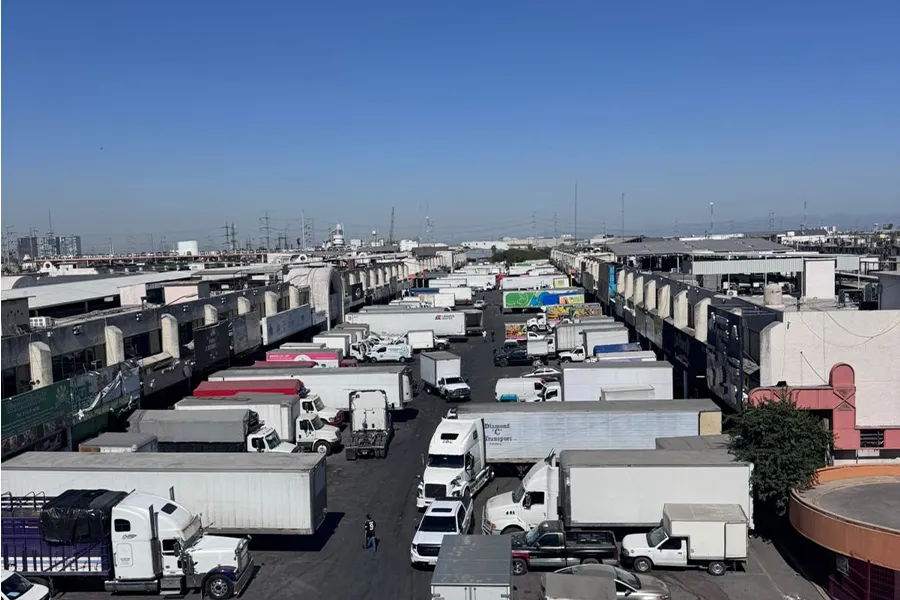
In Mexico, roughly one-third of the food produced in the countryside is lost before reaching consumers. Tomatoes, known locally as jitomates, are among the hardest hit. In some of the country’s wholesale markets, between 40 and 50% of the incoming supply is discarded. A range of factors drives these losses, including improper handling, transportation challenges, weather conditions, and demand fluctuations.
In response to this problem, researchers from EGADE Business School and the School of Engineering and Sciences (EIC) at Tecnológico de Monterrey are leading a project to examine tomato losses along the supply chain in the state of Nuevo León.
Alicia Galindo, research professor at the business school and national director of the Master’s in Finance program at EGADE Business School, explains that these losses amount to millions of pesos and carry high environmental costs due to decomposition, as well as the heavy use of water and fuel. They also have a social impact, posing challenges for food security.
“This is a really meaningful project,” Galindo says. “It’s not just about supporting wholesale markets, warehouse operators, or producers. We’re also going into the fields to understand how tomato production is being carried out. And it will have broader implications at the level of public policy.”
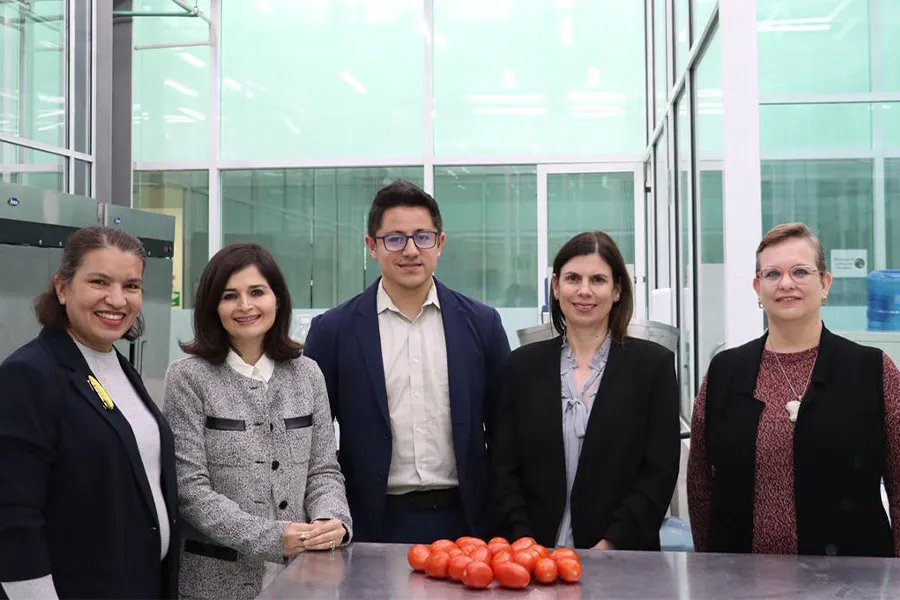
The team also includes Rebeca García, Esther Pérez, Sara Guajardo, and Vicente Mirón, researchers and specialists in bioengineering and food engineering at EIC, who bring technical expertise to the project, focusing on handling, harvesting, storage, and even commercialization.
Quantifying Food Losses from Farm to Market
This study is being carried out in collaboration with Mercado de Abastos Estrella, in the Monterrey metropolitan area, with the goal of better understanding the people who manage and sell tomatoes there.
“We realized that in Nuevo León there are no data on the amount of fruit and vegetable produce that is lost as it moves from the field to its first point of contact,” says García.
The project titled “Comprehensive Forward and Reverse Diagnosis of Tomato Handling in an Urban Market in Nuevo León: An LCSA and Double Materiality Approach to Reducing Losses with Social Impact” was selected as part of the 2025 National Call for Basic and Frontier Science by the Ministry of Science, Humanities, Technology, and Innovation (Secihti).
According to Alicia Galindo, the study is grounded in the Lifecycle Sustainability Assessment model, which evaluates three key dimensions across the tomato value chain: environmental impact, measuring the tomato’s environmental footprint from the field through distribution; financial cost, meaning the economic impact of waste; and the impact on the various stakeholders along the chain.
“And double materiality analysis is essentially about building a matrix where we assess the financial impact of that waste and the level of priority or risk it poses to each of the stakeholders involved,” Galindo explains.
Preventing Losses at the Source to Avoid Future Waste
The team is also incorporating artificial intelligence tools to monitor and analyze data, intending to identify patterns of shrinkage, anticipate peak loss seasons, and support decision-making through data visualization tools. To carry out this work, students from the Tec’s Master’s in Applied Artificial Intelligence program will also take part.
“We’ve identified that, even though producers and vendors in the Monterrey metropolitan area keep records and historical data on what’s produced and what’s lost, those data aren’t really being used to inform decision-making,” Mirón explains.
Beyond simply quantifying what has already been lost, the project will promote targeted interventions at critical prevention points by pinpointing the technical and operational variables that affect product quality and shelf life.
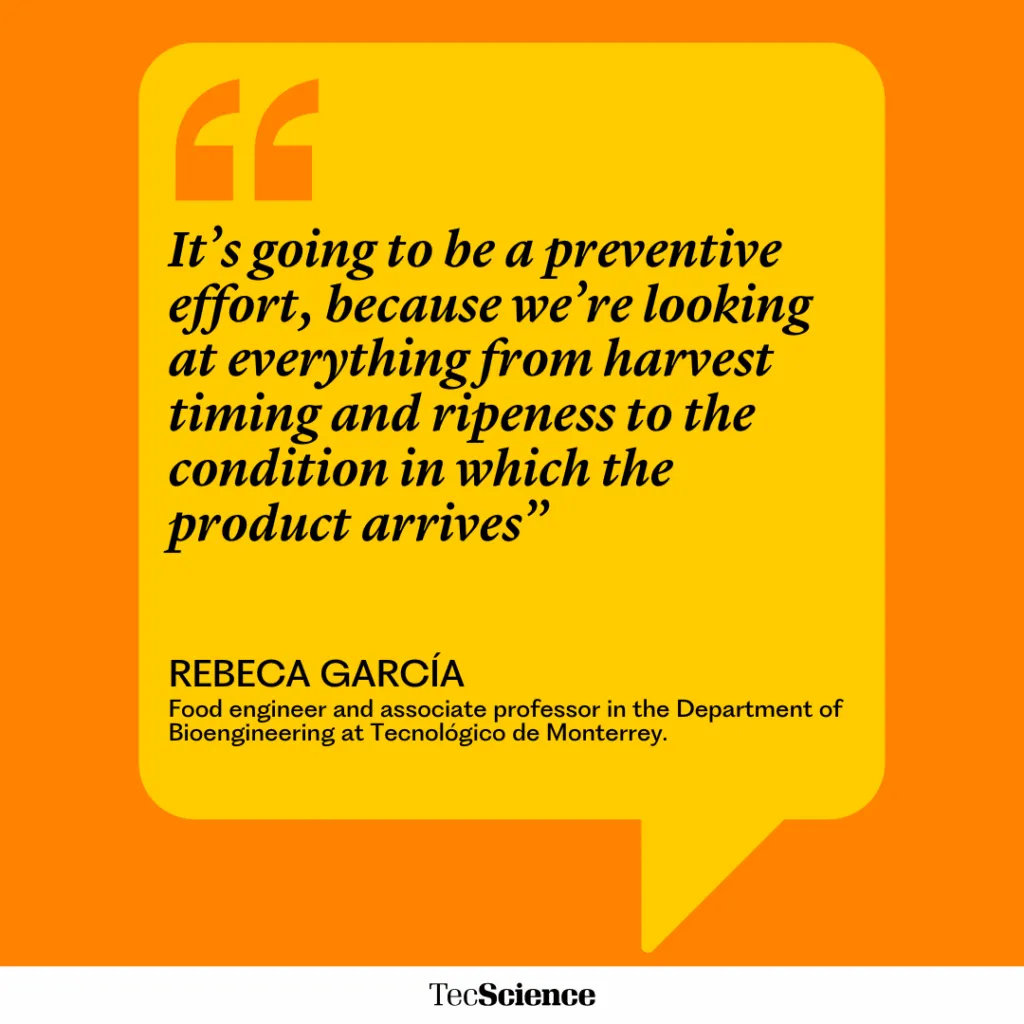
“It’s going to be a preventive effort, because we’re looking at everything from harvest timing and ripeness to the condition in which the product arrives,” García adds. “While there are many factors at play, we’re already seeing trends in the data we’ve been able to gather. So instead of letting it reach the point where it’s lost, the idea is to step in earlier and act before that happens.”
Building a Local Circular Economy to Scale Later
The project also envisions Circular Economy strategies so that tomatoes that can no longer be sold fresh can be repurposed and transformed into other food products, giving them a second life instead of letting them go to waste.
The team has taken part in initiatives before the Congress of Nuevo León to propose amendments to the Law on the Right to Adequate Food and the Fight Against Food Waste. They have also joined working groups tied to the state’s Zero Hunger strategy. In addition, Esther Pérez notes that the project’s findings could provide valuable evidence for shaping public policy and implementing both the Circular Economy Law and the General Law on Adequate and Sustainable Food.
The project is expected to run for approximately two to three years, a period during which the team aims to gather sufficient data and evidence to support its recommendations.
Looking ahead, the researchers hope the initiative will become a scalable model—one that can be replicated with other types of food and in other regions across the country. Just as importantly, they aim to raise public awareness about the true value of food and the labor, resources, and effort required to bring it to the table. “We want consumers to understand everything that goes into buying three tomatoes,” Pérez says.
Did you find this story interesting? Would you like to publish it? Contact our content editor to learn more at marianaleonm@tec.mx