
By Óscar Arias Carrión
Some institutions seem to fade away long before anyone dares to declare them dead. They continue operating with impeccable discipline: they convene meetings, award diplomas, organize conferences, and produce press releases. From the outside, everything suggests normality. From within, however, a dissonance emerges that is harder to name. It is not exactly a collapse. It is something else: a vitality that persists in form while weakening in meaning.
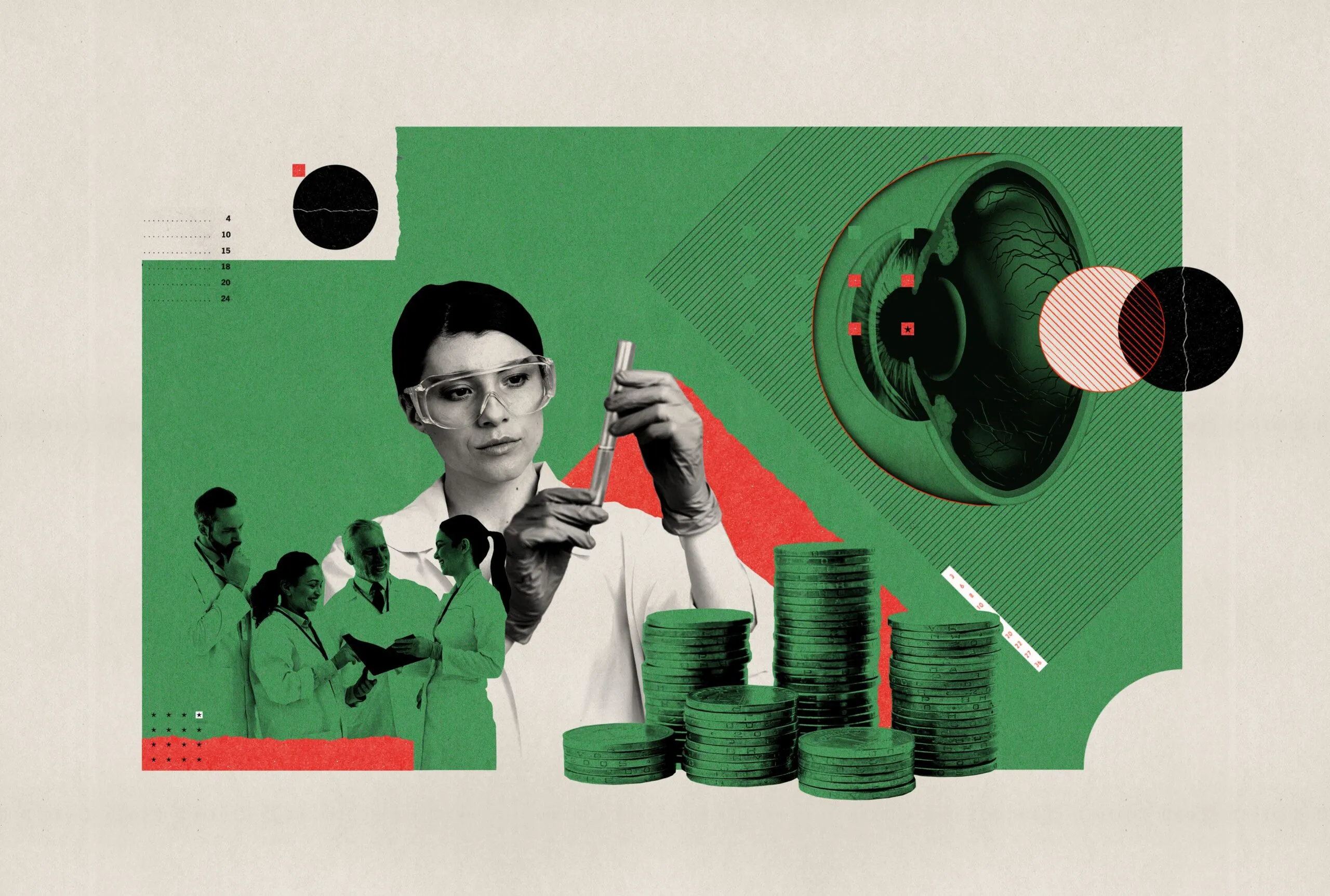
Peter Fleming, in Dark Academia: How Universities Die, proposes an uncomfortable yet surprisingly precise term to describe this state: the zombie university.
The concept does not function as a rhetorical exaggeration. A zombie is not completely dead, but it is not fully alive either. It walks, repeats familiar gestures, and retains basic reflexes. Fleming argues that something similar is happening across much of the contemporary university. The rituals of knowledge remain: the gown, the seminar, the peer-reviewed article, the doctoral defense. But the pulse is no longer set by intellectual curiosity or public vocation. It is increasingly governed by a mix of market logic, poorly designed incentives, and a pile of bureaucratic routines. The institution remembers what it once was, though it seems less certain about what it exists for.
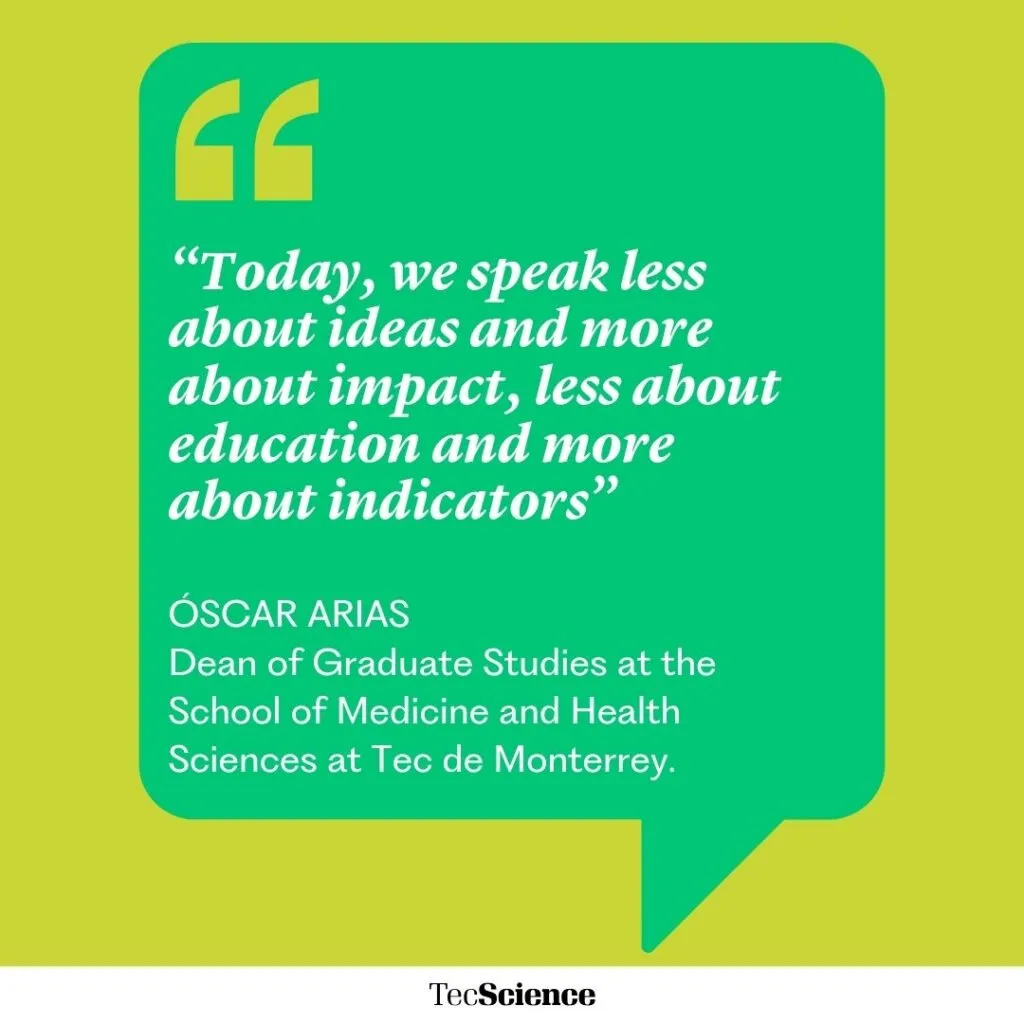
This shift does not arrive abruptly; it seeps in. The language gives it away. Today, we speak less about ideas and more about impact, less about education and more about indicators, less about knowledge and more about positioning. Words are not innocent. They come from the corporate universe and carry with them a specific grammar of valuation: whatever cannot be measured, audited, or translated into metrics quietly begins to lose legitimacy. The problem goes beyond the importation of corporate jargon, as many adapt by applying the law of least effort. The rhetoric of excellence coexists, paradoxically, with practices of inertia.
In that terrain, a distorted form of professionalism thrives. It is not only about endless workdays or chronic exhaustion, but about a moral regime that turns passion into a mandate. Loving one’s work ceases to be a source of meaning and becomes a permanent obligation. If someone is exhausted, the failure is no longer attributed to the system, but to a presumed individual insufficiency. Burnout loses its status as a warning signal and, perversely, becomes a silent credential. The university does not ask why its academics are at the limit; instead, it offers resilience workshops, “mindfulness,” or well-being programs that shift onto the individual a discomfort that is, at its core, structural. The result is an ecosystem where the exhausted and the disengaged coexist, integrated into the same machinery.
Academics: From Intellectuals to Producers
Academics, for their part, are redefined. From intellectuals, they become producers. Publications, citations, funded projects, and annualized metrics. High terminal efficiency, frictionless. The classical ideal of the professor who teaches, researches, and thinks with relative autonomy yields to a logic of continuous accountability. What matters less is what is written than how often it is published, where, and with what quantified impact. “Publish or perish” ceases to be a metaphor and becomes an administrative slogan.
Paradoxically, while greater productivity is demanded, the core activity becomes blurred. The university grows, yes—but in the wrong directions. Bureaucracy, forms, audits, and evaluation systems multiply. Administration expands and consolidates itself as the institution’s hard core, surpassing its academic side. Teaching and research survive as elite areas, forced to justify their existence before managerial structures that rarely teach or conduct research.
The obsession with social impact adds another layer of simulation. All research is expected to promise immediate, quantifiable, and visible effects. The result can be a choreography of inflated reports and narratives of forced utility that discourage intellectual risk-taking. Truly new ideas—those that do not yet know what they will be useful for—find little room to maneuver in an environment that demands results long before reflecting on whether the right questions are being asked.
None of this would be possible without structural precarity. It is not a flaw of the system; it is one of its supports. Adjunct faculty without stability or institutional voice sustain much of the teaching. Meritocracy functions as a moral alibi: if someone fails to remain, responsibility is assigned to the individual, not to the design of the model.
Faced with this landscape, cynicism emerges as a survival strategy. Criticism circulates in hallways, irony in private, frustration in overpriced cafés. But cynicism is passive: it allows participation to continue without belief in the rules. It also allows one to pretend to comply with them. And while the game is played without conviction, the system reproduces itself without effective resistance.
The contemporary university seems more concerned with its ranking position than with the quality of the questions it formulates. Students are redefined as clients, programs as products, and research as marketing material. Branding invades everything. Mediocrity is bureaucratized while knowledge is reduced to a means, rarely an end.
Thinking outside the box sounds inspiring in strategic seminars, though a basic detail is often omitted: the box costs money. Without sufficient resources to conduct research or to pay for open access, creativity becomes an almost clandestine exercise. Ideas are not lacking; they abound. What is scarce is the material scaffolding that allows them to be tested, published, and discussed without passing through the tollbooth of publishers that invoke the so-called “democratization of knowledge” while charging for every point of entry.
Thus, the researcher ends up juggling concepts in an imaginary laboratory, writing articles that perhaps no one will read because there was no money to “unlock the PDF.” Originality is demanded, but oxygen is restricted. And yet, science advances —haltingly, with dark humor and an almost irrational stubbornness— because thinking outside the box is not a slogan; it is a necessity when the box is empty.
Recognizing the Problem Is the First Step
Fleming deliberately avoids offering closed solutions, and that restraint is a virtue. There are no rescue manuals for zombie institutions. What does exist is an uncomfortable invitation to recognize symptoms, to examine concrete contexts, and to accept that withdrawal, disidentification, or even departure may be legitimate decisions. Leaving academia does not necessarily mean failure; sometimes it means refusing to confuse vocation with an institutional pathology.
But perhaps the first honest gesture is not to pronounce a final sentence, but to suspend inertia. To stop pretending that everything is fine, without falling into the paralyzing comfort of fatalism. Institutions do not obey inevitable biological laws; they are historical constructions, and precisely for that reason, they can be transformed.
Recognizing that universities are going through a phase of profound wear does not imply accepting their demise. It means distinguishing between what is exhausted and what still beats. Because even within rigid structures, spaces of genuine thought persist: classrooms where wonder still occurs, laboratories where curiosity resists metrics, conversations that no ranking can quantify.
Fleming’s critique is unsettling because it names a real drift, but also because it forces a more difficult question than nostalgia or cynicism: what university do we want to rebuild? Not one idealized in retrospect, but one capable of reconciling knowledge, time, and meaning. An institution where measurement does not replace judgment, where stability does not turn into indifference, where productivity does not cancel reflection, where impact does not suffocate the fertile uncertainty of new ideas.
The problem is not that the university has changed —every living institution does— but which forces govern that change. And there remains a margin for action, not always spectacular or immediate, but real: redefining criteria of academic value, protecting time for slow but genuine thinking, rebuilding intellectual communities less subjected both to the logic of continuous performance and to the comfort of minimal effort.
Perhaps the task is not to “save” the university as an abstraction, but to reanimate its essential practices. To defend dignified material conditions. To reclaim that teaching and thinking are not administrative costs, but the very core of the institution. To remember that knowledge does not only produce results: it produces understanding, critique, and imagination.
Nothing guarantees the success of that reorientation. But simply accepting zombification does guarantee its perpetuation. Between complacent denial and paralyzing fatalism lies a third, less comfortable path: deliberate reconstruction.
Because if the university risks becoming a zombie, it also retains something that no managerial model or bureaucratic routine has fully eradicated: the capacity to question itself. As long as that capacity exists, the story is not over.
Author
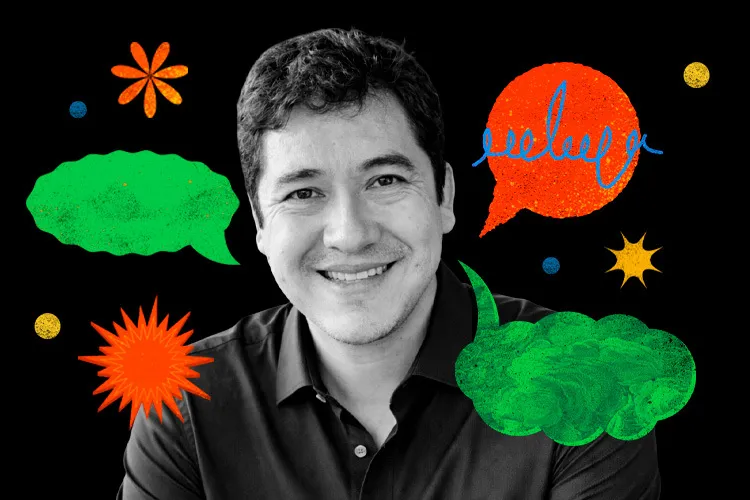
Óscar Arias Carrión is Dean of Graduate Studies at the School of Medicine and Health Sciences at Tecnológico de Monterrey.