
By Grissel Trujillo de Santiago
When I was a child, I didn’t call what excited me about learning “science,” but today I know that’s exactly what it was. It was biology, chemistry, and math classes; it was the questions that arose as I began to understand how things worked. For me, that learning appeared in very ordinary moments, often while my mother was cooking. I would come home from school excited and, while she prepared the meal, I would tell her about things I had learned in class. “Mom, did you know that…?” I would say again and again, full of excitement.
I come from a humble family. My grandparents were farmers and never had the opportunity to pursue formal education. However, they were always deeply intelligent and observant people. My grandfather was a self-taught veterinarian and a beekeeper; he was fascinated by understanding how ecosystems function and how bees organize their social life. He knew a great deal about it through experience, observation, and respect for nature. In my family, knowledge was never seen as something distant or exclusive to school—it was part of everyday life.
My grandparents managed to ensure that their four daughters went to college, and that generational leap was decisive. My mother became a university professor and researcher in the field of veterinary medicine. When I told her about what I had learned at school, she didn’t just listen—she shared my excitement. She was my accomplice. Sometimes she laughed and told me I asked too many questions, that I posed difficult ones. But she always took the time to listen, to think with me, and to enjoy that exchange. I believe that was when, without realizing it, I began to associate knowledge with something deeply enjoyable.
In addition to that early love of learning, my parents instilled very clear values in me through taekwondo practice. For many years I trained under a simple but powerful philosophy. My father used to say that to be a good taekwondo practitioner, you only needed three things: practice, practice, and practice. There, I learned discipline, how to deal with frustration, how to be consistent, and how to respect my teachers and my peers. I also learned to honor those who teach you and to understand that discomfort and sacrifice are part of the process when you want to achieve something beautiful and meaningful. Over time, I realized that this training was just as important as any science class: it was the emotional and ethical foundation that would later sustain my research path.
Science Is Not Only for Geniuses
My approach to “formal” science came later, during university. That’s when I understood that science also involves frustration, discipline, and perseverance. There were moments when I wondered whether this path was really for me. I was passionate about it, but the environment often seems to demand absolute certainty, dazzling brilliance, or a confidence that one does not always have. Over time, I learned that it is not about being a genius, but about being consistent, patient, and resilient.
One of the moments that most transformed my relationship with science was going through a serious illness in my adult life: kidney cancer. Losing an organ profoundly changed the way I see the body, human fragility, and the role of science. From that point on, my work stopped being only an intellectual exercise and also became an act of empathy. I understood, from personal experience, how important it is to research with purpose and with a deep responsibility toward the people we ultimately hope to help.
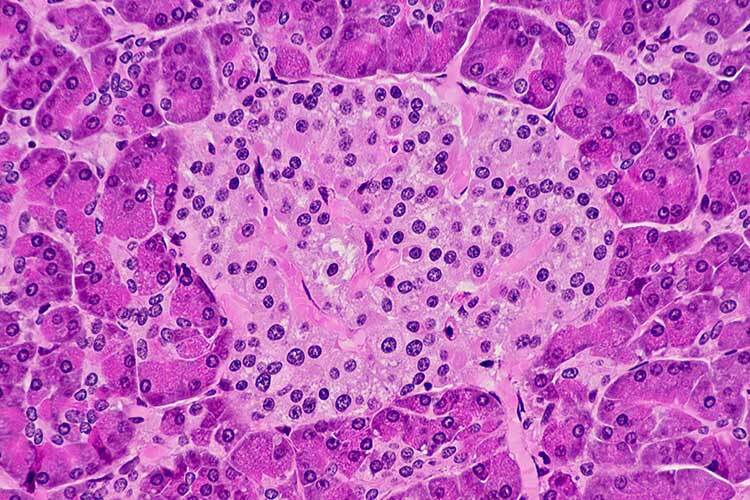
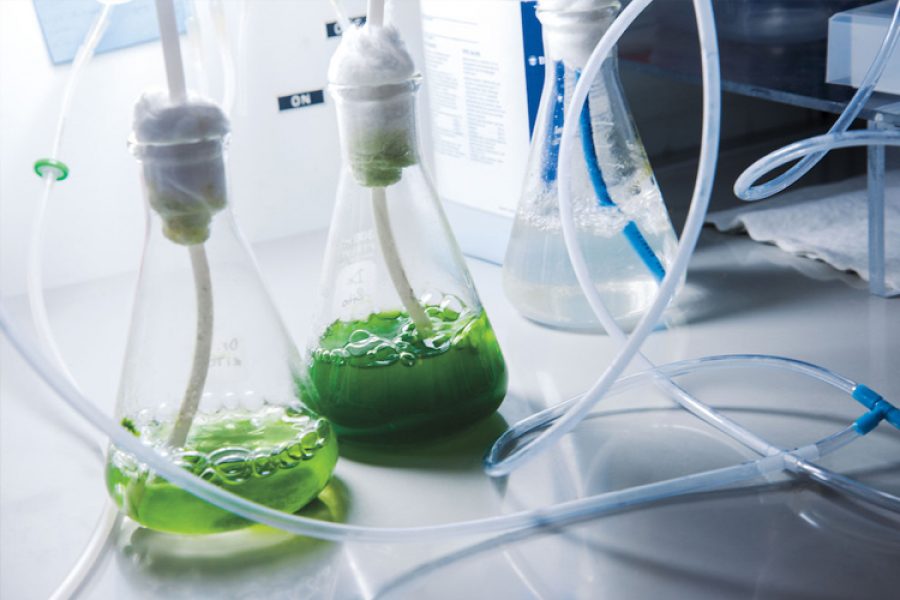
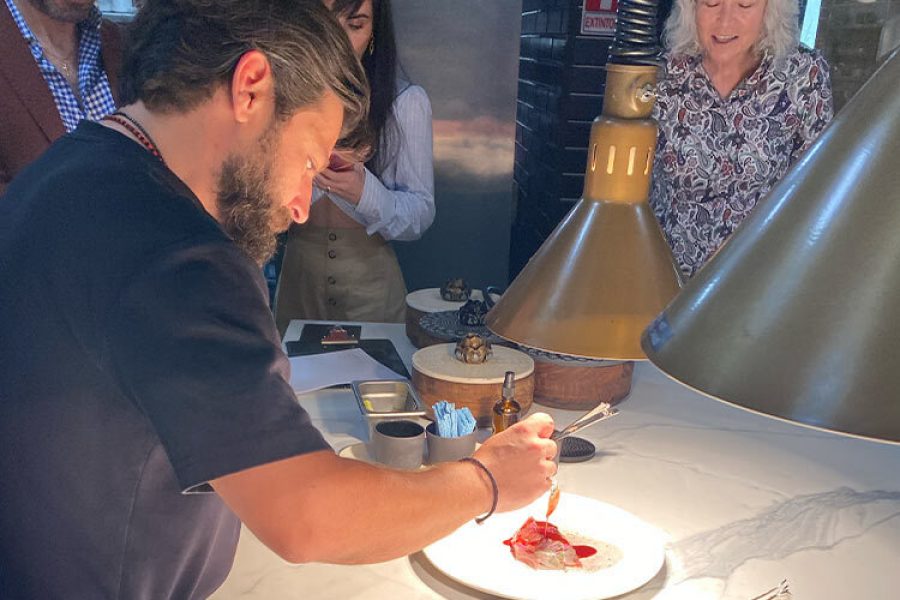
Today I work on developing technologies to produce living tissues in three dimensions and on creating the foods of the future through a science-based company. My career has led me to collaborate with institutions in Mexico and abroad, and to move across disciplines. But none of this happened in a linear or predetermined way. My vocation did not appear all at once; it was built gradually through curiosity, discipline, and many hours of invisible work.
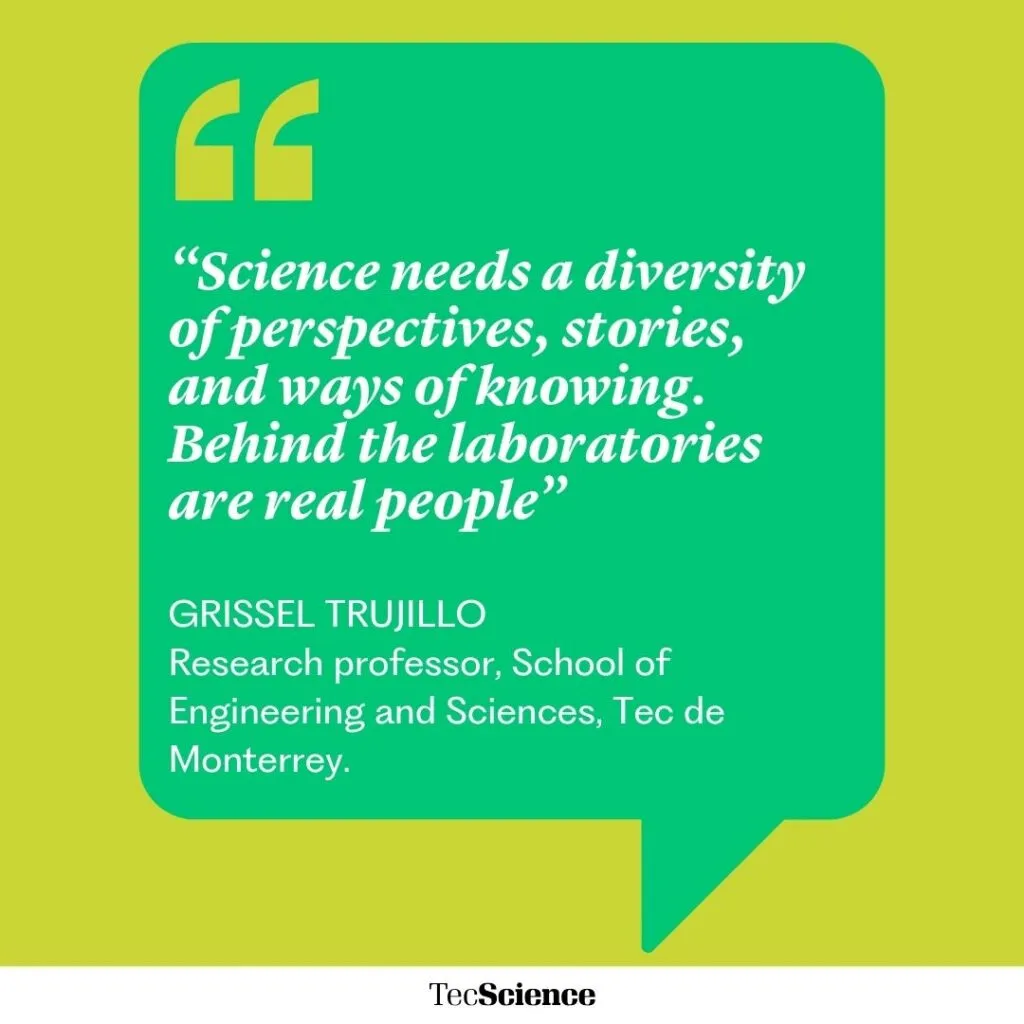
Even today, significant barriers remain for girls and young women who want to approach science. There are not always close role models, there is not always support, and the idea often persists that science is only for a few “special” people. My story—and that of many women scientists—shows the opposite. Science needs diversity of perspectives, stories, and ways of knowing. Behind laboratories, papers, and recognitions are real people who doubt, make mistakes, learn, and keep moving forward.
If there is one thing I have learned and like to share with girls and young women, it is this: you do not need to have everything figured out from the beginning. You do not need to be perfect. A scientific vocation is not always discovered; often it is built. And science, when lived with joy, discipline, and heart, can be a powerful tool for transforming the world—starting with the way we look at it.
Author
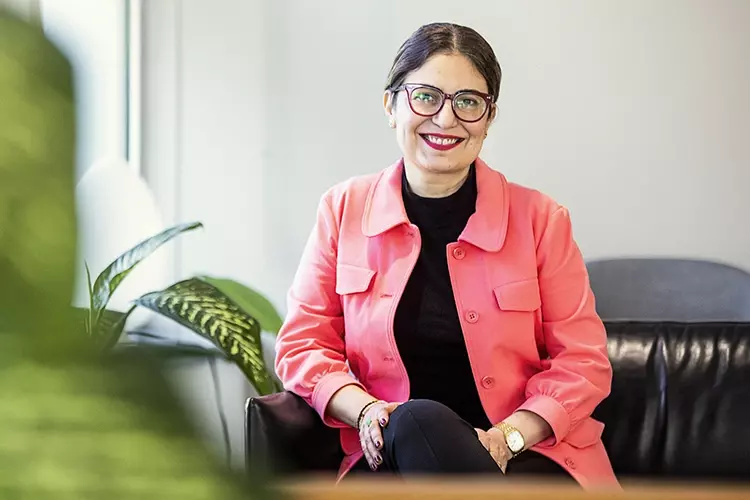
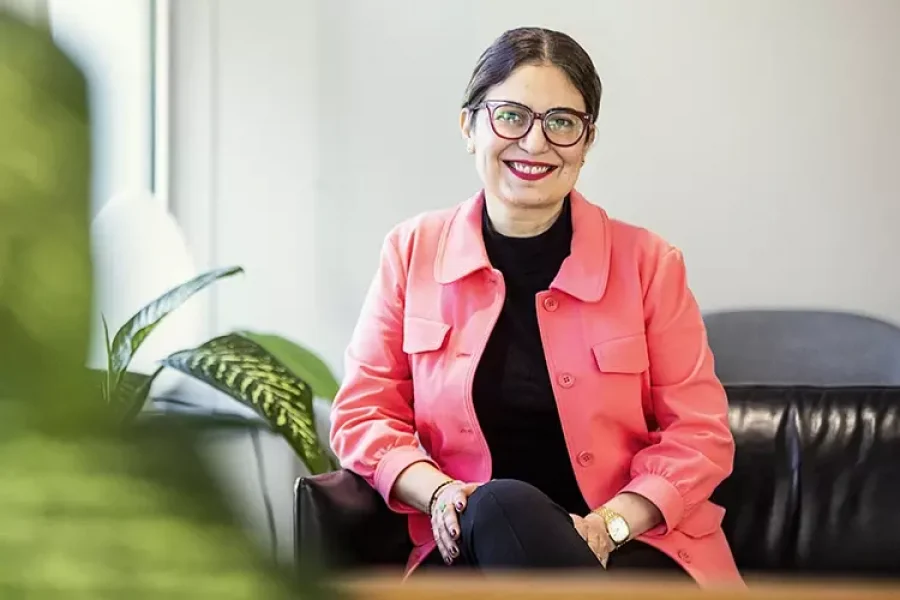
Grissel Trujillo de Santiago is a research professor at the School of Engineering and Sciences (EIC) at Tecnológico de Monterrey. She is the Chief Scientific Officer of Forma Foods, a science-based company from Tec, and also leads the Álvarez-Trujillo Lab. She is a member of Mexico’s National System of Researchers and the Mexican Academy of Sciences. She has received the L’Oréal-UNESCO For Women in Science Award.