

In the favelas of Belo Horizonte, Brazil, figures showed that Vila Viva, a municipal urban transformation program, had worked: infrastructure and health indicators improved, and violence, particularly homicides, had decreased.
However, when Waleska Caiaffa, a visiting professor at the Federal University of Minas Gerais (UFMG) and a member of the Urban Health Observatory of Belo Horizonte, along with her team, interviewed the residents, she found that fear persisted and that support networks remained weakened.
“If we had stopped on the data, we could have concluded that the intervention had worked,” the researcher said during the plenary session Regional Spotlight: Latin America & Caribbean – Regional Evidence, City Practice, and Capacity for Action.
The plenary session was part of the 22nd International Conference on Urban Health (ICUH), the world’s leading forum for the exchange of policies, research and practices in urban health, which brings together between 400 and 500 decision-makers from more than 40 countries.
For the first time in its history, the conference came to Mexico, based at the Mexico City Campus (CCM) of Tec de Monterrey and in partnership with the World Health Organization (WHO) and UN-Habitat.
The plenary session included Caiaffa; Olga Sarmiento, Director of Research at the Faculty of Medicine of the University of the Andes, Colombia; Eduardo Santana, founder of the Museum of Environmental Sciences at the University of Guadalajara (UdeG), Mexico; and Nélida Escobedo, fellow at the Center for the Future of Cities (CFC) and professor at the School of Architecture, Art and Design (EAAD) of Tec de Monterrey. It was moderated by Eugen Reséndiz, research professor at EAAD and fellow at the CFC.
During the panel, they agreed that, to improve cities, evidence is essential, but it is not enough to produce it: it must be understood and evaluated together with the communities and turned into changes that are sustained over time.

Scientific Evidence for Building Healthy Cities
According to experts, cities can stop making their inhabitants sick, and if well design they can even protect it.
One of the initiatives presented was the cable car system in Bogotá, Colombia, which connects informal settlements to the public transportation system. In their research, Sarmiento and her team found that in addition to reducing travel times, this infrastructure decreased exposure to air pollutants, improved user satisfaction, and reduced the stigma associated with the area.
Her team has also evaluated the Care Blocks, spaces that offer educational services, physical activities and support to caregivers, mainly women.
The results show that women who attend are more likely to engage in physical activity, sleep between seven and nine hours, and establish new social relationships.
These experiences show how urban interventions can go beyond their initial objectives. “There has been governance and continuity in policy leadership, but also a dialogue with the community,” Sarmiento emphasized.
From Evidence to Sustained Action
But generating evidence doesn’t guarantee it will become public policy. To close that gap, Escobedo presented Urban95 Academy for Latin America and the Caribbean, a program that connects urban research and experiences with municipal authorities to improve spaces for early childhood and their caregivers.
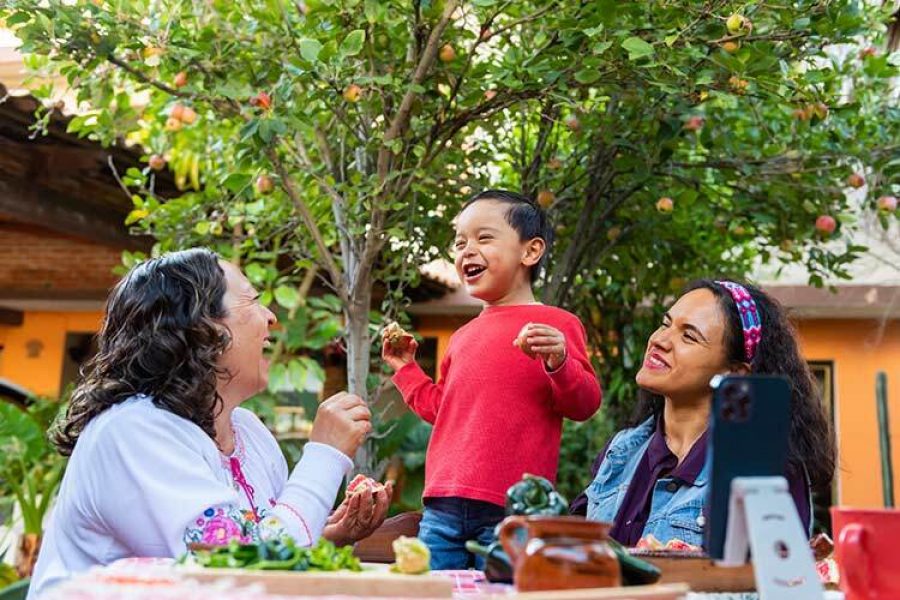
Urban95 proposes imagining the city from a height of 95 centimeters, roughly the height of a three-year-old child. By improving the urban environment for children, accidents can be prevented, physical activity increased, exposure to pollution reduced, child development promoted, and the well-being of their caregivers improved.
“How can we transform a street into a safe route to school?” the researcher asked.
Another way to bring evidence closer to people is through museums. Santana suggested that museums can contribute to improving urban health by connecting science, art, and citizen participation to drive environmental change.
From the museum he manages, the researcher has observed firsthand how knowledge and inspiration can be translated into concrete actions, such as reducing pollution, promoting the use of bicycles and increasing green areas, aspects that also benefit the physical and mental health of its visitors, according to him.
Therefore, he proposed measuring the impact of museums not only by how many people visit them, but by the environmental and social changes they help generate.
“Museums can generate evidence about health, interpret it, bring communities together, and support prevention and well-being,” she said.
Thus, the experts emphasized that building healthy cities requires more than simply producing knowledge. It is necessary to generate qualitative and quantitative evidence, translate it into concrete actions, evaluate and design interventions in collaboration with the community, and ensure that they are sustainable over time, regardless of changes in government.
“Our region has a wealth of knowledge and practical experience to offer the world,” Reséndiz concluded.
Did you find this story interesting? Would you like to publish it? Contact our content editor for more information: marianaleonm@tec.mx