

Climate change is often discussed in global terms —average temperatures, emissions, or international agreements— but its impacts are felt in communities, whether they are urban or rural. In response, various research groups around the world are seeking to develop projects that contribute to mitigating these impacts.
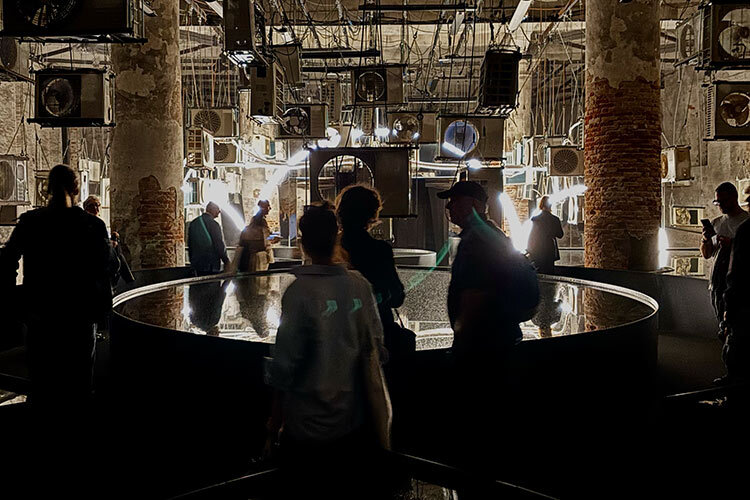
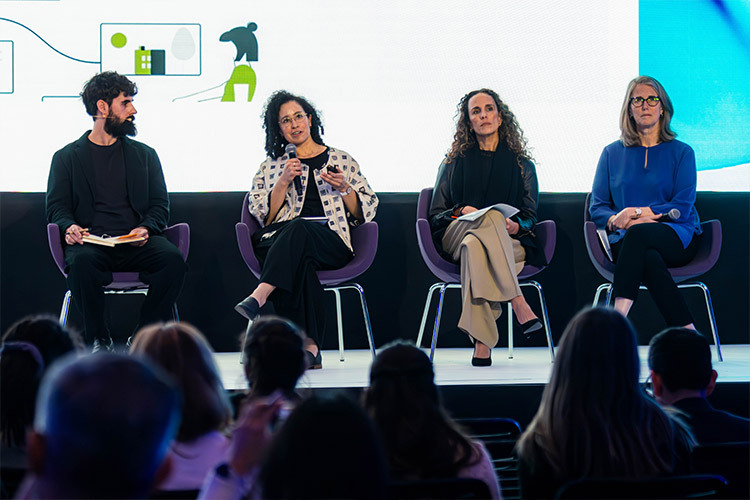
This was evident during the panel From Research to Action: Cities and Communities Facing Climate Change, which took place at the Tec Science Summit 2026, when a group of researchers, urban designers and housing specialists discussed how to turn scientific knowledge into real tools to cope with the challenges that come with it.
It was moderated by Ryan Whitney, research professor at the School of Architecture, Art and Design (EAAD) of Tec de Monterrey and featured the participation of Francisco Benita, research professor at the School of Engineering and Sciences (EIC), Sarah Billington, professor and head of the Department of Civil & Environmental Engineering, Claudia Acuña, Director of Impact Partnerships at New Story and Larisa Ovalles, researcher at the Urban Risk Lab of the School of Architecture and Planning at MIT.
Far from institutional speeches or abstract solutions, the conversation revolved around a practical question: how can research actually improve the way people live in light of this environmental crisis?
One of the central ideas was that today climate research no longer takes place solely in laboratories or computer models, but directly with the people it impacts.
Walkable Cities
Benita showed how urban sensors, mobility analysis and environmental data can reveal invisible phenomena, such as urban heat islands or pedestrian stress points.
In projects focused on building walkable cities, carried out from Singapore to the United States, thousands of students participated using Internet of Things (IoT) devices that recorded temperature, humidity or light intensity every few seconds.
The result was not only a large set of scientific data, it also allowed them to understand how a real city moves and how urban inequalities are reflected in everyday experience.
But, as the expert emphasized, technology alone is not enough: projects work when communities participate and understand what happens to their data, becoming an active part of the scientific process.
“We calculated indicators, such as the distance to the nearest clinic, to try to understand how easy it is to move around [in a city],” Benita said.
How to Support Communities in Resisting Natural Disasters
From another perspective, Billington presented examples of applied research focused on resilient infrastructure. One of them explores how to reduce the risk of flooding while public works projects, which can take years to build, are underway.
Instead of waiting for large investments, her team tests immediate interventions: delivering protective materials to vulnerable households and accompanying them with constant advice to strengthen families’ confidence in their ability to act in the face of risk.
The approach reveals an important shift in contemporary climate science: mitigating impacts does not always mean building more infrastructure, but rather activating local capacities.
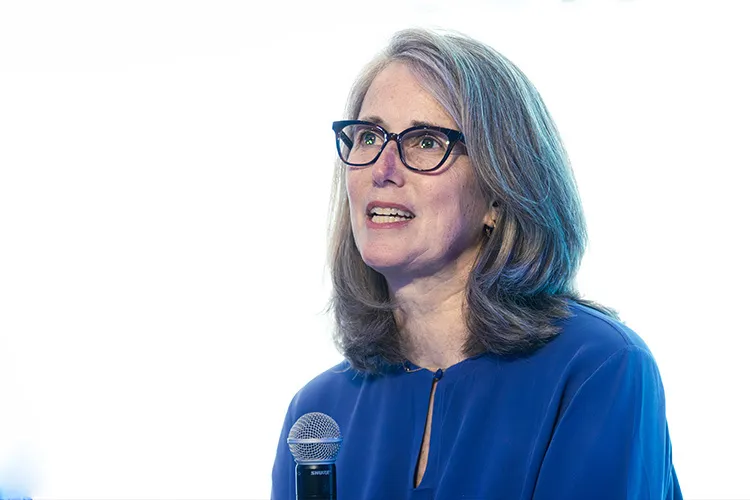
Another project seeks to reduce emissions from the construction sector by reusing materials through artificial intelligence, while a third experiments with digital platforms to incorporate informed citizen’s opinions into decisions about urban infrastructure.
“The idea is that any city can test or experiment with this and figure out issues they care about,” Billington said.
The Importance of Housing in the Face of Climate Change
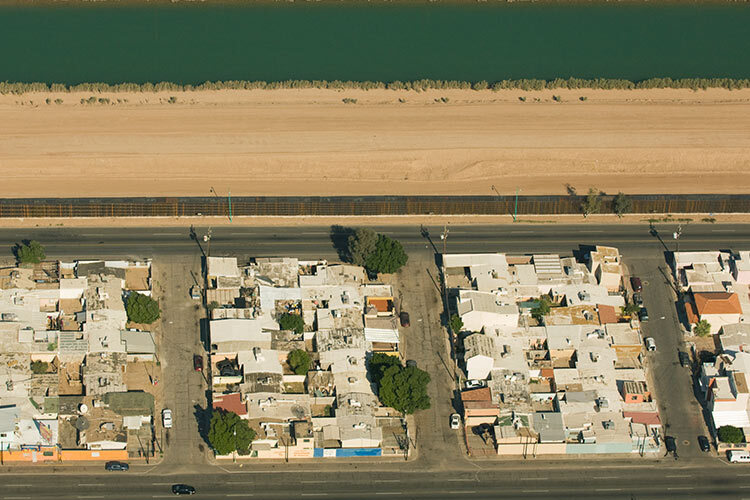
Acuña argued that in Latin America, a large part of the climate risk is due to informality in urban expansion.
More than 110 million people live in informal settlements, often located in flood-prone or unstable areas, making vulnerability a structural issue.
“Not all risks come from urbanization, of course, but a significant portion of the exposure and long-term fragility is determined before a house is ever built,” the expert said.
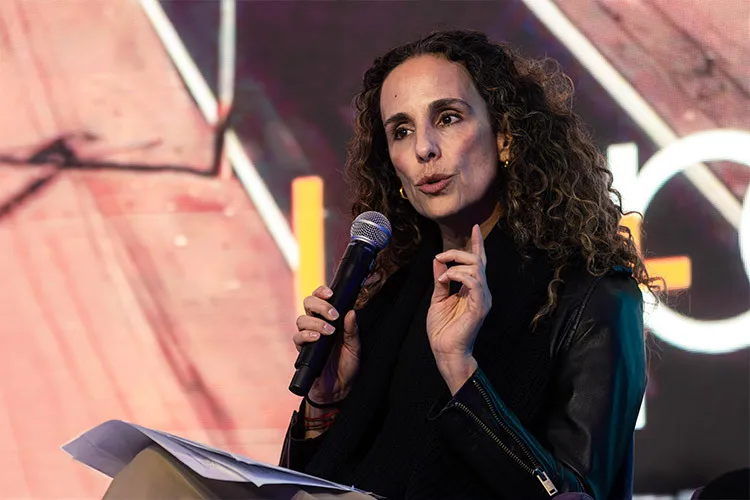
Her organization, New Story, works under the “Land First” strategy, which seeks to intervene in the land access system before urban informality arises. Instead of rebuilding after a disaster, the goal is to prevent it through planned, accessible, and resilient land.
The model combines private investment, local governments, developers, and families to create housing markets capable of reducing climate risks from the outset.
Urban Design to Address Natural Disasters
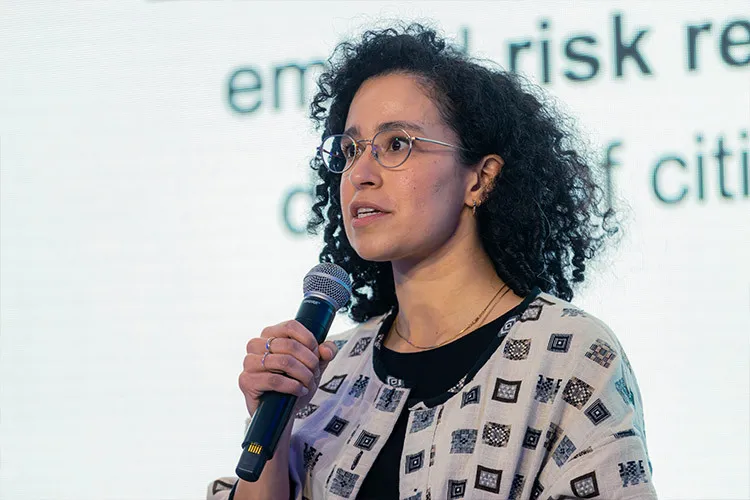
Researcher Larisa Ovalles shifted the discussion toward urban design and disaster management as a continuous process —before, during, and after an emergency. From MIT’s Urban Risk Lab, her work is based on action research: collaborating with communities from the outset and designing solutions that work both in everyday life and in critical moments.
One example is Prep Hubs, public spaces that operate daily as recreational areas or community gathering places, but which, after a disaster, are transformed into centers for energy, communication, water, or food. The key, she explained, is the concept of dual use: infrastructure that doesn’t wait for a crisis to become relevant.
“For us it is critical to kind of learn from community first; it’s been shown gime and time again that it’s more effective to learn what people already after a disaster,” Ovalles said.
How to Close the Gap Between Research and Action to Resist Climate Change
Throughout the panel, the idea emerged that the main obstacle to tackling climate change is not a lack of scientific knowledge, but rather the gap between research and urban reality. Cities operate under political cycles, economic constraints, and social emergencies that do not always align with academic timelines.
“While we are doing research, families are already making decisions, building, and informality already espanding,” Acuña said. “The real challenge is translation, integrating the research into the system in real time.”
Part of the solution will be to co-create projects with governments and communities, as well as redefining what it means for research to have an impact.
“I think universities should broaden what they consider impact,” Billington said. “If somebody is working with a vulnerable community and having an enormous impact that should count, not just the number of papers or citations.”
There was also talk of conducting research with humility, recognizing that local people know more about the problems they face because they experience them firsthand.
Ultimately, according to the panelists, new technologies or major international agreements will not be enough to tackle climate change. The answer lies in the ability to translate research into local actions that make a community less vulnerable to the next flood, heat wave, or wildfire.
“Climate change is no longer an abstract concept; it is something that is affecting our communities locally and globally, in different ways and in different spaces,” Whitney concluded.
Did you find this story interesting? Would you like to publish it? Contact our content editor to learn more: marianaleonm@tec.mx