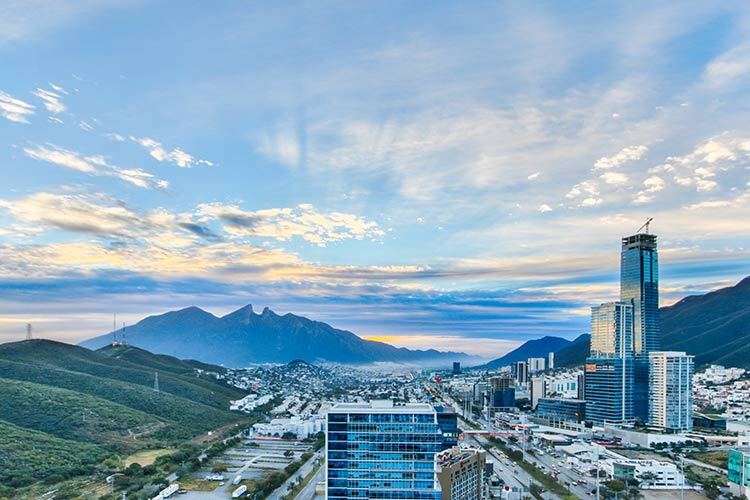


Mexican cities are growing in both area and population, but while the outskirts are expanding, urban centers are losing residents. This translates into an increasing distance between homes and workplaces, schools, hospitals, and parks.
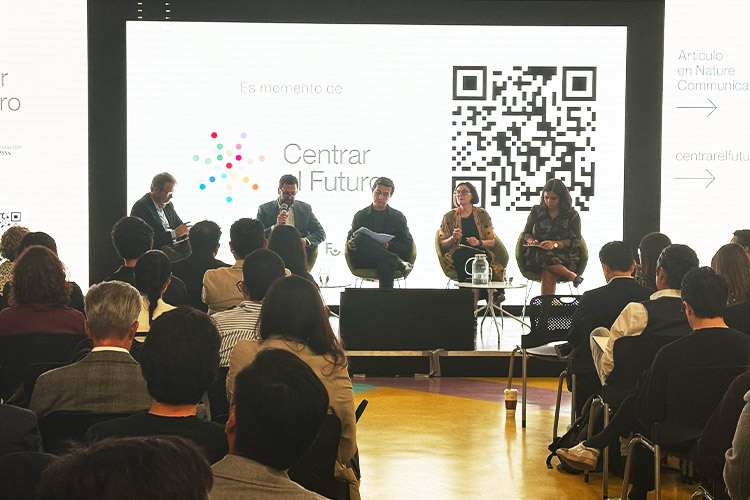
This phenomenon was the focus of the Centering the Future event, organized by the Center for the Future of Cities (CFC) at the Mexico City Campus of Tec de Monterrey.
During the meeting, Javier Guzmán, Vice President of Research at Tec de Monterrey, expressed that the project represents the institution’s commitment to research that has a positive impact.
“Based on rigorous evidence, this study allows us to understand the transformations that are being implemented in our cities and to open new questions about the urban development models we want to build,” he said.
Roberto Ponce, research director of the CFC and leader of the project, presented the study they recently published in the journal Nature on the expansion of 69 cities, as well as the interactive platform that can be consulted by decision-makers and citizens.
Mexican Cities Need a Revolution
According to Ponce, the project has some main findings. One of them is that Mexican cities are expanding their urbanized surface area more than they should have, since the distance to the centers increased by 28% in the last 30 years.
For Ponce, this urban model is a tragedy because it wastes existing resources and services in the city center, while the most vulnerable residents lack access to them in the outskirts. “We need a revolution in how we plan metropolises,” the expert stated.
This revolution, however, does not depend on a single actor. That is why the event brought together a panel of public officials, researchers, and decision-makers to discuss what explains this growth model and, above all, what is needed to change it.
During the conversation, moderated by José Antonio Torre, director of the CFC, specialists discussed what factors explain this transformation and what it implies for the urban future.
José Iracheta, Undersecretary of the Ministry of Agrarian, Territorial and Urban Development (SEDATU), stated that Mexican cities function as a bipolar structure in which housing development in consolidated areas involves high regulatory costs, while urbanizing in the periphery is initially cheaper.
This dynamic favors irregular expansion and displaces the population to increasingly distant areas. “The formal city is extremely regulated, and at the same time, we have a city that grows practically in anarchy,” said Iracheta.
For Diane Davis, senior lecturer in Regional and Urban Planning (Charles Dyer Norton Chair) at Harvard, understanding history is important, because Mexican cities have particular trajectories and their centers have changed over time.
Therefore, she proposed studying how factors such as housing, technology, and climate change are modifying land value and use. “This is happening because the macroeconomy is changing,” Davis pointed out.

Demography and Governance: the Challenges Ahead
The demographic dimension added another variable. Claudia Masferrer, a research professor at the Center for Demographic, Urban, and Environmental Studies (CEDUA) at El Colegio de México, pointed out that aging and changes in household formation will transform urban needs. “Regarding the relationship between the city center and the periphery, people live where they have support and family networks, and there are no incentives for them to move to the center,” Masferrer said.
The debate also pointed to a governance problem. Emmanuel León, General Director of Urban Policy at the Secretariat of Planning, Territorial Development and Metropolitan Coordination (Metrópolis), highlighted the need to update planning and governance instruments for peripheral areas where there is an absence of government presence.
“The most important discussion the city will have in the coming years is about to begin: what is the vision we are seeking with the General Territorial Planning Program?” said León.
Rather than providing unique answers or proposals, the panel sowed the seeds for the kind of discussions and collaborations between researchers, public officials, and citizens needed to design cities that are capable of adapting to demographic, territorial, and environmental changes, always with the aim of protecting their citizens and ensuring their well-being.
Did you find this story interesting? Would you like to publish it? Contact our content editor for more information: marianaleonm@tec.mx