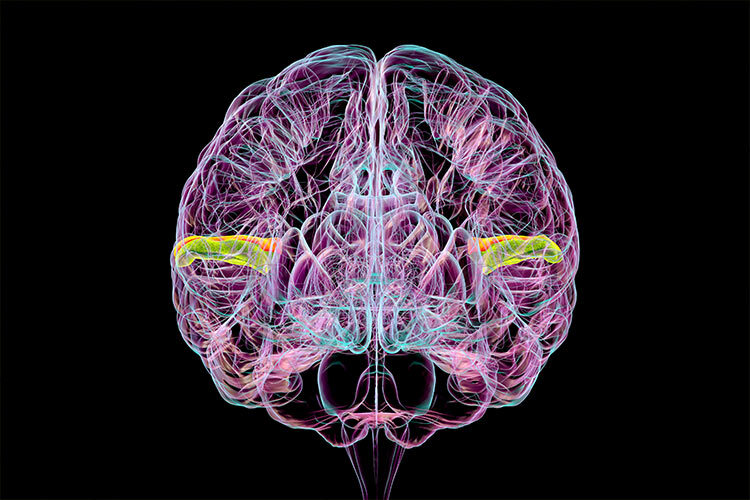


The science we use to assess and treat aphasia—a neurological language disorder—was developed primarily with English speakers. This has left a knowledge gap for Spanish speakers, specifically those from Latin America.
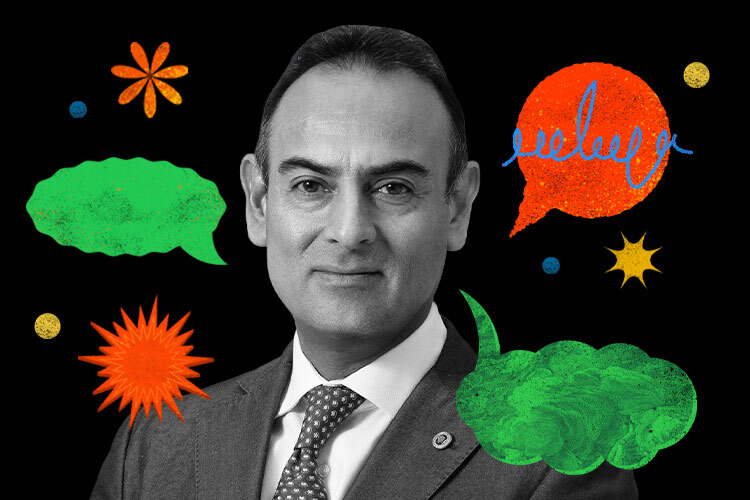
“In Mexico we can diagnose it, but we don’t necessarily have targeted, proven, and evidence-based interventions for our own population,” says Alejandra Platas, Regional Director of the Department of Clinical and Health Psychology at the School of Medicine and Health Sciences (EMCS) of Tecnológico de Monterrey.
To address this problem, a collaboration between the EMCS of Tec de Monterrey and the Multilingual Aphasia and Dementia Research Lab of the University of Texas at Austin (UT Austin) will develop a personalized language intervention for Latin American people living with this condition.
What is Aphasia?
Aphasia is a progressive disorder that makes it difficult for people to speak, read, and write, and sometimes understand what other people are saying.
It is associated with damage to brain areas involved in language that result from strokes, tumors or brain injuries, as well as neurodegenerative disorders, including Alzheimer’s and dementia.
This disorder affects millions of people worldwide, but its global magnitude is still not well quantified. However, we know that stroke, one of its main causes, affected 93.8 million people globally, according to the World Health Organization (WHO).
“This can be very frustrating, because people have in their minds what they want to say, but they lose that connection to be able to speak the words,” says Said Jiménez, professor at the Department of Clinical Psychology at EMCS.

CommUNITY: Speech Therapy for Spanish Speakers
Although aphasia exists in many countries with a great diversity of languages, most of the treatments that exist were developed by and for English-speaking people.
Transferring these results into Spanish is not simply a matter of translating words. Languages have different structures; there are also variations among different Spanish-speaking communities.
“We don’t have the same variations or frequency of words in Mexico as in Spain or Colombia,” Platas explains.
In that sense, the studies that exist in Spanish-speaking people have been developed mainly in Spain, so Platas and Jiménez are part of a multidisciplinary and multi-institutional team that seeks to bring these interventions to Latin American people.
The project, called ComUNIDAD, will remotely implement speech therapy for Spanish-speaking people with aphasia. The first phase includes Mexican participants and will have a sample of fifteen people, recruited from private and public hospitals in Mexico City.
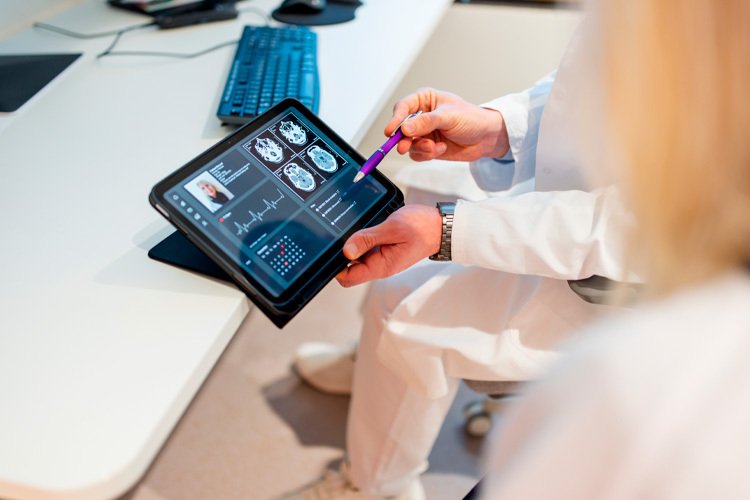
The intervention will not be identical for everyone. First, different dimensions of language and other cognitive functions will be assessed using validated and standardized instruments for the Mexican population. Then, each participant will receive individual Zoom sessions tailored to their specific needs.
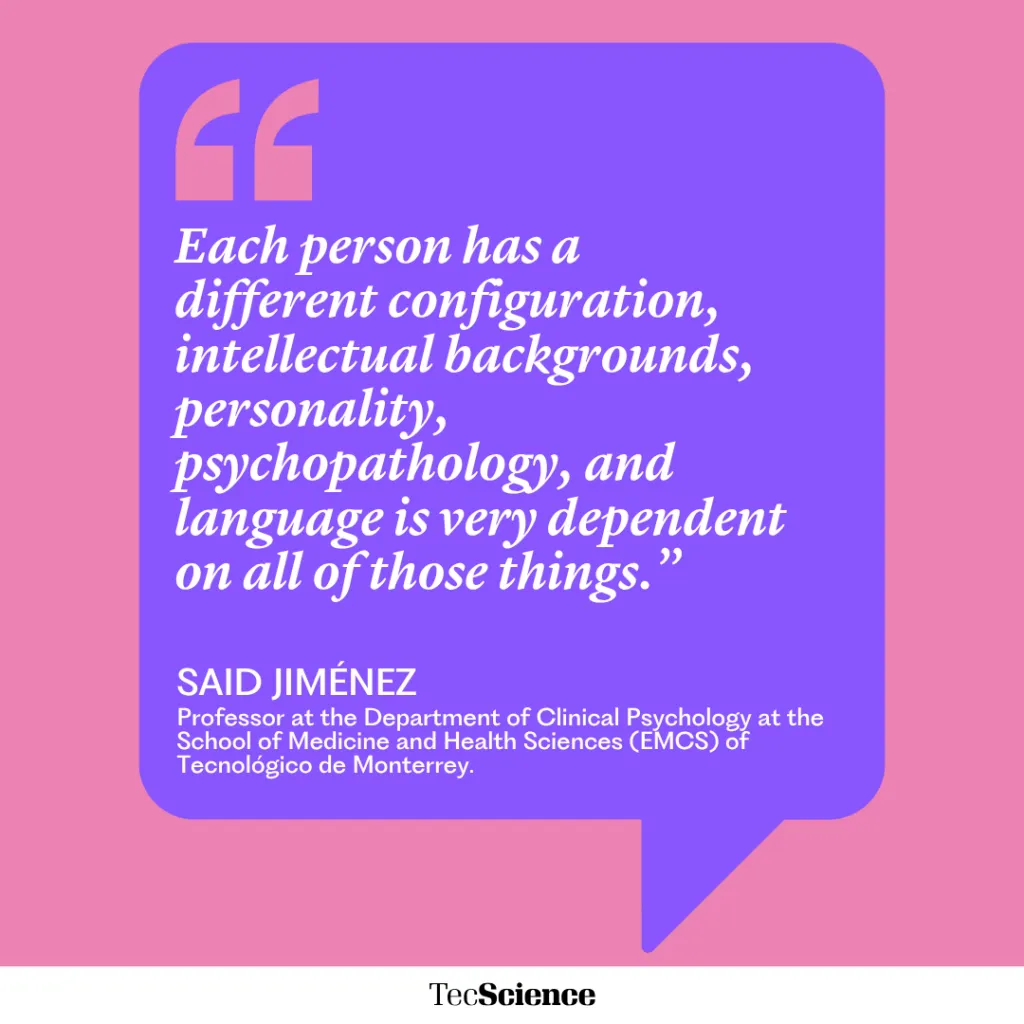
“Although the sample size may sound small, it’s fifteen small universes,” Jiménez reflects. “Each person has a different configuration, intellectual backgrounds, personality, psychopathology, and language is very dependent on all of those things.”
This personalization reflects a fundamental characteristic of aphasia: there is no single profile. Some people may know exactly what they want to say but have difficulty retrieving the word; others may retain their vocabulary but have problems that prevent fluent speech.
Therefore, the intervention will seek to work on the skills that each person needs and, above all, that these can be used outside of therapy, in everyday life situations.
Interventions to Improve the Daily Lives of Those with Aphasia
In addition to developing these individualized therapies and adding traditional tools to measure their effectiveness, ComUNIDAD will include connected speech analysis, which studies the natural way humans speak.
Through exercises such as asking participants to describe an image, fragments of their responses can be recorded and variables such as the number of pauses, the time between words, the quantity and type of words used, and other speech characteristics can be extracted.
Then, these patterns can be analyzed using computational tools to understand the progress of the intervention.
“This data will allow us to evaluate the before, during and after of the therapies,” explains Jiménez.
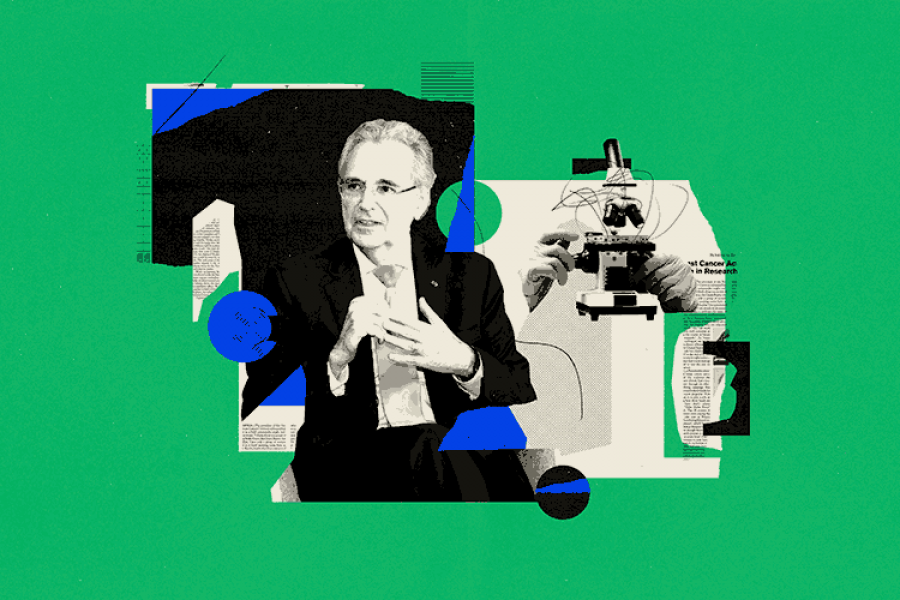
The therapies and some of the analyses will be carried out by therapists and experts from the Multilingual Aphasia and Dementia Research Lab, led by Stephanie M. Grasso, professor and researcher at the same university.
Grasso’s lab welcomes students interested in conducting research related to aphasia, dementia, and bilingualism, reinforcing the value of this international collaboration.
The potential advantage is that this measure could more closely reflect how a person actually communicates than a single vocabulary test. It would also allow for multiple measurements of each participant and more detailed tracking of their progress.
The fifteen participants alone will not be enough to determine whether an intervention works for the entire Spanish-speaking population. The team envisions this first stage as a pilot study to better understand the diversity of profiles, identify which variables are most informative, and generate evidence for subsequent research with larger samples.
They will also combine their data with databases from UT Austin and the University of Barcelona, in order to eventually make broader generalizations.
Thus, the project’s goal is to begin building the evidence we need to treat aphasia in Spanish speakers, specifically from Mexico and Latin America.
“Beyond training people to pass a test, what we want is for them to retrieve functions that they can apply to their daily lives,” Platas says.
Did you find this story interesting? Would you like to publish it? Contact our content editor to learn more: marianaleonm@tec.mx