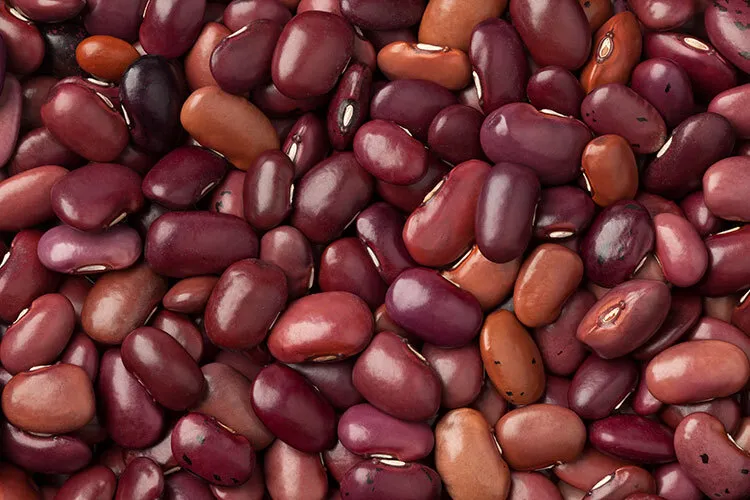


Imagine going to a convenience store and being able to buy a nutritious bar that not only provides you with nutrients and makes you feel satisfied, but also helps lower your blood triglyceride levels. This is what a Mexican product made from common beans and oats has achieved.
It all started when Aurea Karina Ramírez, a research professor at the School of Engineering and Sciences (EIC) of the Monterrey Institute of Technology, was doing her master’s thesis at the Autonomous University of Querétaro (UAQ) under the supervision of Flavia Loarca.
What they were looking for was to develop a product that would take advantage of beans, whose consumption in the country has fallen by about 50% in the last four decades.
Initially, Ramírez developed more than 54 different formulations, which were tested by a group of people to find the best texture, flavor, and appearance of the food.
“The interesting part came later when we carried out studies to understand its effect on the body,” says Ramírez.
In an in vitro evaluation, they found theirs had half the fat of other competing nutrition bars and more than 10 grams of protein, derived from mixing beans and a cereal.
The next step was to test in a clinical trial whether the bar had a positive impact on the bodies of the people who consumed them.
“We recruited a group of women from Querétaro who had high triglycerides,” the researcher explains.
From Formulation to Clinical Trial
The study involved 26 women with hypertriglyceridemia, of whom 14 were assigned to the experimental group —the one that consumed the bar— and 12 to the control group.
For eight weeks, the experimental group consumed 50 grams of the bar daily, while the other group only made adjustments to their diet. At the end of the treatment, triglyceride levels decreased by approximately 38% in those who consumed the bar, without needing to restrict their diet.
“With the control group there was also a slight decrease in this marker, but it was not statistically significant,” says Ramírez.
Although the results are promising, the sample size of the trial is small, so larger studies are needed to confirm its effectiveness.
However, upon seeing this result, the expert and her team did not stop there and decided to investigate what was behind this response.
Behind the Promising Results
What they found is that their formulation combines bioactive compounds from beans, such as fiber, resistant starch and polyphenols —molecules with antioxidant and anti-inflammatory capacity— , along with the β-glucans from oats, known for their cardioprotective effect.
Together, these components help the intestine absorb less fat, promote cholesterol elimination, and reduce the production of new fats in the body.
“We also saw changes in neuropeptides and hormones that are related to how likely fats are to stick to our arteries,” says Ramírez.
In a protein analysis of the people who consumed the bar, they found that the expression of at least 40 proteins associated with inflammation and lipid metabolism was modified.
Among the most important effects are better regulation of inflammatory processes and changes in the way the body uses fats as an energy source.
From the Lab to the Shelf
Seeing that their product had such good results, they decided to start marketing it. They named it Flavis, in honor of Loarca, and made a small production that was sold in the UAQs cafeteria until before the pandemic.
After the health crisis, it was difficult to secure funding, so production has not resumed, but they hope to restart talks about it soon.
Regardless of whether or not their energy bar will be sold in stores in the future, the project illustrates how science can truly have an impact on people’s lives.
“I think it’s a good example of how to make a product that passes all those stages, involving the consumer, validating the effects with scientific bases and taking it to production,” Ramírez says.
Unlike medicines, functional foods —such as Flavis— can simply be added to existing habits, without needing to change the entire diet, which offers an accessible way to improve public health.
In Mexico, excess triglycerides is the most common dyslipidemia and represent one of the main causes of cardiovascular risk and metabolic syndrome in the country.
Therefore, having a bar in convenience stores that truly nourishes individuals and also addresses a health problem is almost utopian.
“I think it’s important to boost local economies, like the bean economy, and if we have support from the government and businesses, its impact can be even greater,” says Ramírez.
Did you find this story interesting? Would you like to publish it? Contact our content editor to learn more: marianaleonm@tec.mx